
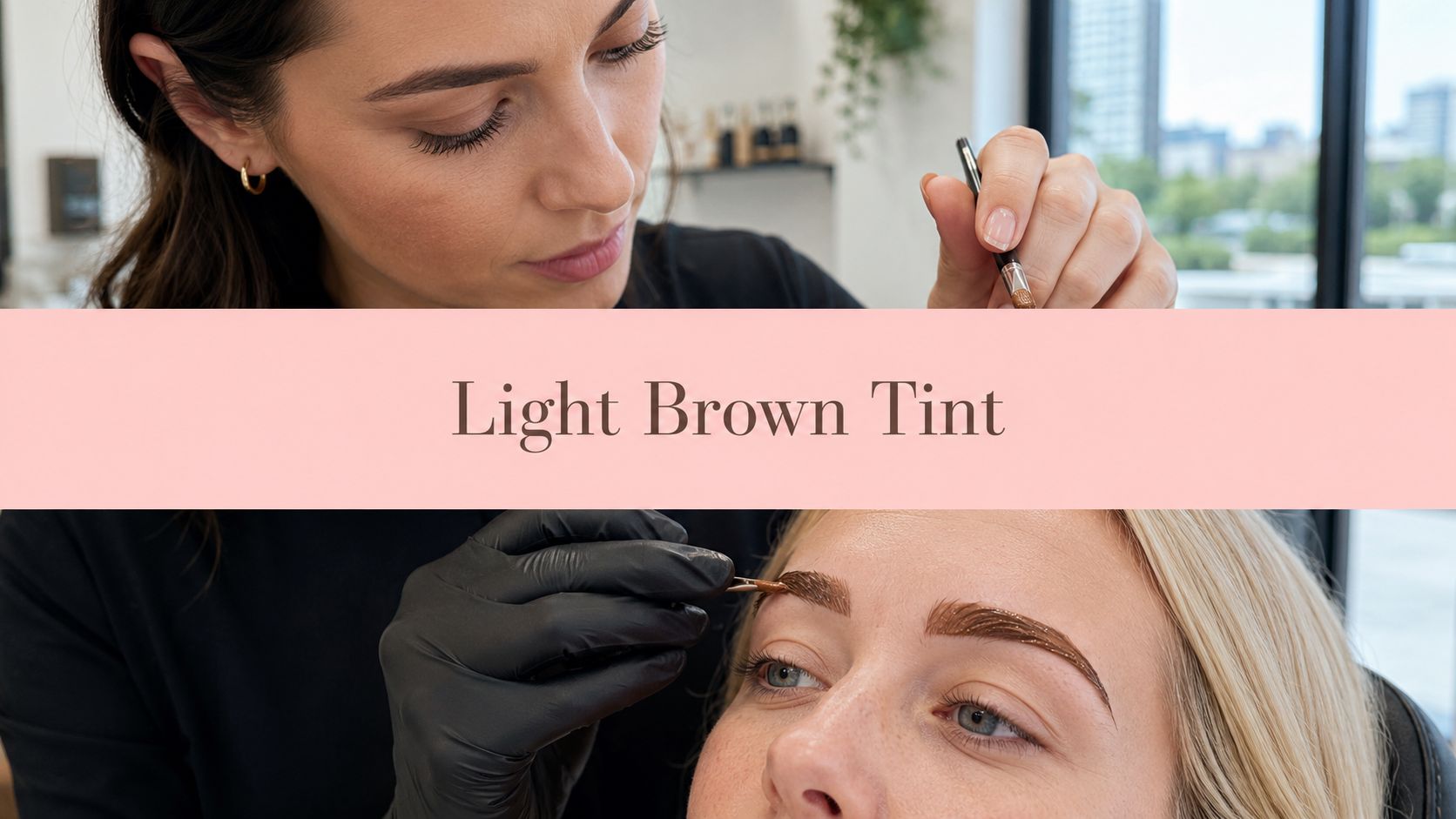
You're tired of filling in your brows every morning, but a dark brown tint feels too severe against fair skin or blonde hair. A light brown eyebrow tint offers a softer middle ground, adding visible shape and definition without making the brows look stamped on. For Sydney clients who want a polished face with less daily makeup, the result should look like your own brows, only clearer.
The shade still needs careful matching. Natural brow depth, hair colour, skin undertone, porosity, recent waxing, and aftercare all influence the final result. A gentle-looking colour isn't automatically gentle for the skin, so professional consultation and patch testing matter just as much as the shade itself.
Why Light Brown Eyebrow Tint Is Sydney's Most Requested Shade
A first-time client often arrives with the same concern: “I want my brows to show, but I don't want people to notice the tint.” That usually rules out very deep brown shades. Light brown gives fine blonde or sparse hairs enough contrast to frame the eyes while preserving a relaxed, natural finish in daylight.
Sydney's beauty market supports that demand for subtle brow maintenance. A 2025 Australian industry summary recorded 18 million appointments for services involving brows, while brow tinting accounted for 22% of brow-related searches, behind waxing at 40% and ahead of lamination at 11% (Professional Beauty Australia's industry summary). Those figures place tinting within an established grooming routine, rather than treating it as an occasional novelty.
Why clients prefer a softer result
A dark tint can create useful structure on naturally deep brows, but it can overwhelm fair complexions, pale hair, or clients who rarely wear makeup. Light brown usually works better for someone who wants to shorten their morning routine without changing the visual balance of the face.
The shade also suits Sydney's varied hair colours. Sun-lightened blonde hair, sandy brown roots, warm brunette tones, and naturally fine brows can all respond differently, but a carefully selected light brown formula gives the technician room to adjust depth. The aim isn't to make every client look the same. It's to make the existing brow hairs easier to see.
Practical rule: If the colour looks believable beside your natural roots and still feels comfortable in bright outdoor light, the match is usually working.
Australian consumers already show strong interest in low-maintenance brow enhancement. A Finder survey on Australian self-care spending reported that 15% of Australians had undergone eyebrow microblading or lamination in the previous 12 months, with an estimated $61 million annual national spend for that category. Those services aren't tinting, but they show the broader willingness to invest in brows. Light brown tinting offers a lower-commitment route into that same polished routine.
Understanding How Light Brown Tint Works on Different Hair Types
The same bowl of light brown tint won't produce the same visual result on every brow. A cool ash-blonde brow may take on a soft taupe appearance, while a warm golden brow can read more honey or copper. The technician is matching starting pigment, oxidation, hair condition, and skin undertone, not just selecting a label from a colour chart.
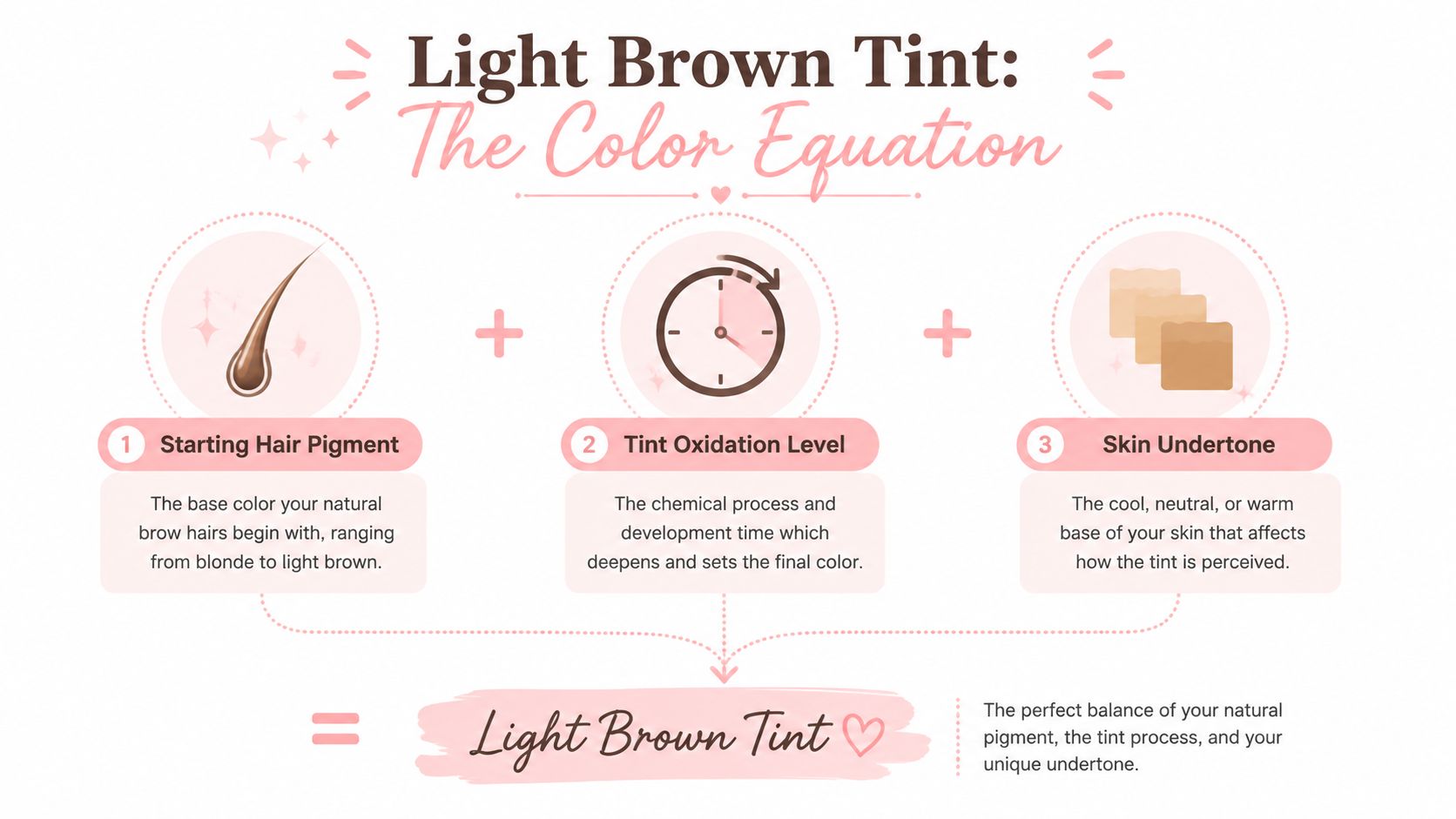
The colour equation
Australian brow and lash dye documentation commonly lists iron oxide pigments alongside oxidative dye bases and a 3% hydrogen peroxide developer (AU-facing product documentation). The visible result comes from a controlled chemical system. The developer helps open the hair cuticle, dye precursors oxidise, and pigment components help tune the finished warmth and depth.
Hair condition changes how evenly that process behaves. Fine, porous hairs may grab colour quickly and look stronger than expected, while resistant or coarse hairs may need careful development monitoring. Bleached or sun-affected hairs can also show uneven absorption, particularly when the brow contains mixed natural and coloured strands.
How starting colour changes the finish
- Ash blonde or beige blonde: A neutral or slightly cool light brown can prevent the result from appearing too golden.
- Honey blonde or golden brown: A balanced light brown can complement existing warmth, but excessive copper may look artificial.
- Strawberry blonde: A warm neutral brown may harmonise better than a strongly ash-based shade.
- Naturally dark brows: The aim may be softening and refining rather than adding depth. A lighter formula or shorter development can prevent a heavy result.
- Very fair, sparse brows: Hair tint improves visibility of existing hairs, but it can't create new brow density where hair is absent.
Processing time often controls the final depth more effectively than the shade name alone. A good technician checks the colour while it develops instead of leaving every client's formula on for an identical period.
What Happens During Your Professional Brow Tinting Appointment
A professional appointment begins with conversation, not colour. Your technician should ask about your usual makeup, preferred brow depth, hair colour, previous tint reactions, recent waxing, and whether you want a visible change or a barely-there enhancement.
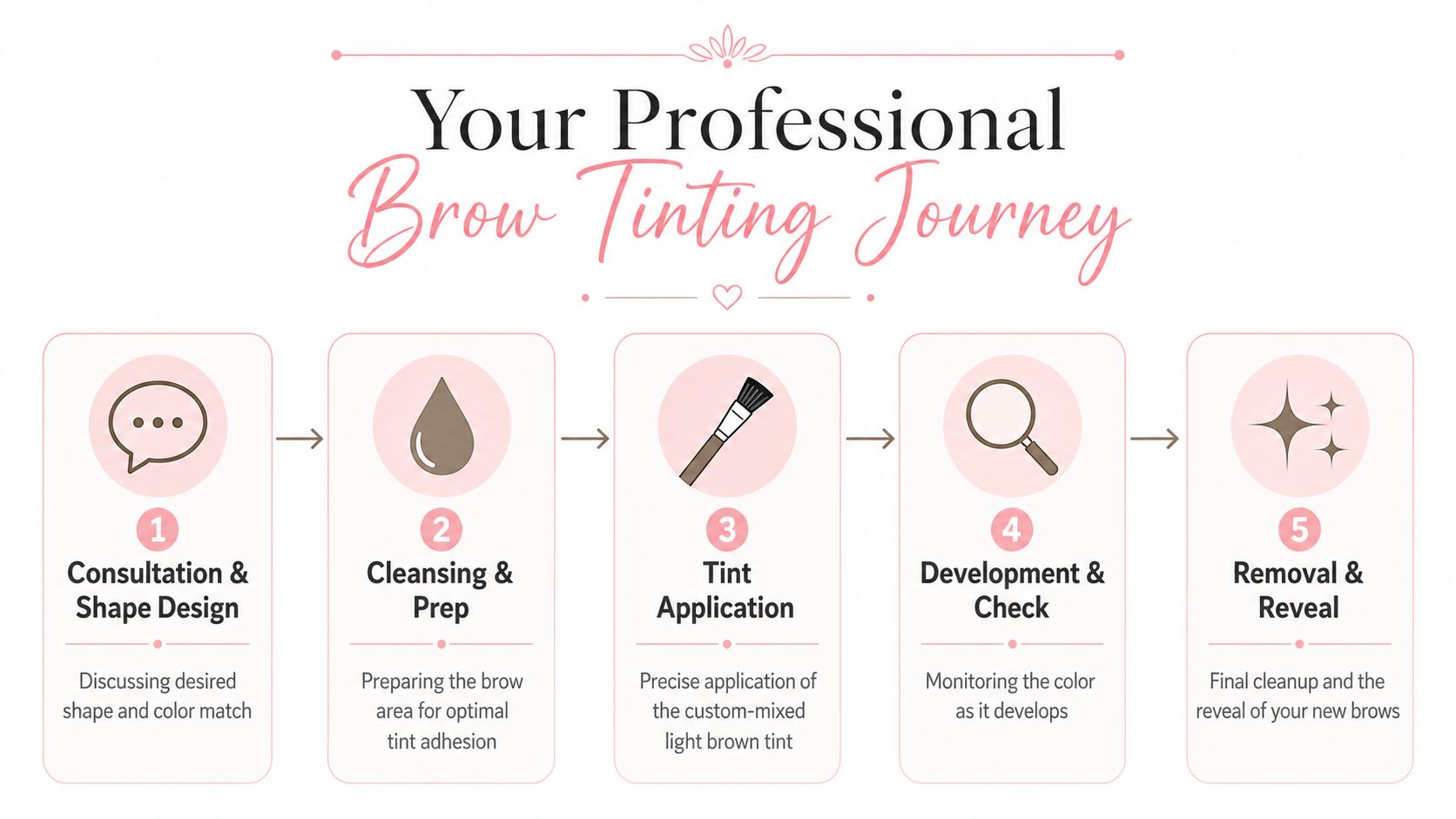
The treatment sequence
- Consultation and shape planning: The technician identifies the natural brow line and discusses whether light brown should look neutral, warm, or cooler.
- Cleansing and preparation: Makeup, oil, and residue are removed so the tint can contact the brow hair consistently.
- Precise application: The formula is placed within the intended brow shape, with care around the eye area and the surrounding skin.
- Development checks: The technician monitors the colour rather than relying on a fixed assumption about how every brow will process.
- Removal and reveal: The tint is removed gently, excess staining is cleaned, and the result is assessed in the context of your face and hair.
Professional application differs from an at-home experiment because the technician can adjust placement, timing, and tone as the colour develops. Protection around the eye area also matters. A consultation should leave you clear on the chosen shade, expected skin stain, aftercare, and what to do if discomfort develops.
For more detail on the relationship between colour, shaping, and related services, see Bonna Beauty's guide to eyebrow tint and lamination. The same consultation principles apply whether you're booking in Bankstown, North Parramatta, Roselands, or Canterbury.
Choosing the Right Light Brown Undertone for Your Skin
Light brown isn't a single universal colour. The most wearable version depends on whether your skin reads cool, neutral, or warm, and whether your natural brow hairs are pale, golden, reddish, or already deep.
| Skin Undertone | Natural Hair Colour | Recommended Tint Undertone | Expected Result |
|---|---|---|---|
| Cool or pink | Ash blonde, icy blonde, cool light brown | Soft ash or neutral light brown | Balanced definition without an obvious orange cast |
| Neutral | Beige blonde, dark blonde, neutral brown | Neutral taupe or balanced light brown | Natural contrast that doesn't look too grey or yellow |
| Warm or golden | Honey blonde, golden brown, warm brunette | Warm neutral or gentle golden brown | Harmonised warmth with softened facial definition |
| Warm with red influence | Strawberry blonde, copper-toned brown | Warm neutral brown with controlled copper | A coordinated result without excessive redness |
| Olive or muted neutral | Sandy brown, dark blonde, neutral brunette | Neutral brown with restrained warmth | A grounded finish that avoids looking overly yellow |
Matching the undertone, not just the depth
A cool complexion may suit an ash-based light brown, but too much grey can make the brows look flat. Warm golden skin can carry more warmth, although a copper-heavy result may pull attention away from the eyes. Neutral skin usually has the most flexibility, but the technician still needs to consider the root colour and how much skin stain you want.
Product descriptions often call light brown soft and natural, but they can differ in how warm the shade appears. One Australian listing describes it as a warm, coppery option for warm blondes and redheads, while also presenting it as an alternative when natural brown feels too dark (RefectoCil Light Brown product information). That's why a useful consultation includes words such as ash, neutral, golden, coppery, soft, and muted, rather than relying on “light brown” alone.
If uneven pigmentation around the brow area concerns you, it can also help to read independent guidance on clinically proven pigmentation care. Keep that skincare discussion separate from tint selection, and don't apply active products close to freshly treated brows without professional advice.
Bonna Beauty's guide to a good eyebrow tint gives clients another useful reference point before discussing the preferred tone and finish with a technician.
Safety First, Patch Testing and Allergy Prevention
A natural-looking shade can still trigger irritation. Brow tint products may contain oxidative dye ingredients and developer chemistry, so patch testing isn't optional just because the final colour is light.
Australian regulation provides a clear reason to take product handling seriously. The TGA states that 2-amino-6-chloro-4-nitrophenol may be present at 1.5% or less after mixing in eyebrow and eyelash colouring preparations, and the mandatory warning says these products must not be used for dying eyelashes and eyebrows if they're likely to injure the eye (TGA scheduling decision). A shade name doesn't tell you whether the final mixed formula or application process is appropriate.

What a responsible safety protocol includes
- Reviewing your history: Tell the technician about previous hair dye reactions, eczema, broken skin, allergies, or recent cosmetic procedures.
- Applying a small test: A small amount of the mixed product is placed according to the product's instructions, commonly behind the ear or on the inner arm.
- Allowing observation time: AU product safety notes specify a 48-hour sensitivity test and advise avoiding application to brows waxed within the previous 72 hours (AU-facing dye kit guidance).
- Checking for warning signs: Redness, itching, swelling, burning, or persistent irritation means the service should not proceed.
- Stopping after a reaction: Don't scrub or apply random active ingredients to the area. Contact the salon for guidance, and seek medical care if symptoms are severe, spreading, or involve the eye.
Recent waxing deserves special attention because it can disturb the skin barrier. Applying peroxide and aromatic dye ingredients to freshly waxed skin may increase stinging or dermatitis risk. A careful technician will ask about timing rather than treating waxing and tinting as unrelated appointments.
For clients comparing qualifications and consultation standards, Bonna Beauty's information about an eyebrow technician explains the type of professional expertise that supports safer brow services. Never tint over broken, inflamed, or visibly irritated skin.
Maximizing Your Tint Longevity with Proper Aftercare
Tinted brow hair and skin stain don't fade in exactly the same way. The skin effect usually softens first, while the colour on the hairs remains until it gradually wears away through cleansing, natural hair growth, and daily exposure.
The first day needs restraint
Follow the product and salon instructions carefully during the first day. Avoid rubbing the brows, using oil-rich products directly over them, or applying exfoliating acids and retinoids close to the treated area. Cleansing balms, facial oils, steam, swimming, heavy sweating, and repeated towel friction can all make the surface colour fade less evenly.
A gentle routine works better than trying to “lock in” the tint with homemade oils or aggressive products. Cleanse around the brow area with light pressure, pat dry, and use a clean spoolie if the hairs need arranging.
Longer-term maintenance
Brow tinting works well alongside shaping, waxing, and lamination, but the services should be timed by a professional. Waxing can make the skin more reactive, while lamination changes the hair structure and may require a different tint plan. Bring up your skincare routine at every visit, especially if you use exfoliants or prescription treatments.
Book a refresh when the colour no longer gives the definition you want, rather than repeatedly tinting irritated or over-processed skin. If you experience burning, swelling, or ongoing redness, stop cosmetic products on the area and obtain appropriate medical advice.
Brow Tinting in Sydney's Beauty Landscape
Brow tinting fits naturally into Sydney's wider preference for practical beauty routines. Clients in Canterbury, Revesby, Roselands, Bankstown, and North Parramatta often combine tinting with reshaping, waxing, or lamination so the brows remain tidy without daily pencil work. The appeal is convenience, but the finish still depends on thoughtful shade selection and a technician who understands how local clients' hair and skin tones interact.
Australian consumers invest in brow enhancement across several service categories. Finder reported 22% participation among women in eyebrow microblading or lamination during the previous 12 months, compared with 10% among men, and placed average annual spending for a broader cosmetic tattooing category at $324.89 per person (Australian appearance-spending data). Tinting remains a softer, less committed option, but it belongs to the same broader behaviour of maintaining visible, balanced brows.
What to check in a Sydney studio
NSW Health distinguishes cosmetic tinting from procedures that penetrate the skin. Skin-penetration procedures include tattooing, ear piercing, hair removal, and penetration of a mucous membrane, with requirements involving sterile needles, sharps disposal, infection control, and protective equipment (NSW Health guidance on skin penetration procedures). Waxing is treated separately unless bodily-fluid exposure is expected.
Studios still need disciplined cleanliness. NSW guidance requires clean towels and linen for each new client, cleaning of treatment areas and work surfaces between clients, clean gowns or aprons, single-use gloves during relevant procedures, and handwashing before and after client contact and after glove removal (NSW Health tattooing and beauty guidance). Council registration and inspection also form part of the local operating environment. Inner West Council describes registration and Environmental Health Officer inspections, while Griffith City Council's beauty and body-art guidance outlines comparable registration and inspection expectations.
If you're travelling through Sydney CBD, Town Hall, or nearby central areas, the City of Sydney's landmarks information provides verified local reference points when planning appointments around transport and work. Choose a studio that can explain its shade process, patch-test policy, aftercare, and the difference between tinting and skin-penetrating brow treatments.
Bonna Beauty offers professional eyebrow tinting alongside brow reshaping, waxing, lamination, lash treatments, and cosmetic tattooing across Sydney locations including Bankstown, Roselands, Revesby, and North Parramatta. Visit Bonna Beauty to discuss a light brown eyebrow tint matched to your undertone, review safety requirements, and book a consultation that fits your routine.