
You're scrolling through lash photos, saving a soft, fluffy set and then a much darker one, wondering which will suit your eyes. The booking menu says classic, hybrid and volume, but it doesn't tell you what your natural lashes can comfortably support.
When comparing volume lashes in Sydney, start with lash health, not the darkest reference photo. A good technician considers your natural lash thickness, eyelid condition and maintenance routine before choosing the fans. The aim is a balanced set that looks intentional and feels comfortable, not the largest fan available.
Volume Lash Fan Sizes From 2D to 6D
Volume fan sizes, lashes per fan and best use
| Fan size | Lashes per fan | Look | Best for |
|---|---|---|---|
| 2D | 2 | Soft, subtle lift and fullness | First-time clients and sparse natural lashes that are healthy enough for extensions |
| 3D | 3 | Noticeable fullness that still looks natural | Clients stepping up from classic lashes |
| 4D | 4 | Full and dramatic, a popular defined-volume look | Clients wanting bold volume for events |
| 5D | 5 | Dense coverage with a strong lash line | Thick, healthy natural lashes only |
| 6D | 6 | Maximum density within this range, very dramatic | Experienced technicians working on robust natural lashes |
A client might ask for dramatic lashes, but the technician's first questions should concern natural lash thickness and length. Volume lashes use several ultra-fine synthetic extensions arranged into a fan, with that fan bonded to an individual natural lash. The D describes how many extensions make up the fan, not its length or curl.
Fullness isn't the same as weight
Adding fibres increases weight when fibre diameter and length stay the same. However, fan count alone isn't a reliable weight rating. A carefully constructed fan of finer, shorter fibres can be more appropriate than a smaller fan made from thicker, longer extensions.
The trade-off progresses through the range: subtle fans offer less visual coverage, while denser fans require more careful control of fibre diameter, length and attachment. A wide fan also creates a different silhouette from a narrow fan, even when both contain the same number of fibres.
Practical rule: If your natural lashes are fine, short or thinning, step down rather than asking the technician to compensate with extra length.
Thick, healthy lashes may support a defined or denser look, but that's still a consultation decision. The technician should assess individual lashes rather than apply the same fan indiscriminately across the entire eye.
Volume Versus Classic and Hybrid Lashes
Classic, hybrid and volume lashes compared
| Feature | Classic | Hybrid | Volume |
|---|---|---|---|
| Application | One extension per natural lash | Mix of classic extensions and volume fans | Several fine extensions fanned onto each natural lash |
| Look | Natural and defined | Textured with extra fullness | Full, dense and dramatic |
| Weight on natural lashes | Usually the lightest-looking option, but fibre specifications matter | Moderate visual density, with a controlled load | Greatest potential load if poorly specified, needs suitable lashes |
| Relative session length | Generally shortest | Medium | Generally longest |
| Best for | Everyday wear and first sets | Balanced texture without full drama | Maximum fullness and event looks |
The decision isn't only whether you want natural or glamorous lashes. It's also whether you prefer separated definition, broken-up texture or a continuous dark lash line. Those finishes can look quite different on the same eye shape.
Classic extensions define the lashes you already have. They won't create the same visual coverage across a sparse lash line as carefully placed fans. Hybrid offers a middle ground, with singles breaking up the density of volume fans.
Choose for your routine
Say a nurse working shifts wants a defined appearance without adding much to the morning makeup routine. Classic could be a sensible starting point, provided the natural lash line already has enough density for the desired result.
A bride wanting fuller lashes in photographs might choose volume with lighter fans and restrained lengths. More density doesn't require an exaggerated outer corner, especially when that placement would make the eyes appear downturned.
For a closer look at textured combinations, the hybrid eyelash extensions guide explains the middle option.
Choose classic for definition, hybrid for balanced texture and volume for fullness. Your technician can adjust the balance during refills, although a substantial change in mapping or an unsuitable existing set may require removal and a fresh application.
Who Should Wait or Adapt Before Volume Lashes
Not everyone qualifies for volume lashes on the day they want them. Natural lash calibre, length, growth phase and eyelid health can change the recommendation, even when the reference photo looks achievable.
Candidate situations and the suggested approach
| Situation | Suggested approach | Why it matters |
|---|---|---|
| Short, thin or sparse natural lashes | Consider lightweight 2D to 3D fans, or assess suitability for a lash lift | Controls the load on each natural lash |
| Recent lash loss or brittle lashes | Wait for healthy regrowth before extensions | Fans add traction to weak lashes |
| Inflamed lid, blepharitis or eye infection | Postpone and seek clinical review | Adhesive exposure can aggravate irritation |
| Dry eye symptoms | Discuss with an optometrist before booking | Extensions can worsen dryness |
| Previous adhesive reaction | Give a full history; a salon patch test isn't medical clearance | A reaction may be allergic rather than simply irritant |
Optometry Australia's guidance on cosmetic facial procedures identifies allergic reactions, infection, trauma and natural-lash loss among possible eyelash-extension complications. That makes screening a necessary part of the service, not an optional extra.
Adapt the plan without forcing a treatment
A lash lift changes the shape of existing lashes rather than adding extensions. It still involves chemical products, so it isn't an automatic alternative for inflamed eyes, damaged lashes or someone with an unresolved reaction.
Previous adhesive reactions need a clear history: what happened, how quickly it developed and whether medical treatment was needed. Hypoallergenic doesn't mean allergy-proof, and a salon spot check can't guarantee tolerance of a full appointment.
If the concern is medical, speak to a clinician first. If it's about lash strength, let the technician adapt the design or recommend waiting.
How a Volume Lash Set Is Applied Step by Step
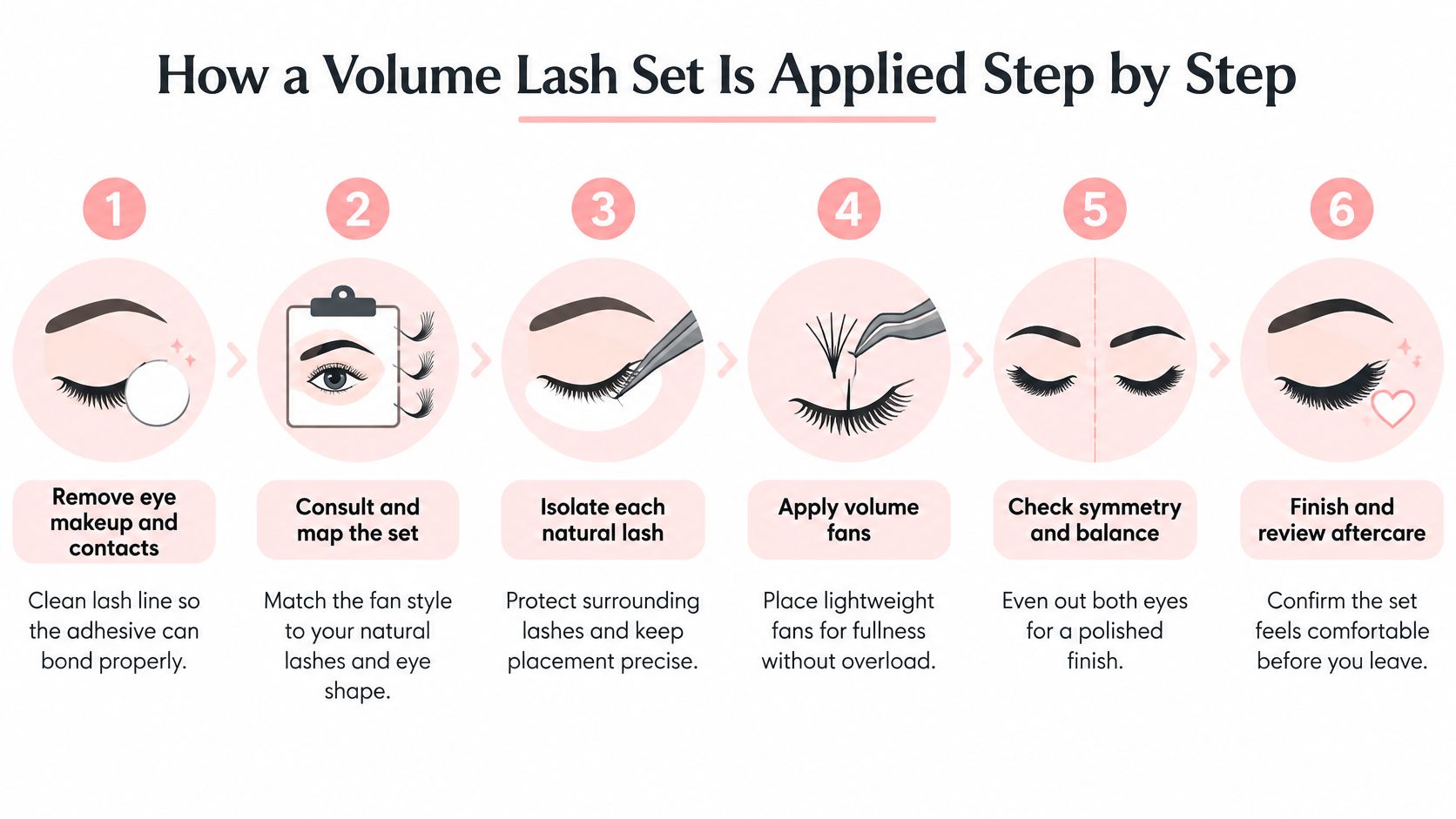
A controlled application follows a deliberate sequence. Clean preparation, individual isolation and a suitable adhesive bond matter more than rushing towards a dense finish.
Preparation and design
Arrive without eye makeup, contact lenses or false eyelashes. At our appointments, clients must remove all of these beforehand. Residual mascara and strip-lash adhesive interfere with preparation, while contact lenses shouldn't remain in during application.
Discuss your history, sensitivities and expectations. Bring a reference photo, but also explain what you don't want, such as a heavy outer corner or lashes touching your glasses. Include the ongoing refill budget in that conversation.
Map the set before application. The technician selects fan construction, length and curl around the eye shape and the condition of the natural lashes. Shorter, weaker lashes shouldn't receive the same specification as stronger neighbouring lashes just to complete a pattern.
Protect the lower lash line with suitable pads and tape. Placement must keep lower lashes out of the working area without touching the eye surface or preventing comfortable eyelid closure.
Application and finishing checks
Clean the natural lashes thoroughly. Use a lash-safe cleanser and remove residue before drying. Primer is a product-specific preparation step, not something to apply automatically regardless of the adhesive system or the client's sensitivity.
Build or select the fan, isolate an individual natural lash and attach the fan precisely. Adhesive belongs on the extension bond, away from skin and the eye surface. Neighbouring lashes must remain separate so they can grow independently.
Check attachment, direction and symmetry before asking the client to open their eyes. Once the adhesive system permits, check opening and closing, then make any necessary corrections. There shouldn't be poking, pulling or a pad-related scratchy sensation.
Review aftercare and arrange maintenance. Explain cleansing, handling and the signs that require help rather than an ordinary refill. Confirm the expected appointment duration and refill interval directly with the studio instead of relying on a generic timetable.
A well-finished set sits evenly without adjacent natural lashes stuck together. Fans shouldn't twist at their attachment points, and the client should be able to close their eyes fully without discomfort.
Comfort isn't a finishing bonus. If the set feels wrong before you leave, say so rather than assuming you need to get used to it.
Safety Checks and Signs to Stop Treatment
Volume fans sit close to the eye surface, which is why small problems deserve fast responses. A review of cosmetic eyelid enhancements found allergic blepharitis was the most frequently reported extension complication, alongside documented keratoconjunctivitis, conjunctival erosion, bacterial keratitis, contact dermatitis and subconjunctival injury.
Symptoms and the action to take
| Symptom | Action | Reason |
|---|---|---|
| Persistent redness or swelling | Stop the set, give no infill and see a GP or optometrist | Possible allergic blepharitis |
| Pain, discharge or marked light sensitivity | Seek urgent eye care the same day | Possible infection or keratitis |
| Reduced vision | Obtain same-day medical assessment | Possible corneal involvement |
| Mild itching after the appointment | Report it to the technician and monitor; seek clinical advice if it persists or worsens | Early irritation signal |
| Lashes pulling or twisting | Arrange correction, review fill timing and consider lighter fans | Traction on the natural lash |
What the studio must control
Risk comes from fan design, acrylate adhesive exposure, eyelid anatomy and tear-film function; weight is only one factor. Adhesive vapour can provoke reactions on its own. Poor isolation creates traction, and a fan that is too dense for the natural lash adds to it. Heavy coverage also makes the lid margin harder to clean, which matters for clients already prone to blepharitis.
Never cover symptoms with an infill. The guide to eyelash extension glue explains the adhesive variables a studio should manage, and anything beyond that belongs with a clinician.
Ask these questions before booking:
- Storage: How is adhesive stored and checked before use?
- Hygiene: Which implements are single-use, and how are reusable tools cleaned?
- Fan selection: How do you choose fan size for thin or weakened natural lashes?
- Reaction checks: What happens if discomfort develops during application?
Training standards for lash technicians vary, so documented competency, supervised experience and conservative fan specifications carry more weight than an impressive-looking certificate. I would rather see a technician reach for a smaller fan on a compromised lash line than promise maximum density.
Maintaining Volume Lashes Between Fills
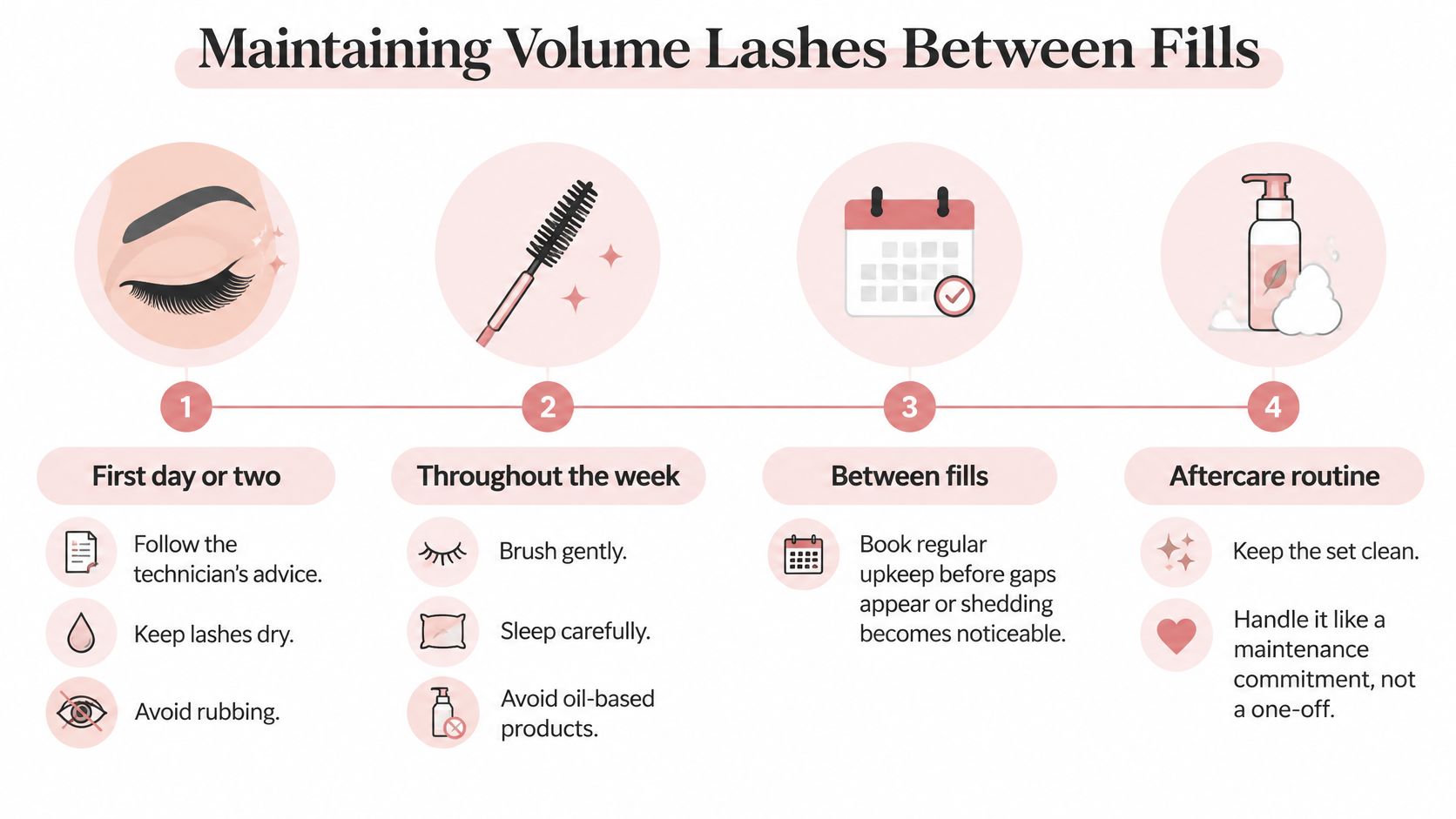
Volume lashes are a maintenance commitment, not a treatment to leave untouched until the fans look untidy. The goal is to keep the lash line clean and arrange maintenance before grown-out attachments become awkward.
From application to your next fill
- Immediately after application: Follow the curing instructions for the adhesive used. Don't assume every system requires the same dry period, and avoid rubbing or exposing the set to unnecessary steam.
- During everyday care: Gently cleanse the lash line with an extension-compatible cleanser. Rinse as directed, dry carefully and use a clean spoolie without dragging through a tangle.
- As natural lashes shed: Watch the overall balance rather than counting fallen fans. A shed natural lash can carry its attached extension with it.
- Before maintenance: Contact the studio when gaps or uneven growth become noticeable, rather than waiting until the remaining fans feel difficult to manage.
Habits that protect the finish
Avoid oil-based makeup removers around the bonds unless the adhesive guidance specifically permits them. Don't pick, pull or try to dissolve extensions at home. Keep mascara, mechanical curlers and heated lash tools out of the routine.
If you sleep with your face pressed into the pillow, reduce that contact where practical. You don't need to force an uncomfortable sleeping position, but repeated friction can disturb direction and shape.
A refill should involve assessing and removing unsuitable grown-out fans, not simply adding extensions wherever there's space.
Use the eyelash extensions aftercare guide for a practical care checklist. Gaps suggest maintenance; heaviness or persistent discomfort calls for an assessment of the design, not automatically a fuller refill.
Choosing a Volume Lash Studio in Sydney
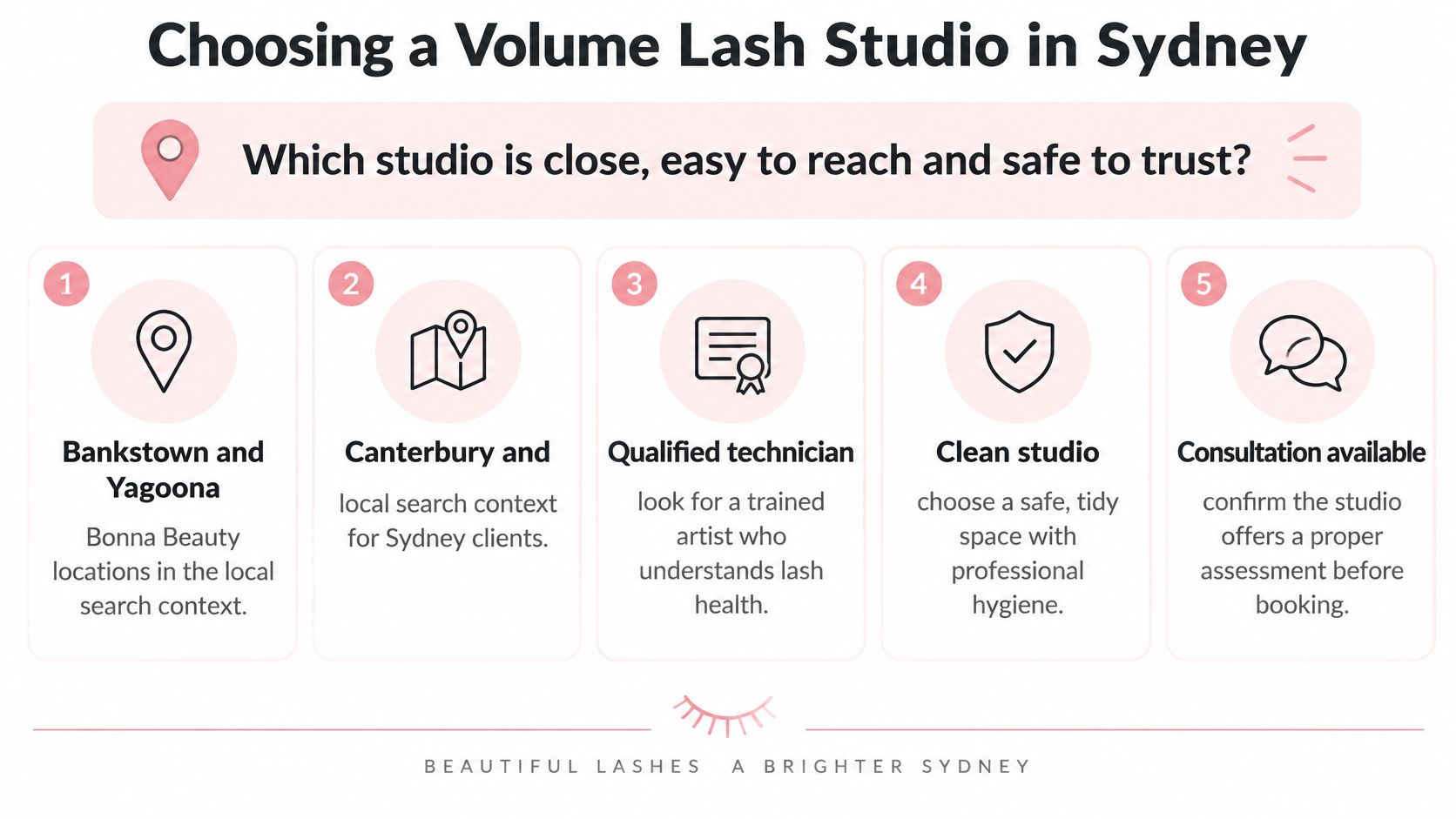
For readers comparing volume lashes Yagoona, eyelash extensions Revesby or volume lashes Canterbury, the useful question is straightforward: which studio is accessible and willing to assess suitability properly? Our suburban network serves Bankstown and Yagoona, Canterbury and Roselands, Revesby, and North Parramatta near Parramatta.
Compare the appointment, not just the photograph
- Training and assessment: Our technicians are diploma-certified and trained. Discuss how that training translates into isolation, fan selection and recognising a reason to postpone.
- Professional equipment: Each of our lash, brow and lip artists uses their own professional kits. Ask how tools and work surfaces are prepared between appointments.
- Design decisions: Request an explanation of why the proposed fan, length and curl suit your natural lashes.
- Maintenance costs: Confirm refill eligibility, removal charges and what happens if you return with substantial gaps.
- Travel: Our locations are near public transport hubs with available front parking. Check the exact address and access details before leaving.
Greater Sydney grew by 650,800 people, or 14.0%, between 2011 and 2021, according to the Australian Bureau of Statistics regional population release. Schofields–East, Wentworth Point–Sydney Olympic Park and Oran Park were among the high-growth areas identified, reinforcing why a convenient suburban appointment can be more useful than a central-city address.
Match the service to the suburb
Someone searching for natural volume lashes Sydney CBD may prioritise a different journey from a reader comparing lash lift Roselands or volume lashes near Parramatta. Don't assume similarly named suburbs or service areas mean the same appointment location.
For combined plans, specify brow lamination Yagoona, lash lift North Parramatta or beauty makeup Revesby, then confirm service availability and whether separate appointments are needed. A reputable technician should answer clearly and decline application when the history suggests unacceptable risk.
Book Your Volume Lash Appointment in Sydney
Make the decision in a practical order: establish what your natural lashes can support, resolve any suitability concerns, then choose a convenient studio. You don't need to arrive knowing the exact curl or fan specification.
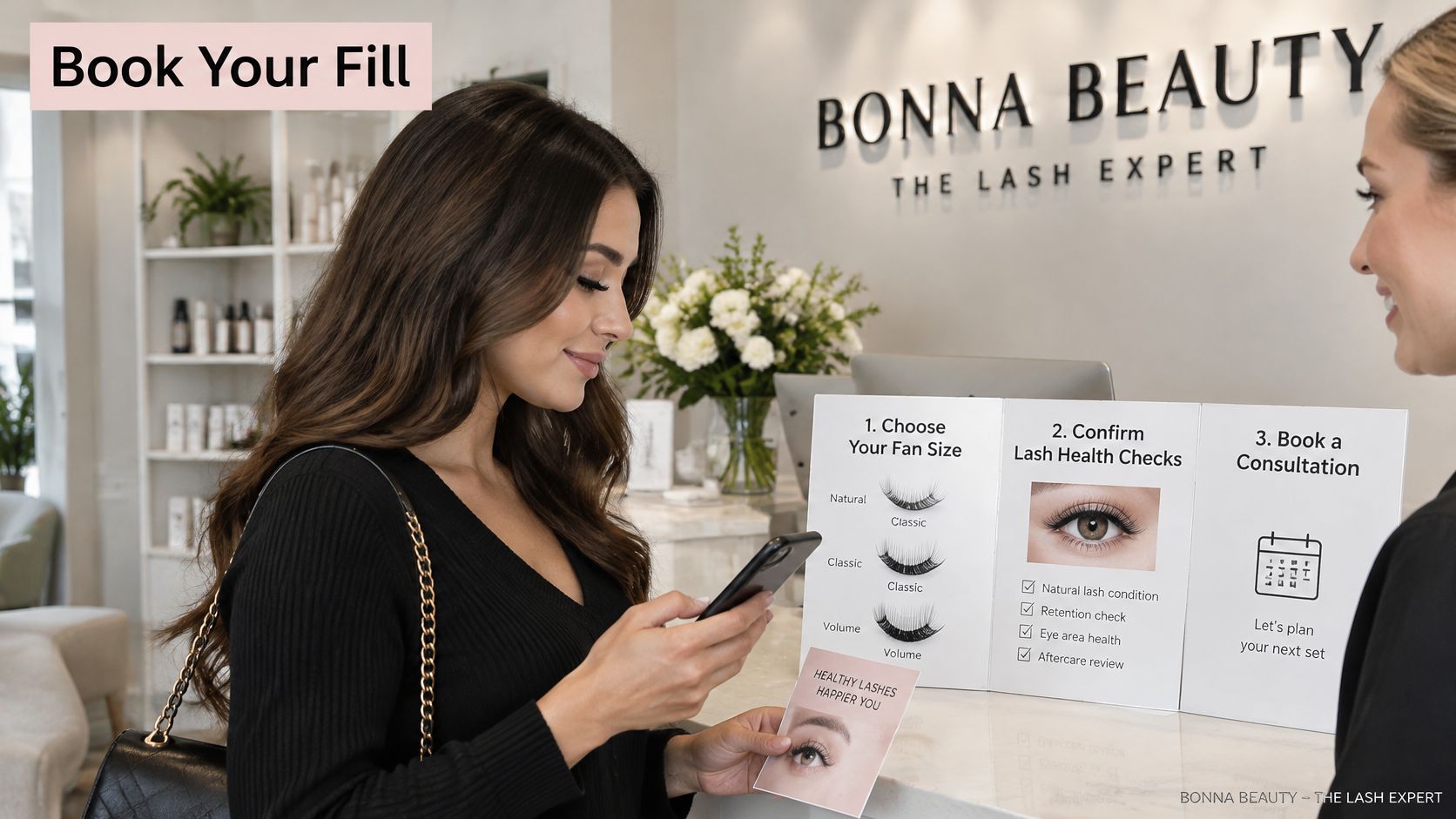
Confirm the practical details
Our night lash-extension services are available in Bankstown, Parramatta and Canterbury, which can help if daytime appointments don't fit your work schedule. Choose the relevant location when checking availability, particularly if you're travelling from another part of western or south-western Sydney.
Before committing, confirm:
- The appointment: Which style is booked, and whether a consultation or removal is needed.
- The ongoing cost: Current full-set pricing, refill costs and any applicable first-time offer.
- The preparation: What to remove beforehand and what history or product information to bring.
Bring a clear reference photo and a realistic description of your daily routine. If you're unsure about extensions, discuss a natural-lash approach rather than booking the densest option and hoping it will suit.
Bonna Beauty offers customised eyelash extensions, lash lifts and brow lamination across its Sydney studio network, with full lash-extension sets now from $90. First-time clients can receive $10 off lash and brow services with the limited-time code ONL10; confirm current availability and terms when booking. Visit Bonna Beauty to book a consultation at your nearest studio, and bring your questions about natural lash health and the finish you want.