
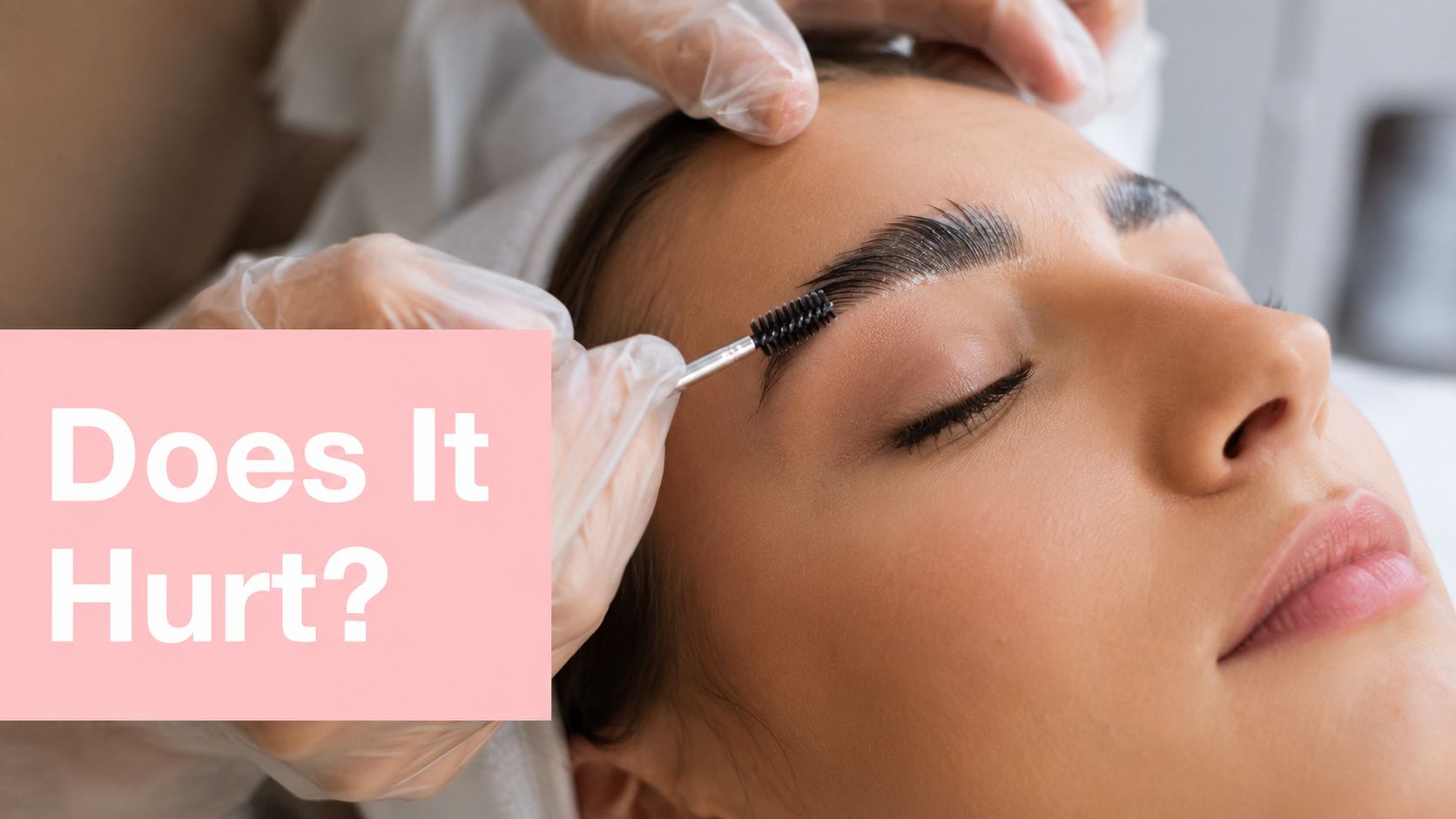
Brow lamination is generally not painful for most clients, although mild tingling or tightness can occur during the treatment. A primary risk is skin irritation from the chemical solutions, not acute pain.
You're sitting in a Sydney salon waiting room, scrolling through conflicting forum posts about brow lamination. One person says it felt like nothing. Another describes stinging, redness, or brows that looked overprocessed. Your appointment is getting closer, and your heart rate is climbing for a treatment that's supposed to make your brows look fuller and more polished.
The honest answer is reassuring, but it needs some context. Brow lamination is usually a low-pain cosmetic treatment, and most clients notice only mild tingling, slight tightness, or a faint chemical smell. Australian guidance describes the service as not usually painful, while also warning that perming and neutralising chemicals can irritate the thin skin around the eyes, particularly when products are misapplied or left on too long Australian brow lamination aftercare guidance.
That distinction matters. A brief, manageable sensation can be part of the process. Persistent burning, increasing heat, swelling, blistering, or spreading redness isn't normal discomfort. It may indicate chemical irritation, an allergic response, or overprocessing, and you shouldn't be expected to push through it.
The Honest Answer About Brow Lamination Discomfort
A nervous first-timer may ask, “Will it hurt?” while touching the delicate skin beneath the brow. The appointment should feel calm and controlled. You may notice brief tingling when the lifting lotion is applied, mild tightness as the hairs are brushed into position, and an unfamiliar chemical scent. Sharp pain is not an expected part of the service.
Brow lamination does not involve needles, hair removal, or skin penetration. The solutions act on the brow hairs, allowing them to be redirected and set into a new shape. The area can feel unusual, particularly when you are monitoring every sensation closely, but different doesn't automatically mean damaging.
Practical rule: Brief, mild tingling can be monitored. Burning that persists or intensifies should be reported immediately.
The main salon concern is irritation rather than severe pain. Incorrect handling or overprocessing may contribute to redness, swelling, stinging, peeling, and itching. Chemicals entering the eyes can cause serious harm, while overprocessing may leave brow ends looking singed. These are safety or hair-structure problems, not routine treatment sensations, as explained in ABC News coverage of brow lamination safety.
What I want clients to understand
Healthy, intact skin may barely register the chemical stages. Eczema, rosacea, a damaged skin barrier, or recent exfoliation can make the same product feel much more noticeable. Sensitive skin does not automatically rule out lamination, but it does require an individual assessment, careful product placement, and an appropriate processing time.
Comfort also depends on technician judgment. Rushing the consultation, placing product onto compromised skin, or dismissing client feedback can turn a manageable service into an irritating one. A qualified brow technician should explain the expected sensations, check in during processing, and remove the product if symptoms move beyond mild tingling.
For Sydney clients, ask a more useful question than “Does brow lamination hurt?” Ask: What should I feel, and what should make us stop? That framework separates ordinary, temporary awareness from chemical irritation or overprocessing, giving you a safer basis for deciding whether to continue.
What Happens During a Brow Lamination Appointment
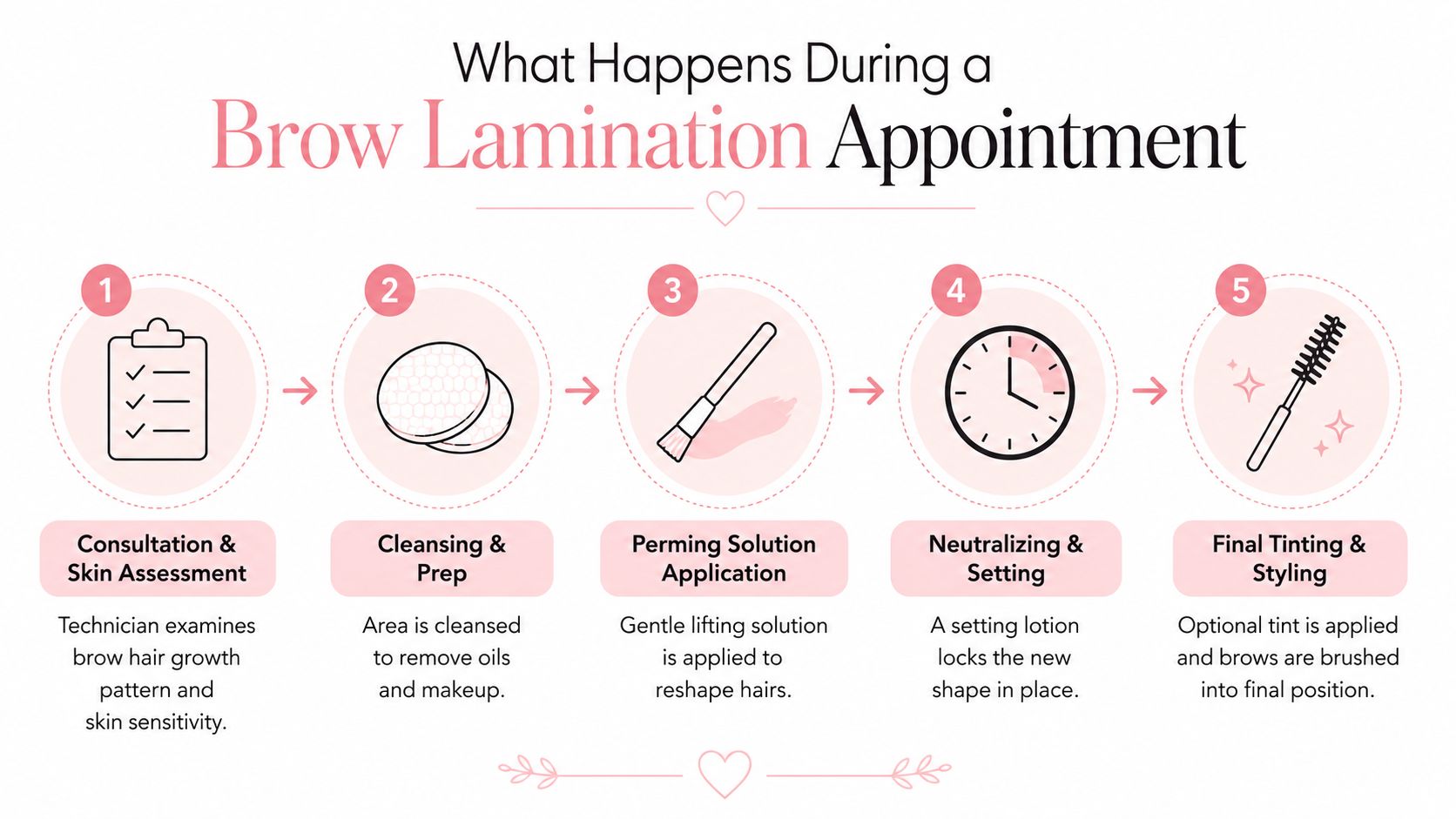
The physical experience becomes less intimidating when you know what each stage is doing. Timings vary with the product system, brow hair texture, and the technician's assessment, so the following describes the sequence rather than a fixed prescription.
Consultation and preparation
The appointment should begin with a conversation about your desired result, previous reactions, skincare, and any conditions affecting the brow area. The technician examines hair direction, density, dryness, and skin integrity before applying anything. Eczema, broken skin, recent waxing, threading, or active irritation should change the treatment decision.
Next, the brows are cleansed with a suitable product to remove makeup, oil, sunscreen, and residue. This stage usually feels like ordinary cleansing, although recently waxed skin can feel tender when touched.
Lifting and setting
The first chemical stage uses a lifting or perming lotion to soften the hair structure so the brow hairs can be brushed into a new direction. Clients commonly notice mild tingling, warmth, or a faint sulphur-like smell. The solution remains on for a product-specific period, and Australian safety information identifies thioglycolic-acid-based formulations as skin irritants and sensitisers, which is why careful application matters Safe Work Australia hazardous chemical information.
The setting lotion follows. It neutralises the first stage and helps hold the brushed shape. You may feel light pressure from the spoolie or angled brush as the technician arranges the hairs, but that brushing shouldn't hurt.
Conditioning, tinting, and styling
A nourishing serum or keratin-focused conditioning product is then applied to support the feel and appearance of the hairs after chemical processing. Many clients notice relief at this point because the area feels less tight and more conditioned.
An optional brow tint adds colour, and its sensation is distinct from lamination. Tint may feel cool or mildly noticeable on the skin, but sharp stinging isn't something to ignore. The appointment finishes with shaping and styling, which may include careful trimming or tweezing depending on your service plan. Bonna Beauty describes its brow lamination service as including consultation, solution application, tinting, and shaping in its Sydney brow lamination guide.
Normal Sensations Versus Signs of Skin Irritation
A nervous first-timer may notice warmth or tingling and assume the treatment is harming the skin. Judge the direction and intensity instead. Normal awareness stays mild and manageable. Irritation becomes sharper, hotter, more localised, or increasingly uncomfortable while the product remains on the brows.
During the lifting stage, mild tingling is possible as the solution changes the hair structure. Brushing and holding the hairs in position can create slight tightness. Cleansing, brushing, or brief product contact may also cause temporary redness. These sensations should settle after removal, not escalate.
A faint chemical or sulphur-like smell is not, on its own, evidence of injury. Check how the skin feels once the product is removed and whether its colour starts returning towards normal.
| Normal Sensation | Irritation Warning Sign |
|---|---|
| Mild tingling that stays manageable | Burning that persists or intensifies |
| Slight tightness while hairs are set | Skin that feels hot to the touch |
| Faint chemical smell | Redness spreading beyond the brow area |
| Mild, temporary redness | Raised bumps, hives, blistering, or marked swelling |
| Brief awareness in sensitive skin | Increasing pain, peeling, or ongoing itching |
Why the difference matters
Brow lamination chemically restructures the hair, so the process can feel unusual without injuring the epidermis. Chemical irritation, contact dermatitis, and allergic reactions affect the skin itself. A peer-reviewed review of brow lamination risks discusses possible allergic contact dermatitis, dryness, erythema, and ocular or respiratory irritation when thioglycolate-based products are misapplied or aerosolised.
Burning is not a sensation to tolerate. A responsible technician should stop the service, remove the product, assess the area, and follow appropriate rinsing and safety procedures. Patch testing may be appropriate if you have reactive skin, a history of allergies, or concerns about chemical sensitivity. It can reduce uncertainty, though it cannot guarantee that a reaction will not occur during the full treatment.
Pay attention to the change over time. Mild tingling that remains stable is different from heat or pain that builds while the solution is processing.
If the sensation is sharp, hot, or getting worse, speak up before the technician continues.
How to Minimise Discomfort Before and During Your Session
Sensitivity often starts before the appointment. Arrive with the brow area calm, intact, and free from products so the technician can assess your actual skin rather than a layer of makeup or skincare.
Prepare the skin
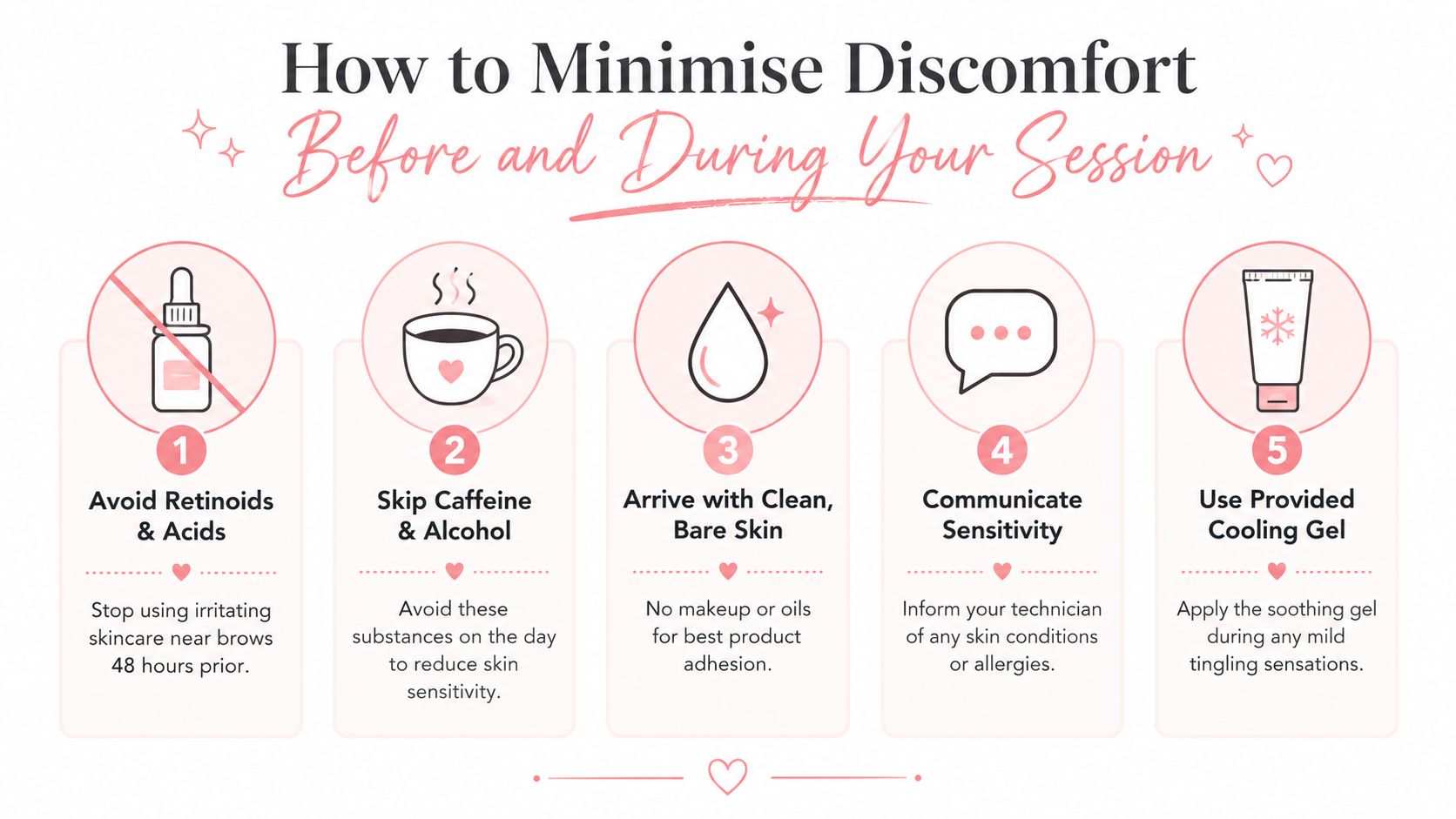
Avoid retinoids, AHAs, and strong exfoliants around the brows for at least 48 hours before treatment. These products can leave the skin more reactive, so combining them with chemical brow processing is an unnecessary risk. Arrive without makeup, brow gel, facial oil, or heavy moisturiser.
Caffeine and alcohol can make some people feel more reactive or flushed, so skipping them on the day may help if you already know your skin responds strongly. This is a comfort measure, not a substitute for a proper consultation.
Tell the technician about eczema, rosacea, allergies, recent waxing, threading, sun exposure, or any prescription skincare. If you're new to chemical brow treatments or have sensitive skin, ask whether a patch test is appropriate before booking the full service.
Communicate during the appointment
A protective barrier cream around the brow perimeter can help limit unnecessary product contact with surrounding skin. It shouldn't be used to disguise a reaction, and it can't make incorrect product placement safe.
Describe the sensation accurately. “It feels warm but manageable” gives the technician useful information. “It's sharp and burning” requires immediate attention. A good Sydney brow studio will adjust the approach, monitor your comfort, and respect the condition of your skin rather than chasing a stronger result.
Hormonal fluctuations can make some clients feel more sensitive, so consider postponing if your skin is unusually reactive. Your technician can also decide whether lamination is suitable that day, especially if the area has been waxed or is visibly compromised.
Aftercare Rules That Prevent Delayed Irritation
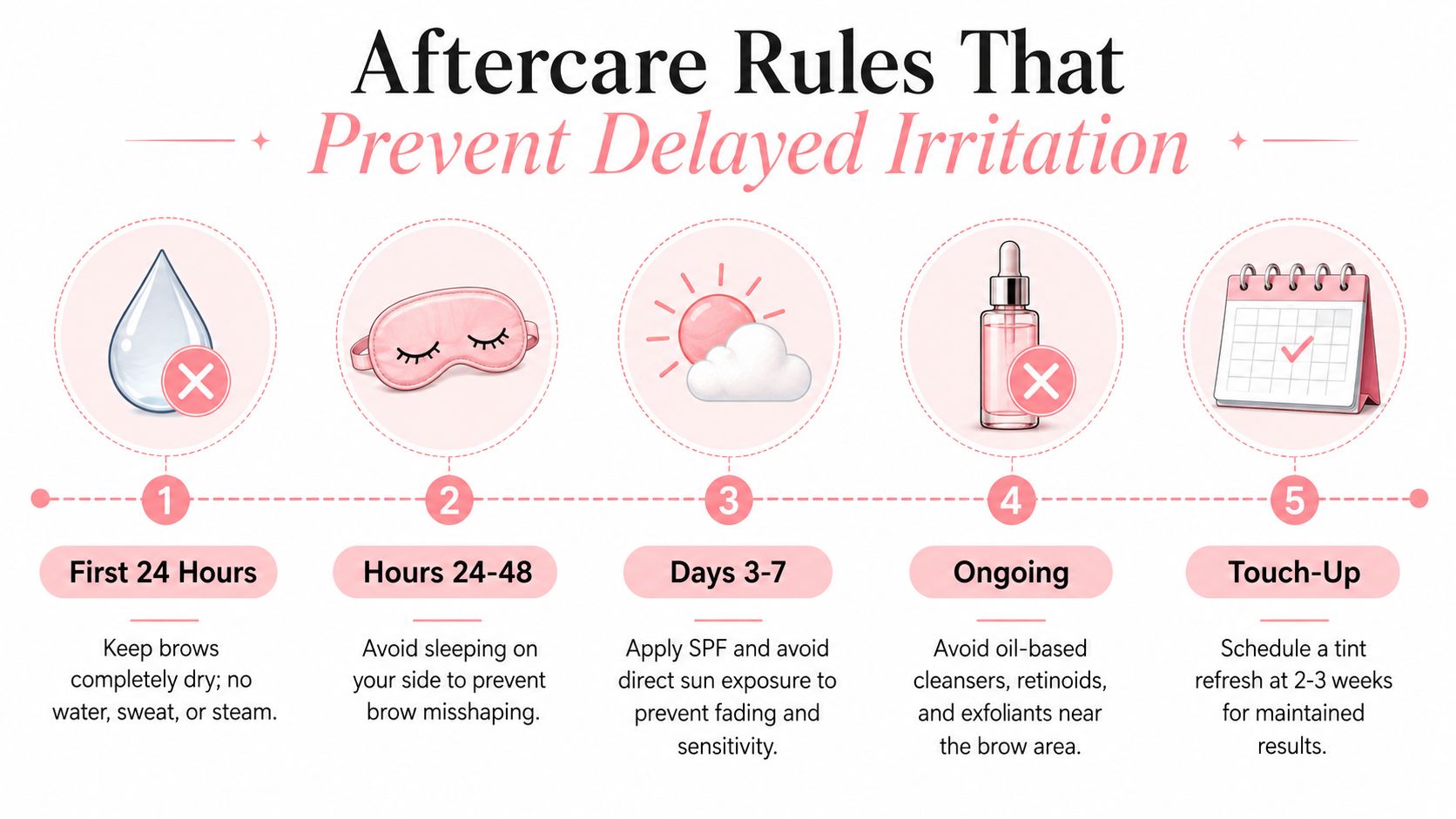
The first day is when clients most often undermine an otherwise careful service. Australian aftercare guidance commonly advises keeping brows dry for 24 hours, avoiding water, steam, swimming, sweat, makeup, and rubbing because moisture can interfere with the setting process Australian brow lamination aftercare advice.
Some Australian providers recommend avoiding wetting the brows and excessive heat or sweating for 10 days, while other guidance recommends avoiding heavy makeup for at least 24 hours and sunbeds for at least 48 hours sensitive-skin brow lamination guidance in Australia. Follow the instructions for the specific system used, particularly if they're more cautious than general advice.
Treat the area gently
Use only the soothing cream, serum, or conditioning product recommended by your technician. Minimal application can help with dryness, scabbing, and itching, but layering oils and active skincare over freshly treated skin can create more problems.
For the early aftercare period:
- Keep moisture away: Avoid showers directed at the brows, steam rooms, saunas, swimming, and heavy sweating during the advised window.
- Avoid friction: Don't rub, scratch, brush aggressively, or press your face into the pillow.
- Pause active skincare: Keep retinol, vitamin C, acids, and exfoliants away from the area until your technician says the skin has settled.
- Protect from heat and sun: Excess heat can worsen sensitivity, so postpone sunbeds and take care in strong Sydney sun.
- Watch the skin: Redness, itching, or dryness that worsens instead of easing deserves a message to the salon and, where appropriate, medical advice.
These aren't arbitrary salon rules. They reduce friction, moisture exposure, and contact with ingredients that may prolong irritation. The brow lamination aftercare guide from Bonna Beauty also provides clients with practical care information for maintaining the treated area.
Can Repeated Brow Lamination Damage Your Brows Over Time
A single carefully performed treatment does not carry the same risk as repeated overprocessing. Each lamination exposes the brow hair and nearby skin to chemical solutions. Corrections booked too soon, or processing left on beyond the technician's recommended time, can leave hairs dry, brittle, and more likely to break.
Many technicians allow six to eight weeks between appointments so the brow hair can grow and the skin barrier can recover. Treat that interval as a professional guide, not an automatic booking schedule. Coarse, weak, unusually dry, or visibly broken hairs need more time before another chemical service.
The long-term trade-off
A brushed-up finish can look polished, but pursuing the strongest lift at every visit can reduce hair condition. Overprocessing may cause temporary damage around the brow area, and possible changes to hair structure or pigmentation are concerns to discuss before continuing treatment. Conservative processing, sufficient recovery time, and conditioning between services provide a safer maintenance approach.
The practical test is the condition of the hair, not whether the calendar says you are due. If the first result looks too flat, do not book a quick correction without an assessment. Ask the original technician to examine the brows and explain the least aggressive option. Sometimes that means adjusting the styling at a later appointment. Other times, a rest period is the better choice for preserving brow strength.
Booking Your Brow Lamination in Sydney
Brow lamination should feel comfortable when a qualified technician assesses your skin, respects processing times, and listens to feedback. Mild tingling can be normal. Burning isn't. You never need to stay silent because you're worried about appearing difficult.
For a Sydney appointment, look for a studio that offers a proper consultation, trained technicians, clear aftercare, and patch testing when appropriate. Ask which lamination system is used, whether tinting or waxing is included, and how the service will be adapted if you have eczema, rosacea, recent retinoid use, or reactive skin.
You can also compare practical options across Bankstown and Yagoona, Roselands and Canterbury, Revesby, and North Parramatta through this guide to brow lamination salons in Sydney. Choose the technician who prioritises healthy skin and brow hair over an aggressively lifted finish.
Bonna Beauty provides brow lamination with consultation, styling, shaping, and optional tinting across its Sydney locations, including Yagoona, Roselands and Canterbury, Revesby, and North Parramatta. If you want a careful assessment before your first chemical brow treatment, visit Bonna Beauty to explore the service and book an appointment.