
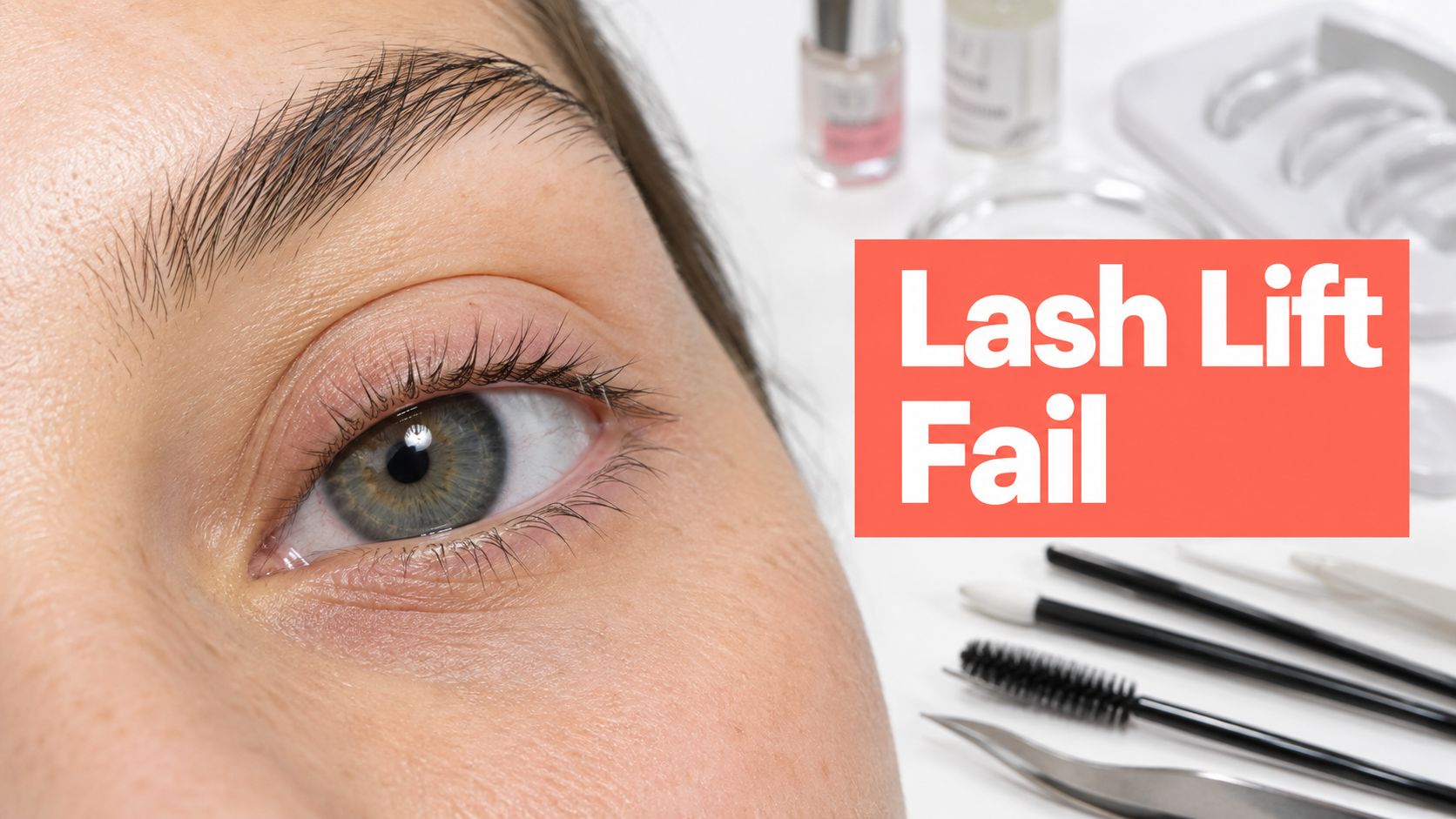
You leave a Sydney salon expecting soft, lifted lashes and instead find one eye sitting higher than the other, a few lashes kinked against your lid, and redness that wasn't there before the appointment. The result looks nothing like the consultation photo, and you're left wondering whether to wash it off, book another treatment, or see a doctor.
A lash lift gone wrong isn't one single problem. An uneven curl is a styling failure. Frizz, breakage, or lash loss points to over-processing. Burning, swelling, discharge, or vision changes raise a health concern. Treating every bad result with another chemical service is how a manageable mistake becomes a serious one.
Use the symptoms to choose the response. Stabilise the area first, identify the likely cause, then decide whether you need patience, a qualified correction, or medical care.
What a Lash Lift Gone Wrong Actually Looks Like
A client at a Sydney studio may notice the problem before leaving the chair. One eye can look polished while the other has a weak or sideways lift. The lashes may point in several directions, cross over one another, or sit so tightly against the eyelid that the result feels uncomfortable rather than open and natural.
Some outcomes are disappointing but mainly cosmetic. Uneven curl, a weak lift, or lashes that remain almost straight usually means the shield, rod, timing, or placement didn't suit the natural lash pattern. Those issues need an assessment, but they don't automatically mean the lashes or eye are injured.
Other signs are different. A hard crimp, frizz, brittle tips, unusual shedding, or visible lash gaps suggests the hair has been over-processed or mechanically stressed. The lash fibre needs time and gentle care. Trying to flatten it with another lift can increase breakage.
The first decision is simple: if the complaint is shape, assess the styling. If the complaint is pain, swelling, burning, or lash loss, treat it as a safety issue.
Redness and watering need closer attention. Mild, short-lived sensitivity can occur after work around the eye, but spreading redness, intense stinging, swelling, discharge, or vision changes aren't normal finishing details. Chemical exposure can irritate the ocular surface, while contamination can create an infection risk.
Australian consumer reporting shows why these symptoms deserve respect. Western Australia's Consumer Protection recorded 112 complaints and 111 enquiries about beauty-industry problems in the previous year, followed by 29 complaints and 28 enquiries already in 2024, with reported problems including poor-quality lash extensions, infections, waxing injuries, and cosmetic tattooing complications (WA Consumer Protection's beauty-treatment report).
The four patterns below make the decision clearer: uneven curl, over-curled crimp, chemical burn, and allergic reaction. Each has a different cause and needs a different response.
The Four Most Common Lash Lift Problems and How to Spot Them
A lash lift changes the structure of the natural lash with chemical processing. The visible result depends on product strength, exposure, shield selection, separation, and the condition of the lashes before treatment. A poor outcome may involve technician technique, client sensitivity, or both.
Uneven curl
One eye may have a neat, open curve while the other has a weak lift or lashes pointing sideways. Individual lashes can also sit at different angles because they weren't separated cleanly before the lotion was applied.
Common causes include a shield that doesn't match the eye, uneven adhesive placement, lashes shifting during processing, or the client opening the eyes while the solutions are active. This is usually a technical or application problem, not an allergy. It needs a professional assessment rather than an immediate repeat treatment.
Over-curled crimp
A crimped result looks sharp, tight, or hooked back towards the eyelid. The tips may touch the skin, and the lashes can appear shorter because the bend is too aggressive. Frizz and a dry, wiry texture often accompany this pattern.
The likely cause is excessive processing, unsuitable solution strength, poor rod tension, or a shield that's too small for the lash length. The lifting lotion has altered more structure than intended. The technician carries the main responsibility, although naturally fine or porous lashes can process quickly and should have been assessed before treatment.
Chemical burn or chemical irritation
Redness, stinging, white-looking lash tips, watering, or sudden shedding is more concerning than a bad curl. Processing lotion that reaches the skin or migrates towards the eye can irritate the eyelid and ocular surface. A product left in contact for too long can also create a burn-like reaction.
A chemical irritation is generally linked to product placement, timing, isolation, or poor control of the service. Don't apply another product to neutralise it yourself. Remove contact lenses if relevant, avoid rubbing, and seek clinical advice when pain or eye symptoms are significant.
Allergic reaction
An allergy commonly presents as itching, puffiness, watering, or swelling around the eyelids. It may appear later rather than immediately, including within 24 to 48 hours, which is why Australian aftercare guidance commonly advises patch testing during that window when the product system requires it (Australian lash-lift and tint guidance).
A delayed reaction can involve product sensitivity rather than poor technique. The technician still has a responsibility to take a proper history, explain patch testing, record products, and stop treatment when a client reports a known sensitivity. A thioglycolate or tint reaction can happen even when the application looks technically neat.
| Problem | Visible sign | Root cause | Who is responsible |
|---|---|---|---|
| Uneven curl | One eye lifts differently, or lashes point in mixed directions | Shield mismatch, movement, poor separation, or uneven application | Usually technician technique, sometimes client movement |
| Over-curled crimp | Tight hooks, frizz, dry texture, or lashes touching the lid | Excessive processing, wrong shield size, or unsuitable strength | Mainly technician assessment and timing |
| Chemical irritation | Burning, redness, watering, white tips, or sudden shedding | Product migration, poor isolation, or excessive exposure | Primarily service protocol, with sensitivity as a contributing factor |
| Allergic reaction | Itching, swelling, watery eyes, or delayed puffiness | Sensitivity to a lifting or tinting ingredient | Client sensitivity and technician screening both matter |
Australian safety reporting has linked lash-related cosmetic procedures with eye-disorder risks and complications such as keratoconjunctivitis, allergic blepharitis, conjunctival erosion, and traction alopecia (CHOICE's eyelash-extension safety information). Those are not cosmetic imperfections. They require a more cautious response.
What to Do in the First 24 to 48 Hours After a Bad Lash Lift
The first two days are for stabilisation, not correction. Don't try to overpower a bad lift with a lash curler, another chemical product, or heavy mascara. The eye area is too delicate for improvisation.
Stop adding stress
Keep your hands away from the lashes. Don't rub, brush aggressively, pull at shedding hairs, or sleep with pressure against the treated eye. Skip mascara, waterproof eye makeup, lash curlers, oil-based removers, steam, and hot water around the eye area.
If residue remains, use a gentle fragrance-free, oil-free micellar solution or sterile saline on clean cotton or a suitable lint-free pad. The aim is to remove surface residue without scrubbing or repeatedly wetting the lashes.
Calm the skin and eyes
A cool compress can help with puffiness. Use it for 10 minutes at a time, then remove it and allow the skin to rest. Don't place ice directly on the eyelid.
Preservative-free artificial tears may soothe a gritty or dry sensation when the eye itself feels irritated. For a tight eyelid, use only a thin layer of an ophthalmologist-approved barrier ointment, and keep products away from the eye unless a clinician has advised you to use them.
The Bonna Beauty lash lift aftercare guide provides treatment-specific guidance on cleansing, makeup, water exposure, and product use. Follow the treating salon's written aftercare as well, but don't let aftercare advice delay medical review when symptoms are worsening.
Know when home care stops
Contact a GP or ophthalmologist promptly for spreading redness, pus or discharge, vision changes, intense pain, blistering, or swelling that continues to increase. Eye symptoms deserve professional assessment, particularly if a chemical may have entered the eye.
Most purely cosmetic styling errors relax as the lashes rehydrate, often within 48 to 72 hours, but that doesn't mean every symptom should be ignored. A weak curl may soften. Burning and vision changes should never be managed by waiting alone.
At-Home Fixes Versus In-Salon Correction
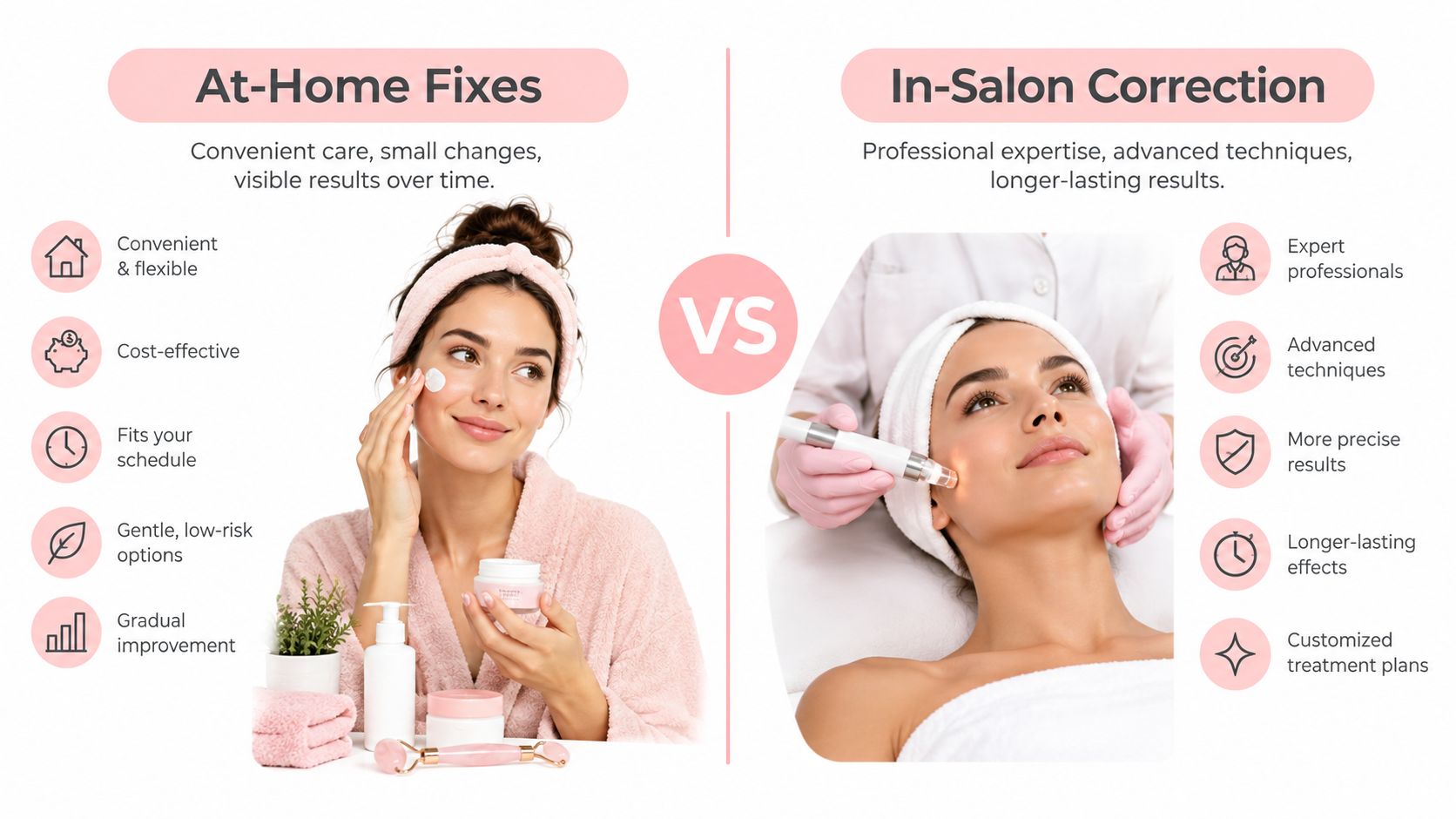
Home care has a narrow role. It can protect the lashes while they recover, but it can't safely reverse a chemical process. The right choice depends on whether you're dealing with shape, structural damage, or an active reaction.
What you can do at home
For dry or mildly frizzy lashes without redness, swelling, or pain, the sensible approach is gentle cleansing and a lash conditioner or serum designed for use around the eye. Use a clean applicator and stop if the product stings. A conditioner can improve feel and flexibility, but it won't restore a lash that has been chemically weakened.
A minor uneven curl may become less obvious as the lash settles. Don't use a home lash lift kit to force the shape into place. DIY reprocessing can create further breakage, uneven exposure, or product contact with the eye.
What needs a technician
A professional correction starts with an assessment, not a promise. The technician should examine lash strength, identify whether the issue is over-processing or poor placement, and decide whether any correction is safe. Depending on the condition, the service may involve gentle cleansing, controlled reshaping, conditioning, or just a recovery plan and a waiting period.
A correction isn't automatically appropriate on the same day. If the lashes are brittle, crossed, or shedding, another chemical service may be the wrong treatment. A responsible technician will refuse to process damaged lashes rather than chase a perfect photograph.
If there is redness, swelling, burning, or lash loss, don't follow a YouTube tutorial. Speak to the treating technician or a clinician.
Home attempts also create practical problems. Further breakage is obvious, but poor hygiene can introduce contamination, and a client may make it harder to establish what the original salon did. Follow-up photographs, the treatment date, product details, and written communication are more useful than experimenting with another kit.
Why Bad Lash Lifts Happen and What Australian Standards Say
A bad lift usually has a technical cause. A shield that is too small can force lashes into a tight, hooked curl. Incomplete separation creates crossed or uneven lashes. Product that spreads too close to the skin or eye can cause irritation, while excessive exposure breaks down the lash structure. Rushed neutralising may leave the curl unstable, and processing already weak lashes can cause brittleness or shedding. A proper consultation should identify these risks before the solutions touch the lashes.
Exposure time is not universal. Lash thickness, product strength, and the manufacturer's directions determine how a system should be used. Expired or poorly stored solutions, mixed product systems, poor ventilation, and rushed removal create avoidable risks. A technician who cannot identify the product system or explain its timing is not giving you a safe service.
Chemical over-processing usually causes dry, weak, kinked, or unusually curly lashes. It does not normally explain marked swelling, spreading redness, pus, or intense ongoing pain. Those signs can indicate an allergy, contamination, or infection and need prompt assessment rather than another cosmetic treatment. Clients with a history of eye sensitivity should read this guide to lash lifts for sensitive eyes before booking and disclose previous reactions during consultation.
Australian consumer reporting has recorded problems involving eyebrow, eyelash, nail, lip, waxing, and hair-removal treatments. In 2020, Western Australian Consumer Protection received 71 complaints and 115 enquiries, followed by 36 complaints and 25 enquiries from 1 January to 30 June 2021. Reported outcomes included chemical burns, infections, allergic reactions, bruising, swelling, scarring, dark spots, and unhygienic conditions (WA beauty and cosmetic treatment warning).
NSW rules are useful for vetting
NSW Health states that beauty-treatment businesses performing skin penetration procedures operate under the Public Health Regulation 2022. Its guidance covers handwashing before and after clients and procedures, after contact with body substances or surroundings, and after removing gloves. It also states that sharps containers must meet AS 23907:2023 and that beauticians cannot supply Schedule 2 products to clients (NSW Health beauty-treatment fact sheet).
A lash lift does not usually penetrate the skin. Local-government guidance still distinguishes ordinary beauty services from procedures such as waxing, because registration and hygiene duties can depend on the treatment offered. Sydney operators in Bankstown, Revesby, Roselands, and North Parramatta should identify which rules apply to their actual services, rather than assume every beauty treatment has the same obligations (Wagga Wagga guidance for beauty salons).
Local councils set notification and registration rules for relevant premises and procedures, including some home-based and mobile operators. The linked registration page is published by Port Macquarie-Hastings Council, so it should not be presented as Penrith City Council evidence. Use it to see how that council describes registration for hair, beauty, or tattoo businesses, then check the council covering the Sydney salon address (registration information from Port Macquarie-Hastings Council).
| Standard or body | What it covers | How to verify |
|---|---|---|
| NSW Health | Hygiene, handwashing, and public-health requirements | Read current guidance and ask about the operator's hygiene process |
| Local council | Notification or registration for relevant premises and procedures | Check the council covering the salon address |
| NSW consumer guidance | Qualifications, experience, cleanliness, and claimed registration | Ask for qualifications and verify AHPRA registration where relevant |
| Australian Consumer Law | Services supplied with due care and skill as promised | Keep messages, receipts, photographs, and aftercare records |
| Product safety controls | Ingredient, handling, and safety information | Ask which system was used and request safety documentation |
Before booking, use the NSW government guidance on beauty and cosmetic services to check qualifications, experience, hygiene, and claimed AHPRA registration. Regulation gives you practical questions to ask before trusting a Sydney operator with your eyes.
How to Prevent a Lash Lift Gone Wrong Next Time
Prevention starts at the consultation, before any product touches your lashes. A technician needs your lift history, tint reactions, eye sensitivities, medications, and natural lash condition to choose safe processing times and the right shield.
Before the appointment
Ask who performs the service and what training they have completed. Review a portfolio that includes short, downward-growing, fine, and uneven lashes, not only easy, uniform examples. Confirm that the salon uses products intended for professional cosmetic use and ask whether its protocol requires a patch test.
For a first treatment or a new product system, arrange patch testing 24 to 48 hours before the appointment when the manufacturer or salon protocol calls for it. A patch test cannot guarantee that no reaction will occur, but skipping it removes an important safety checkpoint. If you are deciding between a lift and extensions, compare lash lift and tint versus extensions before booking.
Ask how the technician selects the shield or rod. Short, long, and downward-angled lashes need different shapes and placement. The technician should explain that choice rather than using the same shield for every client.
During the service
Lashes should be clean, separated, and isolated before processing. Solutions require controlled placement, accurate timing, careful removal, and fresh product handling. Rushed neutralisation or product touching the skin can turn a styling issue into over-processing or irritation. If your eyes sting, water heavily, or feel partly open, speak up immediately and ask the technician to stop and assess the area.
Home-based studios in Yagoona, Canterbury, Revesby, and North Parramatta should be able to explain the local requirements that apply to the services they offer.
After the appointment
Follow the salon's written instructions. Common precautions include avoiding water and steam immediately after treatment, skipping eye makeup and waterproof mascara during the initial aftercare period, avoiding oil-based cleansers, and postponing swimming, saunas, and heavy steam exposure while the lift settles.
Sleep without pressing your face into the pillow on the first night. Do not brush aggressively, pull at the tips, or apply an unapproved serum while the eye area is irritated. These steps reduce friction and prevent another active ingredient from worsening a temporary chemical problem.
Respect the retreatment window
Do not book another lift just because the first result looks uneven. Repeated chemical exposure and over-processing can leave lashes brittle, broken, or distorted. Allow the natural lash cycle to renew, with about 6 to 8 weeks commonly cited in Australian and AU-market lash-care guidance (Australian lash-lift recovery guidance).
Your final checklist should cover clean work surfaces, single-use shields or applicators where appropriate, fresh solution decanted for each client, clear consultation questions, and visible service information. Bonna Beauty offers lash lift and tint treatments with aftercare information across Sydney locations, including Yagoona, Roselands and Canterbury, Revesby, and North Parramatta. Treat it as one option to investigate, then verify the individual technician and protocol.
When to Seek Professional Help and Final Takeaways
Use a three-level decision rule.
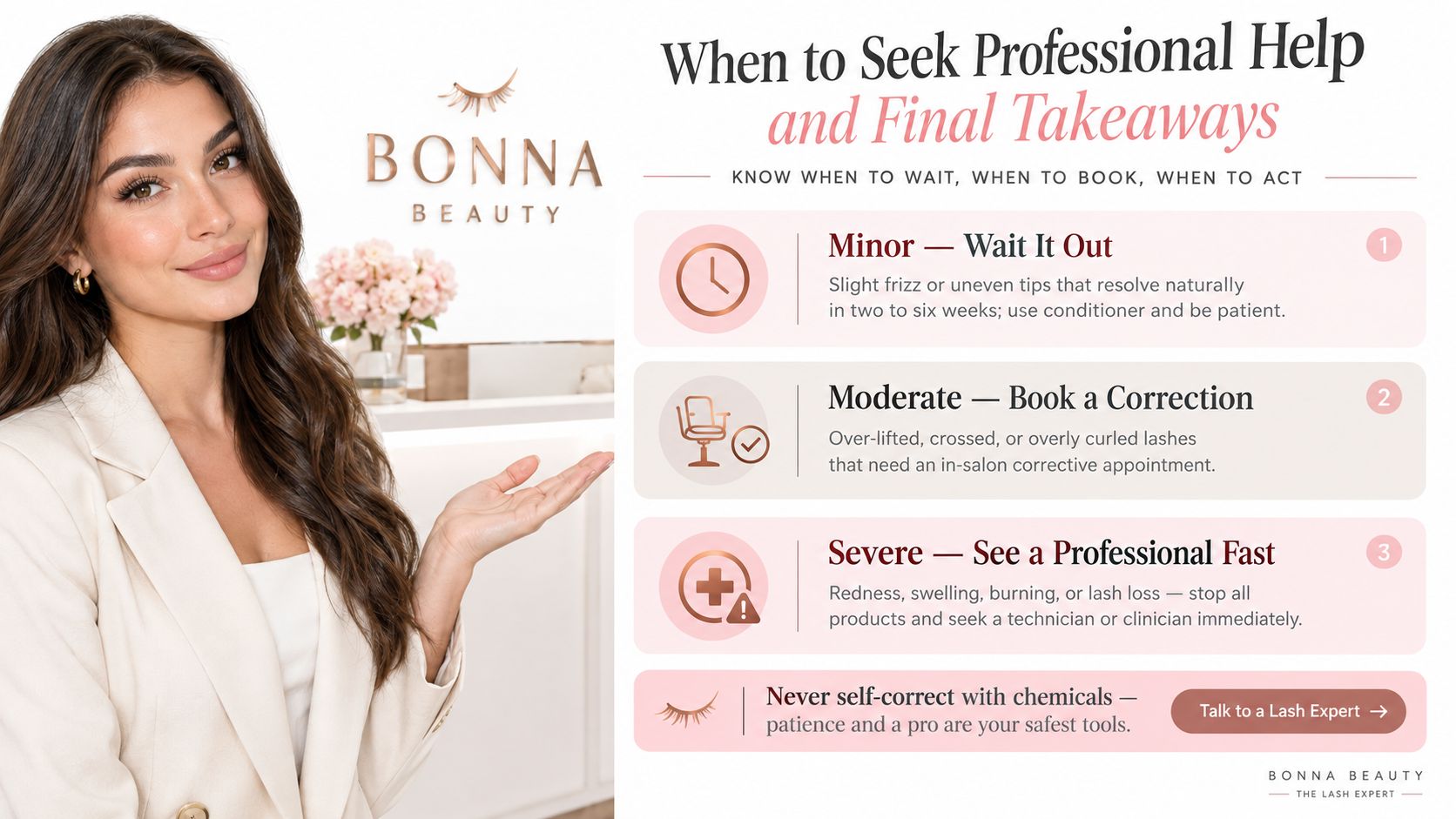
Minor cosmetic issue: slight frizz, uneven tips, or a curl that looks too strong but causes no pain, swelling, redness, or shedding. Stop chemical treatments, use gentle care, and allow the lashes to settle and renew. Some cosmetic irregularities improve over two to six weeks, depending on the condition of the treated lashes.
Moderate styling problem: over-lifted, crossed, sharply crimped, or visibly distorted lashes without active eye symptoms. Contact the original salon, send clear photographs, and arrange an assessment rather than attempting a home correction. A correction appointment may be appropriate within seven days, but only if the technician confirms that the lashes are strong enough to tolerate further work.
Severe or escalating symptoms: swelling, discharge, vision changes, blistering, burning, intense pain, spreading redness, or significant lash loss. Stop all lash products and seek same-day medical advice from a GP or ophthalmologist. Don't wait for a cosmetic appointment to resolve an eye-health problem.
Keep four rules in mind:
- Check the operator: Confirm the technician's qualifications, experience, hygiene process, and relevant NSW council requirements before booking.
- Patch test properly: Allow the recommended 24 to 48 hours for a first-time product or treatment system when the protocol requires it.
- Create a record: Photograph the lash line immediately after the service and keep the receipt, consultation messages, product details, and aftercare instructions.
- Space treatments: Leave at least 6 to 8 weeks between lifts, and wait longer if the lashes remain brittle, sparse, or distorted.
A lash lift is a chemical process, not a harmless styling tweak. Give it the same respect you'd give hair colour or a skin peel. Choose an experienced technician, speak up when your eyes sting, and never use more chemicals to hide damage.
If your lash lift has gone wrong, Bonna Beauty can assess the condition of your natural lashes and explain whether you need aftercare, recovery time, or a professional correction. Visit Bonna Beauty to review lash lift and tint services, aftercare guidance, and Sydney booking options.