
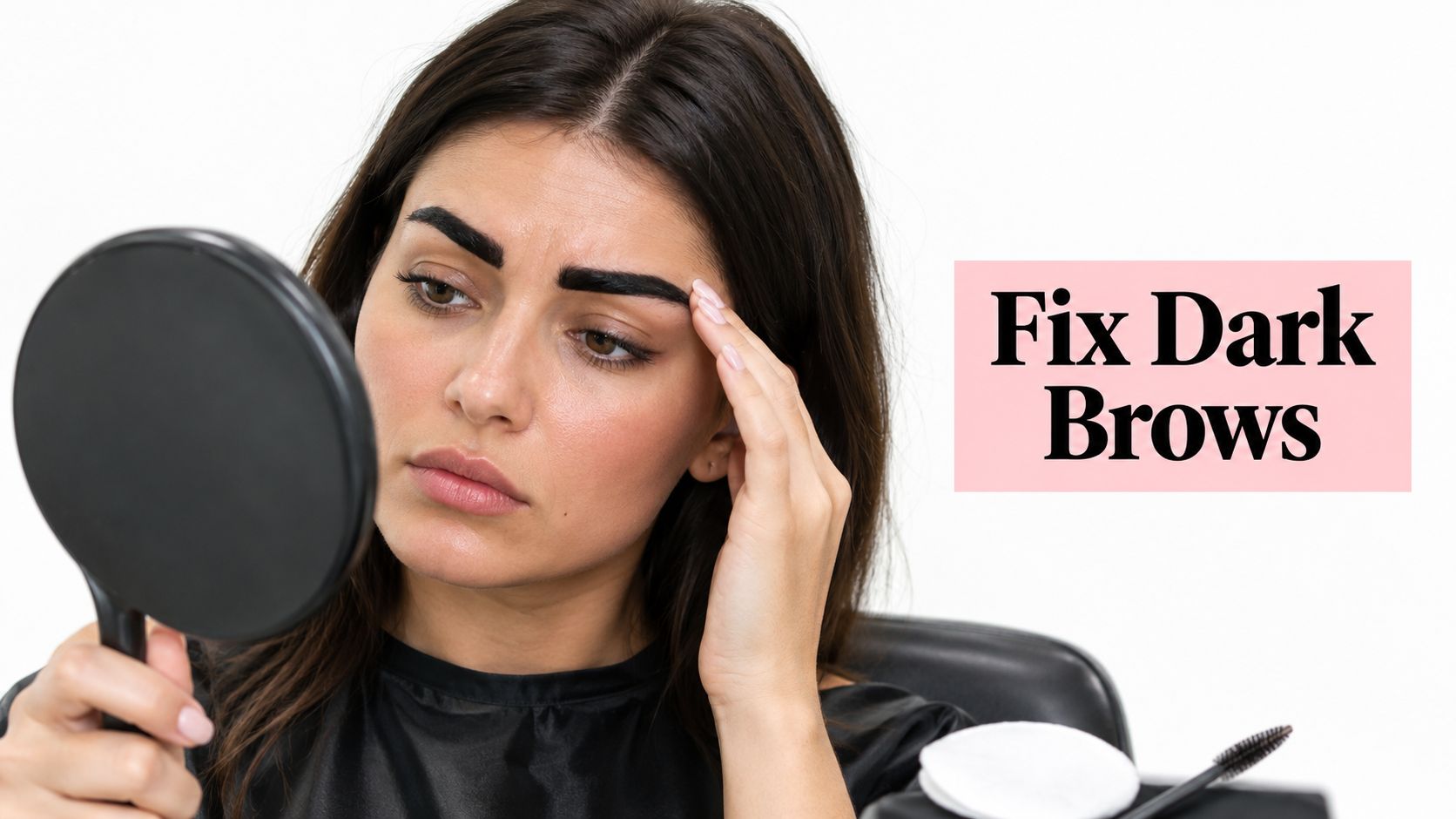
You're leaning towards the salon mirror, or checking your reflection in the car park, and your soft brown brows suddenly look almost black. Before you reach for lemon juice, bleach or a harsh scrub, pause. A brow tint that looks too dark usually involves either colour sitting on the hair shaft, a skin stain around the hairs, or both, and each needs a different response.
Most cosmetic darkness can be managed calmly, but burning, itching, spreading redness or eyelid swelling changes the situation. The safest approach is to identify what you're seeing first, use gentle measures while the colour is fresh, and leave chemical correction to a trained brow technician.
Why Your Brow Tint Ended Up Too Dark
The first useful distinction is between over-deposited hair colour and residual skin stain. Hair colour has bonded to the brow hairs and will soften as the tint sheds and the hairs grow. Skin stain is pigment sitting in the upper layer of the skin, so it generally fades sooner with normal cleansing.
Try a gentle wipe test in good light. Press a cotton pad moistened with micellar water along the skin beside the brow, without scrubbing the hairs. If brown pigment transfers from the skin, some of the intensity is surface staining. If the brow hairs themselves still look deep after the surrounding skin is clean, the main issue is the hair shaft.
Several service details can push a result beyond the intended depth:
- Processing time: Leaving tint on longer increases saturation and can make the stain more persistent.
- Shade selection: A colour chosen several levels deeper than the natural brow may read heavier than expected, especially against lighter skin or hair.
- Skin retention: Oily T-zones, dehydrated patches and recently sensitised skin can absorb or hold colour unevenly.
- Preparation: Waxing, active skincare or irritation can alter how the skin accepts tint.
- Testing: A patch test is a safety step, not merely a formality. Australian product guidance recommends a 48-hour patch test for new clients or new formulas, as outlined in Australian light-brown eyebrow tint guidance.
Practical rule: Clean the skin edge before judging the hair colour. A dark outline can make an otherwise acceptable brow look dramatically heavier.
A tint that reads too dark immediately after removal may also soften as oxidation settles. That doesn't mean you should ignore an uncomfortable reaction, but it does mean a visual mismatch alone usually calls for restraint rather than aggressive correction.
What to Do in the First Hour After You Notice the Darkness
If you're still in the salon, tell the therapist before you stand up and leave. Fresh tint can often be blotted, rinsed and reassessed while the product is still recent. Your technician can inspect whether the colour is concentrated on the skin edge, the hair, or both, then choose a controlled response instead of guessing.
If you've already walked out, keep the first response simple:
- Use a damp cotton round. Moisten it with micellar water and make gentle downward strokes along the brow shape. Stay on the skin edge and avoid rubbing back and forth across the hairs.
- Clean the surrounding skin. An oil-based cleanser can help lift surface pigment. Rinse with cool water and pat dry with a clean towel.
- Check the result in natural light. Bathroom lighting often makes a fresh tint appear harsher than it does outdoors.
- Photograph the brows. A quick front-facing photo gives you a useful record if you need to contact the salon about the result or a developing reaction.
Don't use a harsh makeup remover repeatedly. Vigorous rubbing can irritate the delicate eye area, spread the stain and leave the skin red, making the brow appear even darker.
What not to layer over the colour
Never apply a lighter tint or blonde dye over a darker tint in the same sitting. Mixing oxidative colour systems on an already coloured base can create an unpredictable muddy brown or green-brown result, while exposing the skin and hair to more chemical processing.
Likewise, don't reach for peroxide, bleach or a household colour product. Brow and eyelash colour products are regulated in Australia according to their composition, and the Industrial Chemicals regulator includes hair dyes, hair tints and bleaches among the categories it oversees. Industry guidance also cites a limit of 1.5% or less after mixing for 2-amino-6-chloro-4-nitrophenol in eyebrow and eyelash colouring preparations, as explained in Australian brow tint product guidance.
Doing less during the first hour usually protects you from the bigger problem. Surface pigment may lift with gentle cleansing, while the proper assessment of hair colour is easier once the brow has settled.
DIY Lightening Methods That Actually Work and Ones to Skip
At-home lightening is most reasonable when the problem is a mild skin stain or a little excess colour on the hair. It isn't a licence to strip the brow aggressively. The skin around the eyes is thin, and irritation can turn a cosmetic mismatch into a longer-lasting problem.
For surface stain, start with micellar water on a cotton round. For hair colour, an oil-based cleanser can loosen residue gradually, while a small amount of plain vitamin E oil may soften the feel of the hairs when used sparingly. A gentle clarifying shampoo can be lathered briefly over the brow hairs and rinsed carefully, but keep it away from the eyes and stop if the skin stings.
Mild exfoliation needs more caution. An AHA product may lift some epidermal stain, but the brow area is not the place for repeated or forceful applications. If the skin is red, freshly waxed, broken or uncomfortable, skip acids entirely.
DIY Lightening Methods Compared
| Method | Target | Time to Result | Risk Level |
|---|---|---|---|
| Micellar water on a cotton round | Skin stain | May reduce surface residue during gentle cleansing | Low when kept away from the eyes and used without rubbing |
| Oil-based cleanser | Skin stain and surface hair residue | Gradual softening | Low, provided the product doesn't enter the eyes |
| Plain vitamin E oil | Hair shaft surface residue | Gradual, with repeated gentle use | Low to moderate, depending on skin sensitivity |
| Mild AHA exfoliant | Skin stain | Gradual | Moderate, and unsuitable for irritated or recently waxed skin |
| Gentle clarifying shampoo | Hair shaft residue | Gradual | Moderate, because shampoo can irritate the eye area |
| Lemon juice | Neither safely | Unpredictable | High, because it can sting and irritate sensitised skin |
| Undiluted peroxide or bleach | Hair and skin | Rapid but uncontrolled | High, with risk of irritation, cuticle damage and uneven colour |
| Baking soda scrub | Skin stain | Unreliable | High, because abrasive rubbing can damage delicate skin |
| Toothpaste | Neither reliably | No dependable correction | High, with unnecessary fragrance and abrasive exposure |
Skip lemon juice, undiluted peroxide, baking soda and toothpaste. These methods don't provide the control a brow correction needs, and they can worsen redness, dryness or hair texture.
A useful boundary: If the skin feels hot, itchy, raw or swollen, stop trying to lighten the colour. At that point, the priority is skin safety, not shade adjustment.
If the stain is the only issue, gentle cleansing may be enough. If the hair remains several shades deeper than your target, a technician can assess whether a professional remover is appropriate or whether waiting is the safer option.
How a Professional Brow Tint Correction Really Works
A correction appointment begins with diagnosis, not another colour. The technician checks the hair shaft in clean light, examines the skin stain around the outline and asks what products or services were used during the appointment. That distinction prevents a common mistake, trying to remove hair colour when the actual issue is only a dark skin edge.
Within the first day, a professional may be able to lift some surface pigment with a suitable tint remover, micellar solution or controlled saline swab. The technician works in small areas, protects the eye, reassesses after each pass and avoids turning a minor mismatch into irritated skin.
After the colour has oxidised and settled, the strategy changes. The brow may be softened through gentle cleansing guidance, careful trimming, mapping and reshaping. Removing a few visually dominant hairs can rebalance the face while the remaining tint fades. A full return to the preferred natural depth generally needs patience, often over two to three weeks, because the colour has to shed rather than being aggressively stripped.
| Scenario | Within 24 hours | After 72 hours | Realistic outcome |
|---|---|---|---|
| Dark skin outline with acceptable hair colour | Targeted surface removal may help | Gentle home care and natural fading | Cleaner, softer border |
| Hair shaft is too deep but skin is calm | Controlled professional remover may reduce intensity | Softening, reshaping and waiting are usually safer | Less intensity, not instant virgin colour |
| Uneven colour after irritation | Stop chemical correction and assess the skin | Medical or salon follow-up may be needed | Safety takes priority over shade |
| Client asks for bleach or lightener at home | Not appropriate | Not appropriate | Avoid DIY chemical stripping |
Chemical removers and any bleach-based tint stripping belong in a salon chair, if they're suitable at all. Do not request a home lightening experiment just because the brow looks dark. For general background on how toning and colour adjustment differ from lightening, you can explore toner options at Buy Me Japan, but toner concepts shouldn't be transferred directly to the eye area without professional advice.
If you're looking for a Sydney brow appointment, see brow tint options around Bankstown and ask for a correction assessment rather than booking another tint over the top.
When Too Dark Actually Means an Allergic Reaction
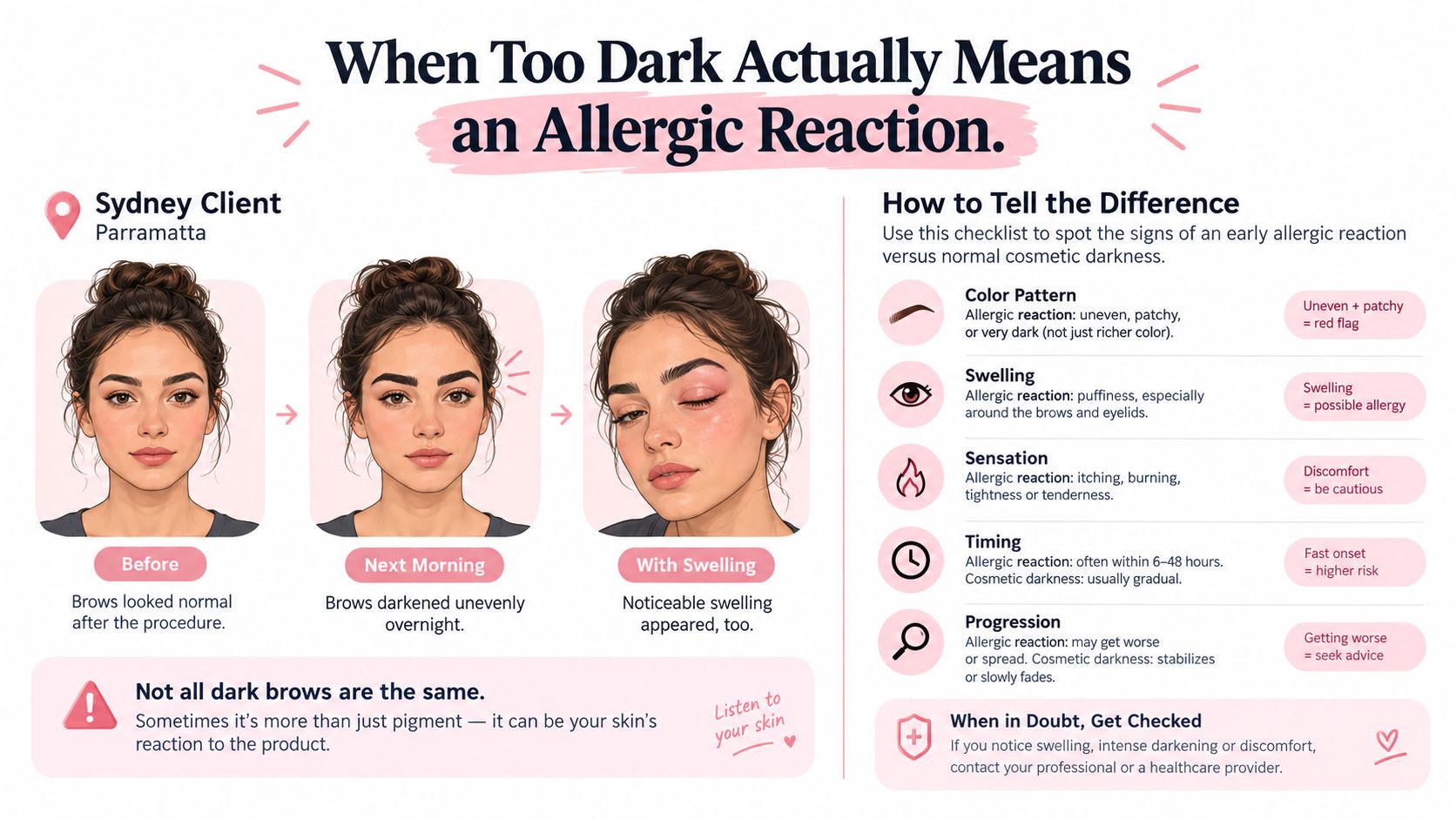
A client in Parramatta may notice one brow looks darker than the other overnight, then see swelling beneath the eye. That pattern needs more attention than a simple colour mismatch, especially if the skin feels itchy, hot or tender.
Cosmetic darkness is usually visual. The colour is too deep, but the skin feels normal and the intensity is reasonably even. A possible sensitivity reaction is more likely when the brow darkens unevenly alongside symptoms such as:
- Persistent burning: Discomfort continues beyond the immediate service period.
- Raised bumps or spreading redness: The affected area extends beyond the original tint outline.
- Itching and tenderness: The sensation becomes stronger rather than settling.
- Eyelid or under-eye swelling: Puffiness appears around the eye, not only along the brow.
- Watering or redness: The eye itself becomes irritated.
- Breathing changes: This requires urgent medical attention.
Australian safety documentation for eyebrow and eyelash tints classifies products as capable of causing eye irritation and an allergic skin reaction. TGA material also identifies 2-chloro-p-phenylenediamine as a strong skin sensitiser associated with symptoms including itchy dermatitis, swollen eyelids, watering, redness and conjunctival chemosis. Choice's explanation of PPD and hair-dye sensitivity provides useful context for why darker oxidative dyes deserve careful handling.
If you suspect a reaction, contact the salon and ask what product was used. Remove residue gently with oil and water if you can do so without getting product into the eye, use a cool compress for swelling and seek medical advice about antihistamines or further treatment. Don't apply exfoliating acids or another remover over inflamed skin.
Take photographs showing the timeline, including the initial colour and any change in swelling or redness. Seek prompt medical review if eyelid swelling worsens, the eye becomes painful, vision changes or breathing becomes difficult. Most dark brows aren't allergic reactions, but symptoms are the deciding factor, not colour alone.
Aftercare in the First 72 Hours to Stop It Getting Worse
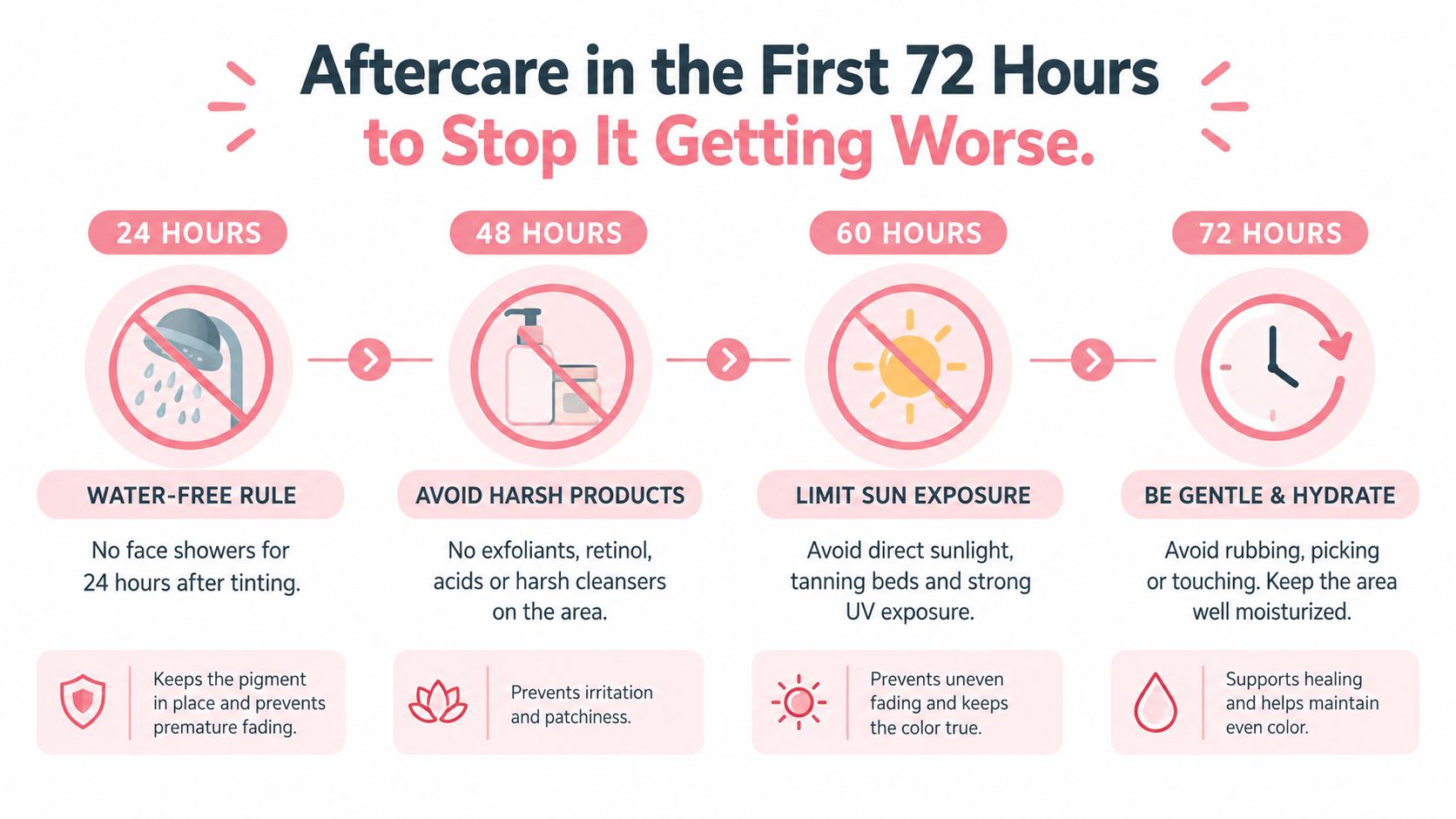
Keep the brows dry for at least 24 hours after the service. Australian salon guidance commonly advises avoiding water, swimming, saunas and intense sweating during that first day because early moisture can make colour fade unevenly or appear harsher than intended. That matters in western Sydney during hot weather, especially if you're heading to a chlorinated pool or exercising soon after a tint.
For the first day, avoid direct showers on the brows, steam rooms, sunbeds, retinol, AHAs, vitamin C, exfoliating cleansers and oil-based removal. These products and activities can disturb fresh colour or irritate skin that has just been exposed to tint. If you need to cleanse your face, work around the brow area and pat nearby skin dry.
A simple day-by-day routine
- Day one: Keep water, steam, sweat and skincare off the brows. If they feel tight, hold a cool, clean cloth nearby without rubbing.
- Day two: Follow your salon's cleansing advice. Use gentle movements and don't exfoliate just because the tint still looks deep.
- Day three: Reassess in daylight. If the skin stain has softened but the hair remains too dark, arrange professional advice rather than adding another chemical product.
Mineral SPF can be applied around the brows once your skin tolerates it, but don't scrub sunscreen into a fresh tint. Food itself doesn't alter the dye, although hot weather, exercise and sweating can carry skincare and salt across the area. A Bondi-style beach day or a western Sydney pool visit is better postponed until the initial aftercare window has passed.
For a practical routine you can keep beside your skincare products, use Bonna Beauty's brow tint aftercare guide. The aim is controlled settling, not forced fading.
Preventing a Brow Tint Too Dark Result Next Time
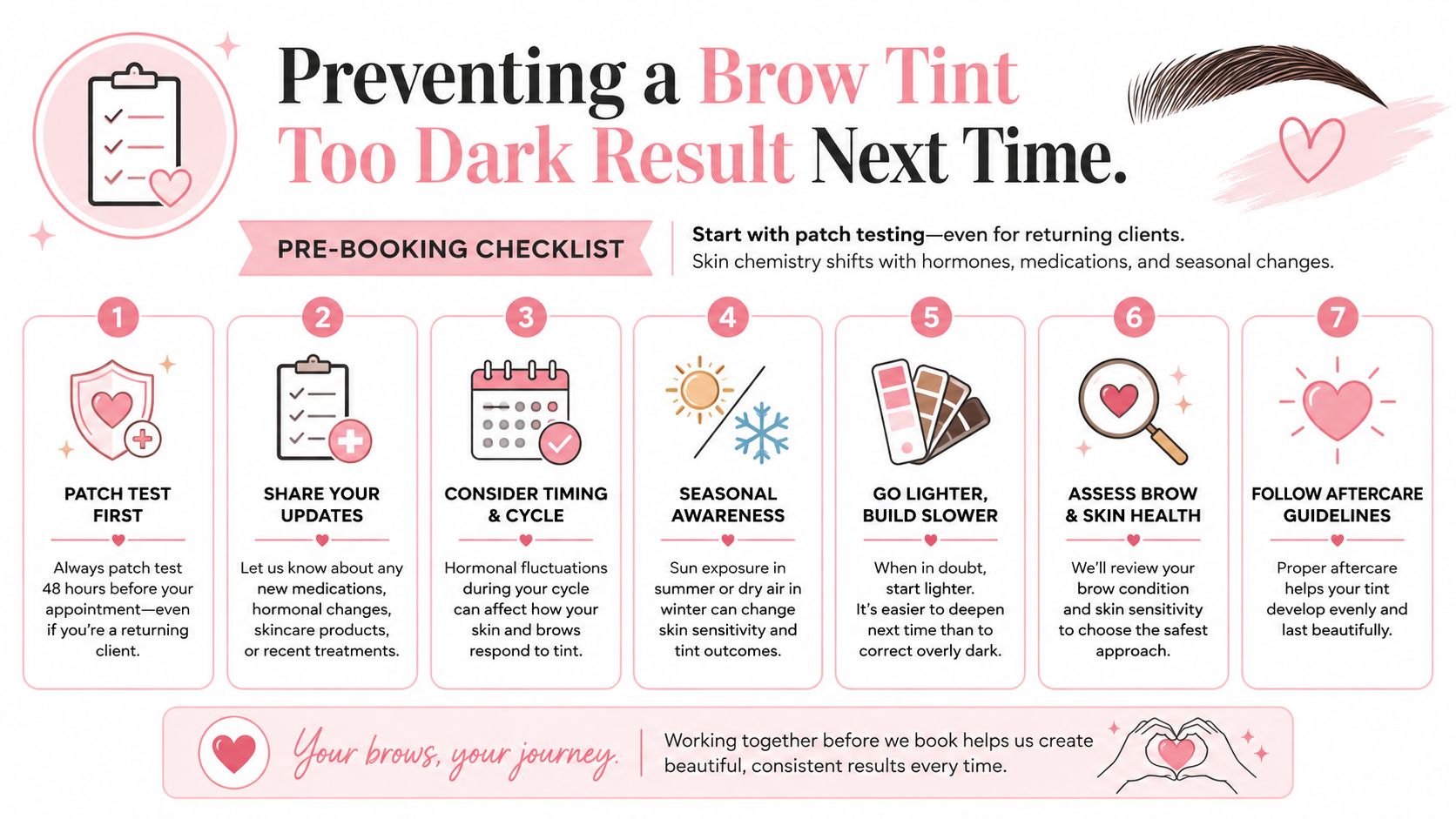
Take a short checklist into your next Sydney booking. Start with a patch test, even if you've tolerated brow tint before. Sensitivity can change with hormones, medication, seasonal skincare and repeated exposure, and Australian product guidance recommends testing before treatment rather than relying on previous history.
Describe the depth in words your technician can use. “Soft taupe”, “natural medium brown” or “visible but not solid” is more helpful than “make it dark but subtle”. Bring two reference photos showing different intensities, but don't use a celebrity image as the standard because you won't know that person's natural brow colour, tint history or lighting.
Decisions that prevent over-deposit
- Choose shade before time: Selecting a lighter shade gives the technician a controlled starting point. Extending dwell time to force a deeper result creates saturation without the same precision.
- Ask about the formula: Confirm the brand, developer and how the colour typically reads on your skin and hair.
- Request a mapping check: Approve the brow outline and front softness before tint is mixed.
- Protect sensitised skin: Avoid booking over irritated or freshly waxed skin. Some Australian product notes advise not tinting brows waxed within the previous 72 hours, as outlined in local salon guidance.
- Plan a review: A follow-up window of seven to ten days gives you time to assess the settled colour before making a small adjustment.
- Discuss active skincare: Tell the technician about retinol, acids, recent sun exposure and any products that have changed your skin's texture.
- Ask for restraint at the front: The inner brow often looks heavier when product is applied too densely, so request a softer transition if that matches your preferred style.
Brow tinting, brow wax and tint, and brow lamination with tint all require shade planning. Ask the technician to show you the intended depth before application, particularly if you're booking in Bankstown, Yagoona, Roselands, Canterbury, Revesby or North Parramatta and want a consistent result across appointments. Bonna Beauty offers brow tinting and related brow shaping services across its Sydney studio locations, so you can raise the “too dark” concern during consultation rather than trying to correct it alone afterwards.
Bonna Beauty provides brow tinting, brow shaping, waxing and lamination with tint across Sydney locations including Yagoona, Roselands, Revesby and North Parramatta, with online booking and aftercare guidance. If your brow tint is too dark or you want a more measured result next time, visit Bonna Beauty and request a consultation that separates skin stain from hair colour before any correction is attempted.