
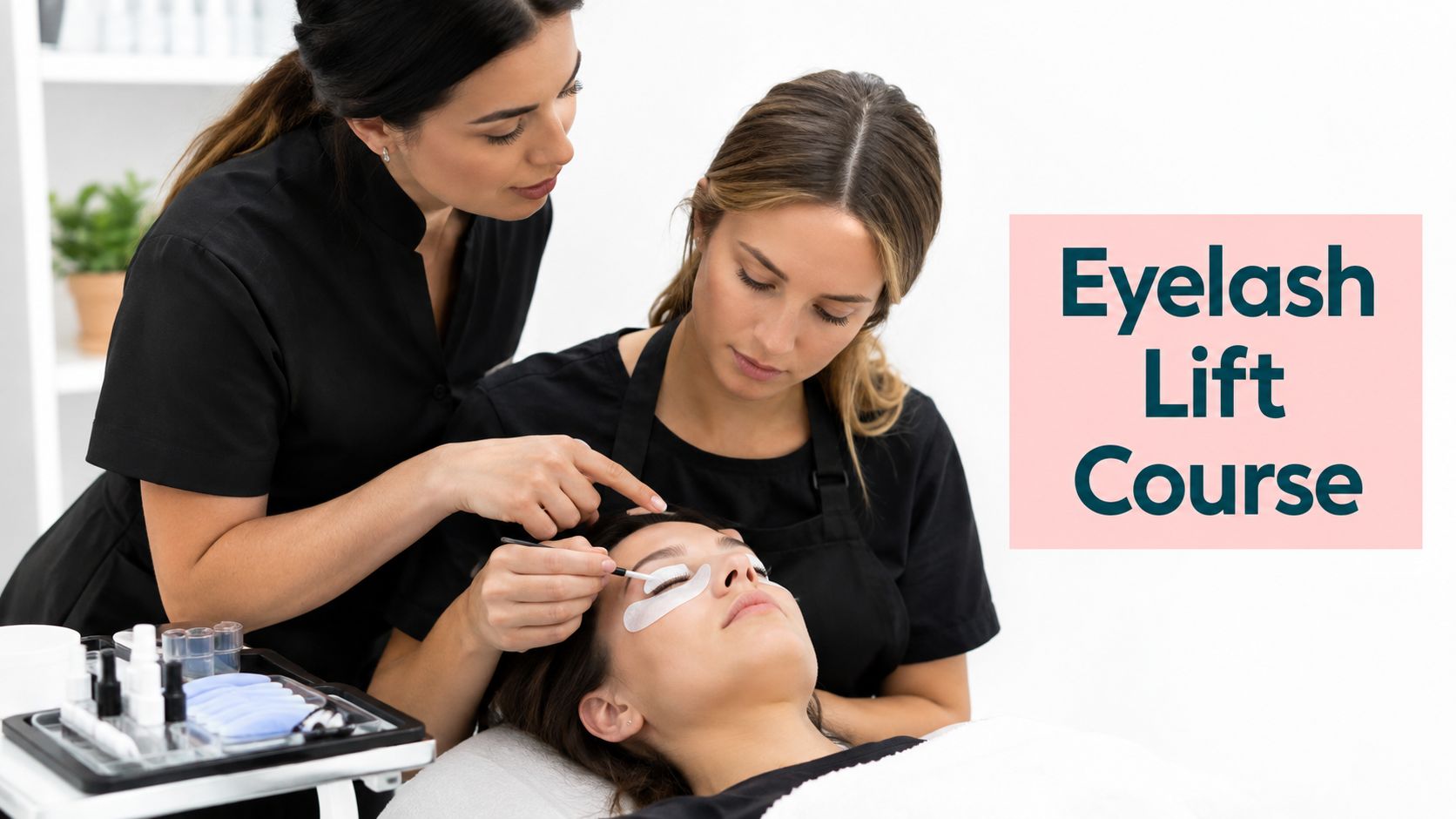
You're in a Sydney café, comparing beauty courses between work shifts, family commitments and the commute from the western suburbs. You want a service clients will understand, a skill you can practise safely, and training that doesn't leave you with a certificate but no confidence at the treatment bed.
An eyelash lifting course can be a practical starting point, but the right choice depends on more than the course fee. You need to compare hands-on practice, model requirements, hygiene education, certification, insurance considerations and the type of beauty career you want to build.
Why an Eyelash Lifting Course in Sydney Is Worth Considering
For a newcomer, lash lifting is easier to understand than many advanced beauty services. You work with the client's natural lashes rather than attaching synthetic fibres, and the treatment uses a focused set of tools, products and consultation steps. That makes it a manageable service to learn before you expand into lash extensions, brow lamination or cosmetic tattooing.
A part-time worker in Parramatta might start by offering lash lifts on selected days. Someone in Hurstville may prefer training close to home, then build a small menu around lash lifting and tinting. The appeal is practical: clients often want a polished result without daily mascara or the maintenance associated with extensions, while the therapist needs a treatment that fits a compact salon setup.
That doesn't mean lash lifting is effortless. Chemical products are used close to the eyes, so product selection, patch testing, contraindication screening, infection control and aftercare are central skills. Australian training materials place those safeguards alongside the treatment technique, not as optional extras. Australian lash-lift training guidance describes the service as a practical treatment commonly taught with live models and highlights the importance of qualified therapists and public liability cover.
A sensible first service
Lash lifting can also help a new therapist learn the habits that apply across beauty work:
- Consultation: Ask about allergies, recent treatments, contact lenses, eye conditions and the client's desired result.
- Preparation: Organise a clean workstation and check products before the client lies down.
- Observation: Assess natural lash length, direction, strength and suitability for the selected shield.
- Aftercare: Explain what the client should avoid and how to maintain the result.
Before paying a deposit, review the practical implications of operating from home or a small studio. This guide to starting a home-based eyelash business in NSW is useful because local council, insurance and development approval questions can affect where you work.
The strongest reason to consider training is not speed alone. It's the chance to begin with one clearly defined service, practise it under supervision and add treatments only when your consultation, hygiene and technical habits are reliable.
What Lash Lifting Is and What the Course Teaches
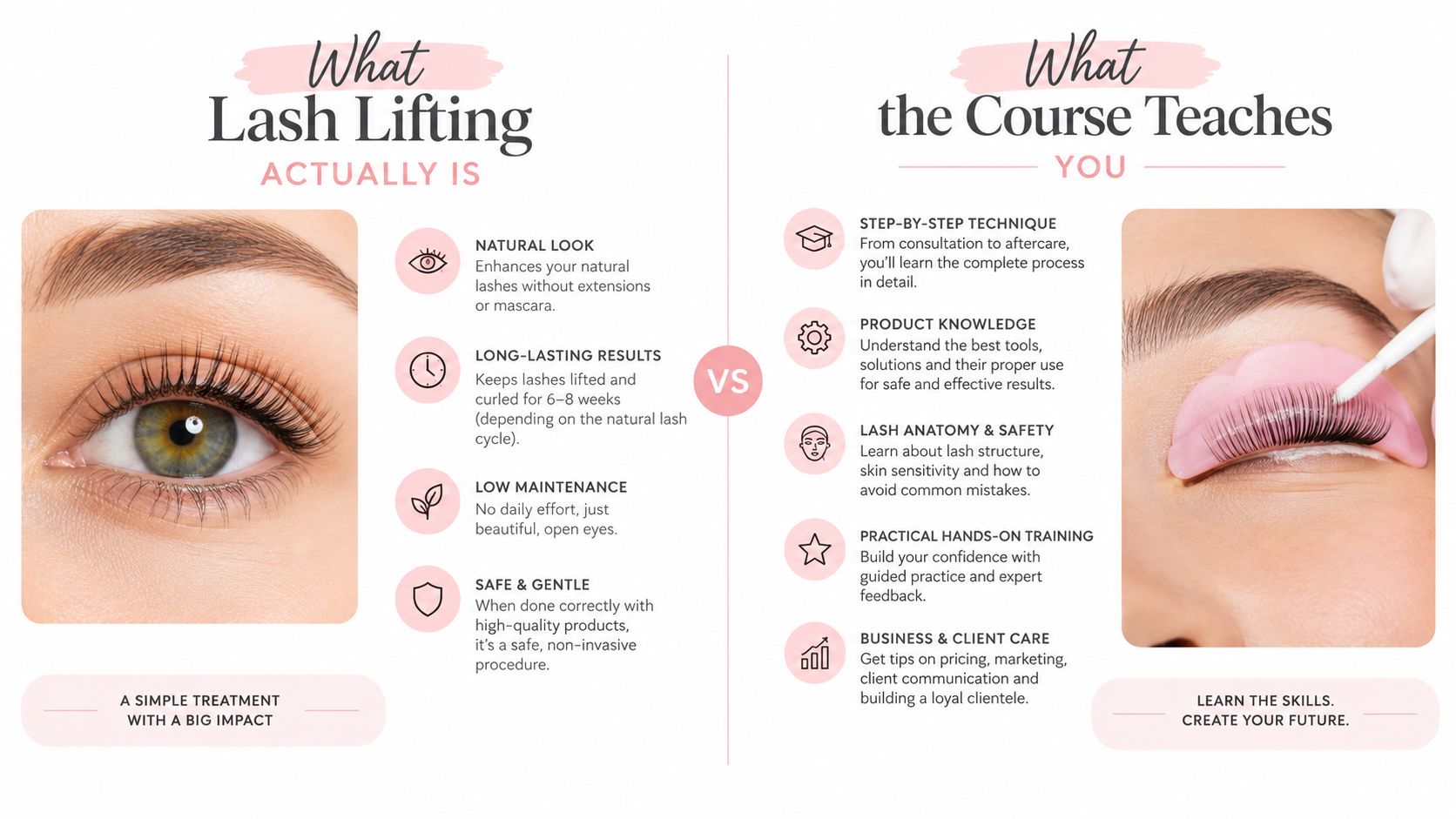
A client arrives wanting brighter, more open-looking eyes, but her natural lashes are pale and point downward. An eyelash lifting course teaches you to assess that starting point, select a suitable shield and create a controlled curl rather than just applying products in sequence.
Lash lifting reshapes natural eyelashes around a silicone shield or rod with lifting and setting solutions. The result is an upward curl that can make lashes appear longer and the eyes more open, without synthetic fibres. Australian course materials commonly describe the result as semi-permanent and lasting about 6 to 8 weeks, as outlined in the Australian Beauty Therapy lash and brow course outline.
The services have different purposes:
- Lash lift: Changes the direction and curl of natural lashes.
- Lash tint: Adds colour, but does not create curl or length.
- Lash extensions: Attach synthetic fibres to natural lashes for added length, fullness or styling.
A tint can accompany a lift, but it is a separate step with its own suitability checks. Pale lashes may benefit from both treatments, while dark lashes may need only curl and separation. Training should help you recommend the appropriate combination instead of automatically bundling services.
What you practise during training
A professional course connects each action with the reason behind it:
- Consultation and screening: Identify contraindications, discuss expectations and record relevant treatment information.
- Shield selection: Match the shield or rod to natural lash length, direction and the desired finish.
- Lash placement: Secure lashes neatly so they lift evenly instead of crossing or sticking together.
- Product control: Apply lifting and setting products accurately, following manufacturer instructions.
- Timing decisions: Recognise that lash condition and product systems vary, so timing must be calculated rather than guessed.
- Tinting and finishing: Apply tint safely when suitable, then remove products thoroughly.
- Aftercare: Explain how to protect the result and when the client should seek advice.
The nationally recognised unit SHBBFAS004 Provide Lash and Brow Services covers lash lifting, tinting, contraindications, infection control, legislation, consultation and aftercare. A private Sydney course may teach the same broad skills in a shorter format, while its certificate and assessment outcome can differ. For a client-friendly explanation before booking, see this Sydney lash lift and tint resource.
Curriculum, Prerequisites, and Model Practice
A Sydney eyelash lifting course should connect knowledge, demonstration, and supervised performance. A manual can describe shield selection, yet practical training shows whether you can isolate lashes, keep the workstation hygienic, and adjust your method when a model's lashes respond differently than expected.
The theory behind a safe treatment
The curriculum should cover lash structure, growth patterns, product chemistry, sanitation, consultation, contraindications, and aftercare. It should also explain when to postpone or decline a treatment, including irritated eyes, unsuitable recent services, or a model who does not meet the provider's conditions.
Australian training commonly aligns with SHBBFAS004 Provide Lash and Brow Services. That unit includes lash lifting, tinting, infection control, legislation, consultation, and aftercare. TAFE NSW provides a useful benchmark by placing students in a simulated commercial salon, where real clients and industry guidance connect classroom knowledge with workplace practice. A private Sydney course may teach the same broad skills in a shorter format, but its certificate and assessment outcome can differ.
| Component | Typical Hours | Focus |
|---|---|---|
| Theory and consultation | Varies by provider | Lash structure, client needs, contraindications and expectations |
| Hygiene and infection control | Varies by provider | Workstation preparation, sanitation and contamination prevention |
| Product and tool knowledge | Varies by provider | Shields, rods, adhesives, lifting solutions, tint and neutraliser |
| Demonstration | Varies by provider | Full treatment sequence and trainer decision-making |
| Supervised model practice | Varies by provider | Lash placement, processing, removal and client communication |
| Assessment and aftercare | Varies by provider | Treatment records, practical review and home-care advice |
Models turn information into skill
Private Sydney providers often ask students to bring or arrange live models. One Australian training provider describes lash-lift education as a 3 to 4 hour practical treatment with 2 to 3 models, while TAFE NSW completes lash and brow treatments on real clients under industry supervision. Compare those approaches through the TAFE NSW beauty course information.
Bonna Beauty Academy's suburban Sydney model can suit beginners seeking focused practice, while an accredited TAFE pathway may provide broader competency assessment. The right choice depends on whether you need a short introduction or a more formal training outcome.
Private introductory courses often have no previous beauty qualification requirement, although age, literacy, health, and model conditions vary. Request the written prerequisites before booking. Your model must be suitable, available for the complete practical session, and willing to follow pre-treatment instructions.
Practical rule: Judge the course by practice, observation, and assessment, not by the manual alone. Ask how many treatments you will perform, who observes you, and what happens if your model becomes unsuitable.
Comparing Duration, Pricing, and Certification Across Sydney Courses
Sydney courses differ sharply in format. A short private workshop may suit a qualified beautician adding one service, while a nationally recognised pathway can provide broader assessment and a unit-level outcome. The key question isn't just, “How quickly can I finish?” It's, “What can I safely and credibly do after I finish?”
Published examples show the range. YUMI Lashes/Brows Training in Sydney lists an intensive 5.5-hour masterclass, with options of $350 for lash lift and tint without a starter kit, $650 with a starter kit, and $850 for lash lift, tint and brow lamination with a starter kit. The listing includes a manual, live models, a professional kit and a certificate of completion. YUMI's Sydney training details provide a concrete benchmark for comparing private course inclusions.
An Elleebana NSW listing gives a different one-day benchmark. It lists a $400 course running from 9:15am to 4:30pm, with a full kit, manual and certificate after successful case-study submission. It also sets specific model restrictions, including pregnancy, breastfeeding, contact lenses, lash extensions and a lash lift within the previous 8 weeks. Review the Elleebana NSW course requirements before assuming any model will qualify.
| Provider Type | Duration | Indicative Price | Certification | Best For |
|---|---|---|---|---|
| Express private workshop | Short practical session | Varies | Certificate of attendance or completion | Students seeking a focused introduction |
| Private academy course | One-day or intensive format | Varies | Provider certificate, sometimes with case studies | Beginners wanting guided practical work |
| TAFE NSW pathway | Course unit or statement pathway | Varies | Statement of attainment or course outcome | Students seeking nationally recognised training |
| RTO pathway aligned to SHBBFAS004 | Broader assessed delivery | Varies | Unit-level statement or qualification component | Students building a wider beauty career |
Course prices and inclusions change, so treat published figures as benchmarks rather than promises. A digital certificate can be useful for organised records and client-facing documentation. Resources explaining verifiable digital certificates with CertSeal are relevant when you want to understand how completion evidence can be checked.
Shorter training trades depth for speed. Accredited options may involve more theory, model practice and formal assessment, while a private course may help an existing beautician add lash lifting to an established service menu. Pick the option that matches your intended scope, current experience and recognition needs.
Enrolment, Kit Inclusions, and What Training Day Looks Like
Starting an eyelash lifting course should feel organised before you arrive. First, choose the Sydney suburb and date that fit your travel plans, review the published training calendar, pay the required deposit and confirm the age, literacy and model requirements. Ask whether the fee includes a kit, whether models are supplied and how post-course assessment works.
A standard student kit may include lifting rods, silicone pads, adhesive or glue, lifting solution, neutraliser, tint, cleanser and aftercare samples. Don't assume every provider includes the same products. Check whether the kit is a practice kit or a complete working kit, and whether product instructions are supplied for the exact system you'll use.
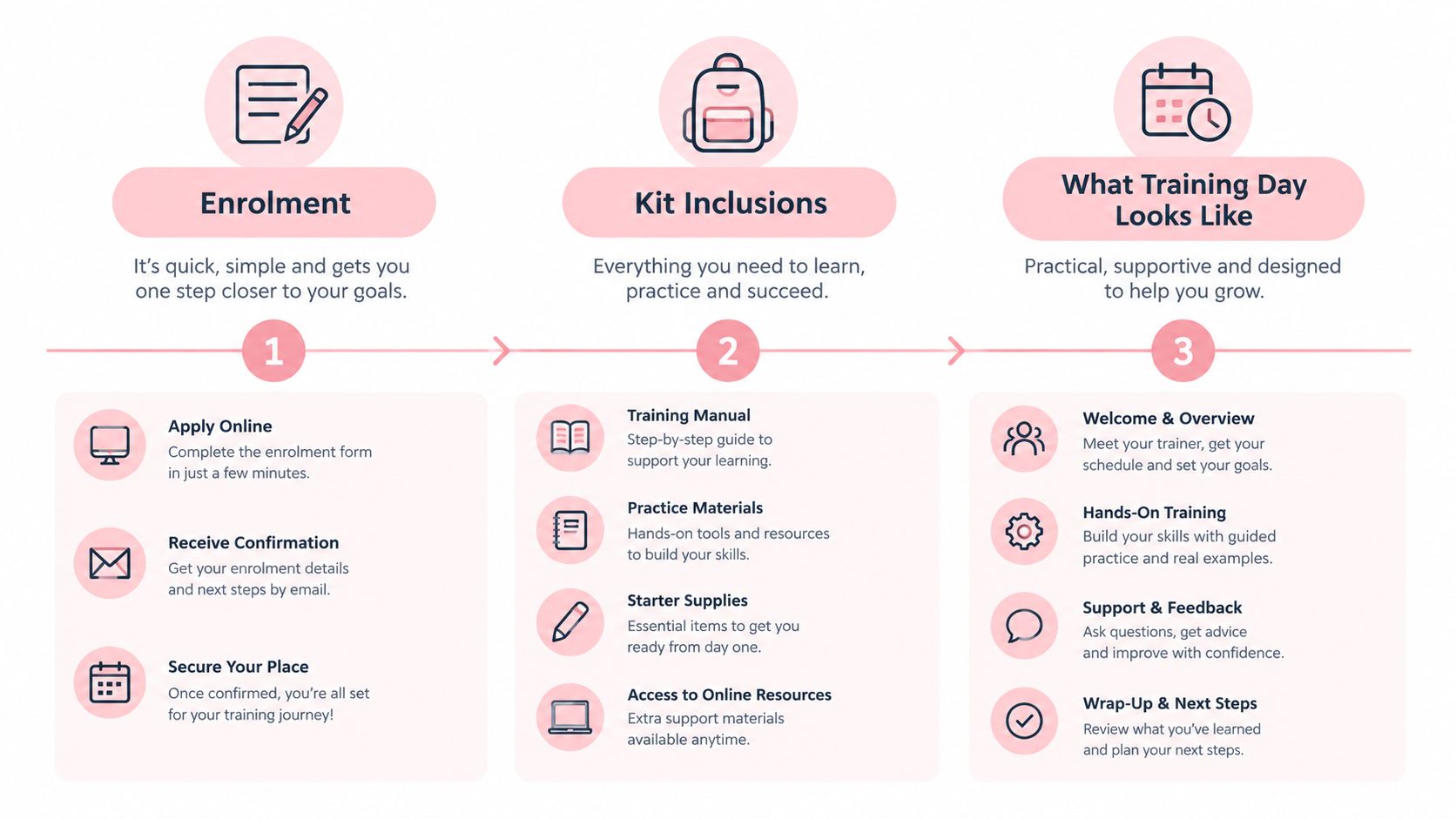
Bring a suitable model if the academy requires one, along with closed-toe shoes, a notebook and any requested identification. Wear practical clothing that allows you to work comfortably around the treatment bed. Your trainer may also ask you to bring model consent forms or arrive early enough to complete consultation paperwork.
A realistic training-day sequence
You'll usually begin with registration, hygiene preparation and a theory briefing. The trainer then demonstrates the consultation, lash assessment, shield placement, product application, removal and aftercare explanation.
Next comes practice on a training surface or silicone before live model work. During the model treatment, the trainer should observe your setup, hand position, product control, timing decisions and communication. After assessment, you'll receive your completion documentation according to the provider's process, plus guidance on practising safely after class.
Why Bonna Beauty Academy Fits Sydney Beginners
A beginner often learns more comfortably when the training environment feels accessible. Bonna Beauty Academy's stated Sydney network includes home-based style studios in Bankstown, Yagoona, Roselands, Canterbury, Revesby and North Parramatta, giving students options outside the CBD. Nearby suburban access can matter if you're travelling from Liverpool, Blacktown, Campbelltown or the Hills District and need to fit training around work or family.
The location is only one consideration. Small-group supervision gives a new student more opportunities to ask why a shield was selected, how a lash was repositioned or when a treatment should be stopped. Those questions are difficult to ask in a crowded workshop where the trainer must divide attention across many participants.
What helps a complete beginner
A course designed for newcomers should explain the procedure in plain English rather than assume previous salon experience. It should also make hygiene visible, from hand preparation and clean tools to product handling and client records.
Look for a learning environment that includes:
- Step-by-step protocols: Each stage should have a clear purpose and a safe order.
- Trainer observation: You should receive feedback while working on a model, not only after packing up.
- Model support: The academy should explain suitability, consent and contingency planning.
- Post-course guidance: You should know where to ask questions when your first independent treatment presents an unfamiliar lash pattern.
Bonna Beauty's academy resources describe training across lash lift, brow lamination, lash extensions and related beauty services, with supervised model work as part of the learning approach. Its academy training and business resources are relevant for students comparing a focused lash service with a broader beauty pathway.
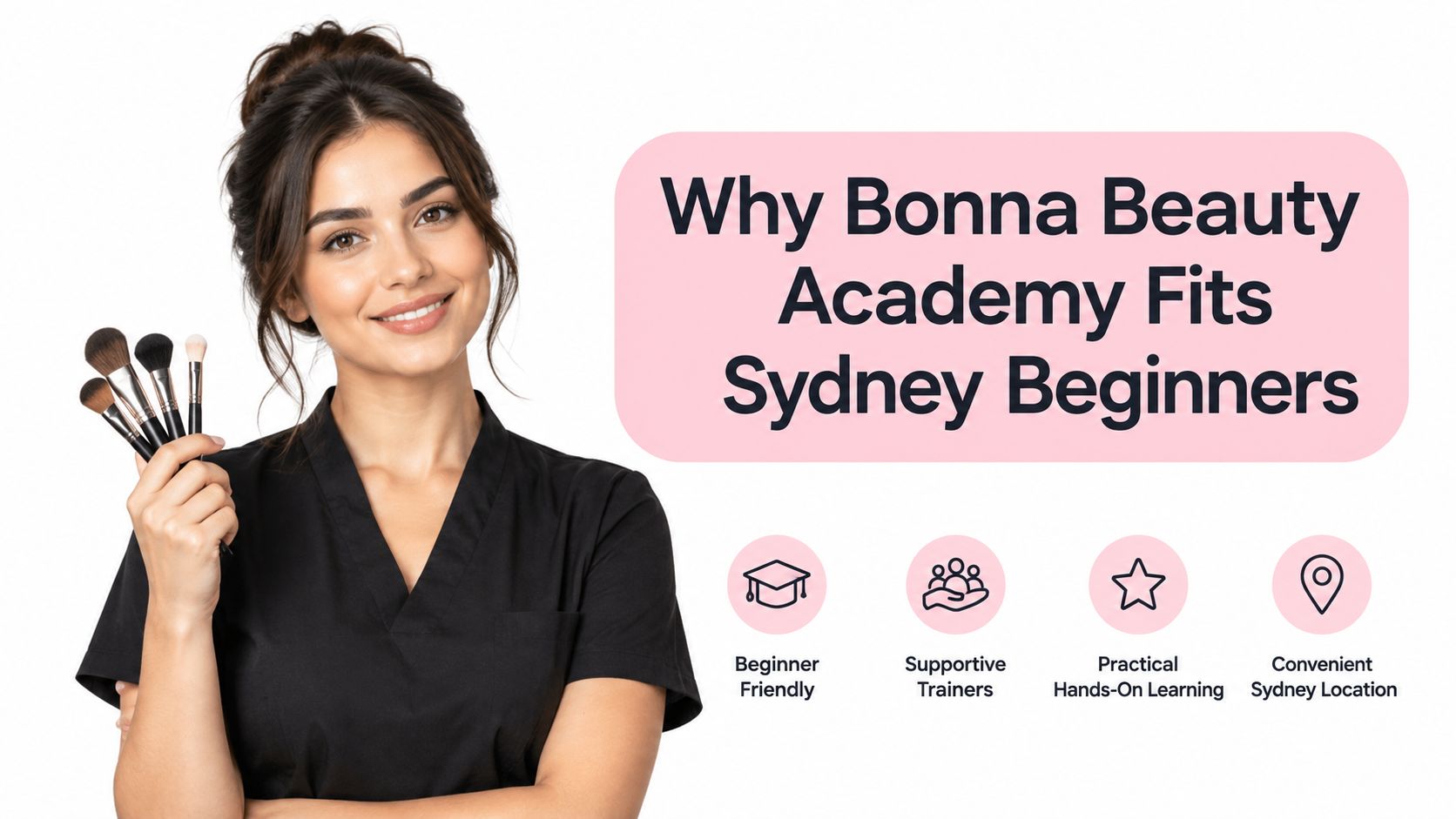
For a Sydney beginner, the practical fit is clear: choose a reachable suburb, confirm the model arrangement, check what the certificate represents and prioritise direct feedback. If you want a local, supervised introduction before expanding your service menu, a suburban academy format is a sensible place to begin.
Choosing Between Bonna Beauty Academy and Other Training Pathways
The right pathway depends on the career you're building. A private academy may suit someone who wants a focused lash service and immediate practical exposure. TAFE NSW or an RTO may suit a student who wants formal units, broader beauty training or a nationally recognised qualification.
The recognition question deserves a direct answer. A certificate of completion from a private academy confirms that you completed that provider's course. A statement of attainment for SHBBFAS004 confirms achievement of a nationally recognised unit when delivered and assessed by the appropriate registered training organisation. Those documents aren't interchangeable, and salons, insurers or future educators may ask for different evidence.
| Factor | Bonna Beauty Academy | TAFE NSW | Private RTO |
|---|---|---|---|
| Delivery style | Focused private academy training | Formal vocational education | Structured vocational delivery |
| Time commitment | Designed for faster service entry | May sit within a broader course structure | Depends on unit and programme |
| Practical focus | Supervised model-based learning | Real clients in a simulated commercial salon | Formal practical assessment |
| Certificate outcome | Provider certificate of completion | Statement or course outcome | Statement of attainment or qualification component |
| Suitable student | Career changer seeking a focused start | Student pursuing broader beauty training | Student needing formal unit recognition |
Cost also needs a wider view. Compare tuition, travel, kit contents, model arrangements, assessment requirements and any future top-up training. Government-subsidised eligibility, where available, depends on the programme and the student's circumstances, so ask the provider rather than assuming a subsidy applies.
Once you've trained, service delivery and client acquisition become separate responsibilities. A new therapist may benefit from learning about salon marketing ideas, then adapting those ideas to local Sydney suburbs, referral relationships and compliant client communication.
Match the pathway to your profile
- Career changer on a deadline: Consider a focused private course, provided you understand its certificate and arrange enough model practice.
- Current beautician upskilling: Choose training that fills a specific gap and complements your existing qualification and insurance arrangements.
- Student building a full qualification: Investigate TAFE NSW or an RTO pathway aligned with SHBBFAS004 and broader beauty units.
Your Next Steps to Enrol in 2026
For a 2026 enrolment, start with the provider's current intake calendar rather than relying on an old social post. Check the minimum age, literacy expectations, model rules, kit inclusions, cancellation terms and certificate outcome before paying a deposit. Some providers may accept younger students, while others set a higher age threshold, so confirm the exact requirement in writing.
Use this checklist:
- Confirm eligibility: Ask about age, basic English literacy, allergies, health considerations and prior training.
- Secure a model: Find someone available for the supervised practical session and check the provider's contraindications.
- Prepare documents: Keep photo identification, enrolment information and previous certificates available if requested.
- Choose the location: Compare Bankstown, Yagoona, Roselands, Revesby, North Parramatta or another published Sydney venue according to travel time and parking.
- Book the date: Use the current schedule, pay the deposit and save the written booking confirmation.
- Plan for changes: Ask what happens if your model cancels, whether the academy can help source a replacement and how cancellation windows operate.
Pack black dress pants, closed-toe shoes, a notebook and lunch unless your confirmation email specifies different requirements. Keep your products and tools in their original packaging, and don't bring an unsuitable model just to avoid losing a training date.
A practical quarterly plan keeps the decision manageable. This quarter, compare pathways, confirm your model and reserve a date. Next quarter, complete training, review your feedback and practise only within your competence. By the following quarter, you can assess whether to introduce the service under your insurance and business arrangements, apply for suitable salon roles or continue towards a broader qualification.
Bonna Beauty offers Sydney-focused lash lift and tint education with practical training resources for students who want to build confidence around natural lash services. Visit Bonna Beauty to review the current academy information, locations and booking options before choosing your eyelash lifting course.