
You've invested in a beautiful set of lash extensions, then notice that a few fans are clumping, the lash line feels itchy, or extensions are shedding sooner than expected. In Sydney's warm, busy salon and bathroom environments, aftercare often becomes the overlooked part of the service. The product you use, how you dispense it, and how you dry your lashes can all influence comfort, cleanliness and the condition of the adhesive bond.
A lash extension cleanser should do more than remove visible makeup. It should support a hygienic routine around the eyes without leaving residue, irritating sensitive skin or introducing contamination through a shared brush, wet nozzle or poorly stored bottle. The safest approach combines a clearly labelled formula with careful handling and a routine suited to your eye health, contact-lens habits and lifestyle.
Why Your Lash Cleanser Choice Changes Everything
A client can leave a Yagoona or Roselands appointment with a soft, defined set, then return with clumping, uneven retention or an irritated lash line. Sydney heat, exercise, makeup residue and rushed cleansing can all affect the result. At refill appointments, the application is not always responsible for early shedding. Daily handling often reveals where the routine has failed.
A lash extension cleanser is an infection-control and maintenance product, not an optional beauty extra. It should remove buildup without leaving a film, irritating the eyelid or encouraging harsh scrubbing. The formula matters, but so do dispensing habits, applicator hygiene and the way the lashes are dried.
Retention starts with clean handling
“Oil-free” is a useful screening point, not a complete assessment. Check the ingredient list, how cleanly the product rinses, the packaging and whether the applicator is kept hygienic. A bottle may be suitable when opened but become contaminated if its nozzle touches wet fingers, lashes or an unclean bathroom surface.
Australian safety benchmarks provide useful context. Eye-area cosmetics should contain no more than 500 colony-forming units of aerobic microorganisms per gram or millilitre. In an ACCC survey of 28 eye cosmetic products_0.pdf), every sample was below the laboratory reporting limit of 10 CFU/g, and no pathogenic organisms were identified. Those findings apply to the tested products at testing, not to every cleanser after repeated handling.
Keep the container closed, keep the nozzle away from the lash line, wash your hands before dispensing, and use a fresh applicator where needed. In practice, these small controls reduce avoidable contamination while limiting friction on the natural lashes. Bonna Beauty's guide to making lash extensions last longer follows the same principle: careful, consistent aftercare protects the work completed during the appointment.
Ingredients to Look For and Avoid in Australian Cleansers
The front label is a starting point, not a complete product assessment. In Australia, cosmetic ingredients must appear on the container or product in descending order by mass or volume for ingredients at or above 1%, followed by lower-concentration ingredients and then colour additives. This gives you a practical way to compare products rather than relying on broad terms such as “gentle” or “hypoallergenic”.
Start with the full ingredient list and the intended use. Look for a cleanser designed for the eye area and lash extensions, with a formula that rinses away cleanly. Then screen for ingredients that match your personal history. Fragrance, preservatives, surfactants and colourants may be tolerated by one client and irritating to another, especially around the eyelids.
| Ingredient Category | Typical Examples | Safety Note |
|---|---|---|
| Surfactants | Foaming cleansing agents | They remove oil and debris, but a strong or poorly tolerated formula may cause dryness or stinging. |
| Fragrance | Parfum or listed fragrance components | Fragrance can be a concern for clients with known sensitivity, so compare the label with your personal triggers. |
| Preservatives | Listed preservation ingredients | Preservatives help protect water-based products, but some people may react to particular ingredients. |
| Colourants | Declared colour additives | Colour isn't necessary for effective cleansing and may matter to clients with known sensitivities. |
| Oils and emollients | Plant oils or richer conditioning ingredients | Don't assume every oil is suitable around extension adhesive. Check the formula and follow your technician's advice. |
Why “hypoallergenic” isn't a guarantee
A product described as hypoallergenic doesn't promise zero reactions. The term has limited practical value unless the formula, testing and intended use are clearly disclosed. A skin patch test also can't rule out irritation on the ocular surface, so burning, swelling, persistent watering or redness should be taken seriously.
Contact-lens wearers need an extra layer of caution. Allergy & Anaphylaxis Australia guidance on allergic conjunctivitis advises washing hands before touching eyes or lenses, removing lenses when discomfort occurs and seeking optometric care if symptoms continue. Remove contact lenses before cleansing if that aligns with your eye-care advice, and don't continue using a product that repeatedly causes discomfort.
Clients in Bankstown, Yagoona, Roselands, Revesby and North Parramatta should also be cautious with imported or decanted products. Reject an unlabelled bottle, retain the original packaging and batch details, and never treat a marketing claim as a medical guarantee. If a new cleanser causes a pattern of adverse reactions among consenting trial users or clients, stop using it and review the formula rather than just telling everyone to tolerate the sensation. For more guidance on distinguishing irritation from other problems, see this Bonna Beauty article on chemical burns and reactions.
Step-by-Step Cleansing Routine for Lasting Extensions
The safest routine is simple, but each action has a purpose. Treat the process like a small infection-control procedure, not a vigorous facial wash. If you have redness, discharge, pain or a suspected eye infection, postpone a lash service and seek medical advice rather than trying to cleanse through the symptoms.
Prepare before the cleanser touches your eyes
Wash your hands thoroughly. Clean hands reduce the chance of transferring bacteria, makeup or bathroom residue to the eyelids and bottle.
Remove contact lenses when appropriate. Follow the advice of your optometrist or health professional, particularly if you have dry eyes, allergy symptoms or previous reactions to cleansing solutions.
Use a clean, dry setup. Keep the cleanser away from the sink splash zone. Dispense liquid into a clean, dry, single-use container, or use a single-use applicator where the product instructions support it.
Protect the original bottle. The nozzle mustn't touch lashes, skin, fingers or a wet brush. Close the container immediately after dispensing.
Clean without tugging
Apply a small amount to the applicator. A soft lash brush or suitable disposable applicator is preferable to fingernails, rough cloths or improvised tools. Don't share cleansing brushes between people.
Work gently through the lash line. Use light movements to loosen oil, makeup and debris. Clean the base and the upper and lower sides of the extensions without scrubbing, twisting or pulling.
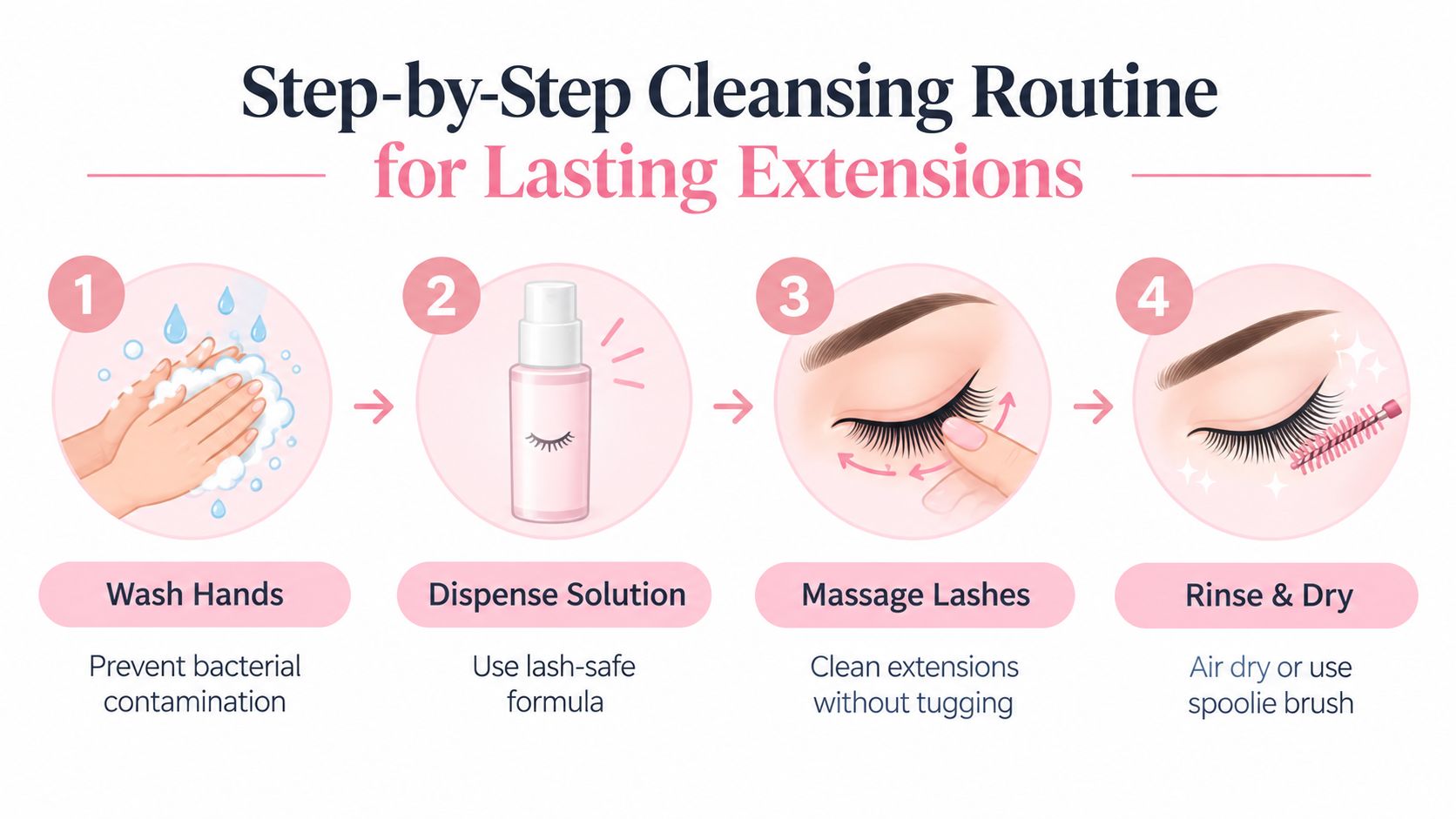
Rinse without contaminating the bottle. Use clean, lukewarm water that's suitable for your household routine, and ensure cleanser residue is removed. Don't pour used rinse water back into the container or reuse it between clients.
Dry the lash line completely. Pat gently with a clean, lint-free material or allow the lashes to air dry as directed by your technician. Once mostly dry, a clean spoolie can help separate the extensions, but it shouldn't be reused while damp or dirty.
Victorian local-government guidance supports single-use dispensing, fit-for-purpose products and aseptic non-touch technique during eyelash services. The same logic is sensible at home and essential in a professional setting. Bonna Beauty's lash-washing routine provides additional practical aftercare guidance for clients maintaining extensions between appointments.
Professional Salon Cleansers vs Drugstore Options
A professional cleanser isn't automatically safer just because it's sold in a salon. The useful difference lies in the details: whether the formula is intended for the eye area, whether it rinses without a heavy film, how the packaging limits contamination and whether the technician can match the product to your extensions and sensitivities.
A carefully selected drugstore product may suit a client on a budget, but the label must be complete and the handling must be disciplined. A cheap product becomes poor value if it causes stinging, leaves residue that prompts rubbing or sits in an unlabelled decant bottle with no batch traceability.
| Feature | Professional Salon Cleanser | Drugstore Alternative |
|---|---|---|
| Intended use | Usually selected for lash-extension aftercare and salon protocols | May be made for general facial cleansing rather than extensions |
| Formula assessment | A technician can review ingredients alongside your lash set and sensitivities | You must assess the label and intended use yourself |
| Packaging | Often supplied with dispensing instructions suited to controlled use | Packaging varies, and pumps or nozzles still require non-touch handling |
| Residue | Chosen for effective rinsing and comfortable aftercare | Some formulas may leave a film or feel drying around the eyes |
| Support | Product use can be demonstrated during a refill or appointment | Instructions may not address extensions or contact-lens routines |
| Cost trade-off | You pay for product suitability and professional guidance | Lower cost may work if the formula and hygiene routine are appropriate |
What I assess in a salon
In a working salon across Canterbury-Bankstown, Roselands, Revesby or North Parramatta, the cleanser is only one part of the system. The technician should use a fresh disposable applicator for each client, keep rinse water client-specific, document cleaning of reusable equipment and discard anything that has become contaminated.
Clients can ask direct questions: Is the ingredient list visible? How is product dispensed? Is the brush single-use? What happens if the nozzle touches the lashes? Clear answers matter more than a premium-looking bottle. Bonna Beauty uses lash-safe aftercare guidance that includes an oil-free foaming cleanser, a soft brush, rinsing and gentle drying, but every client should still check that the routine suits their own eyes.
Troubleshooting Common Cleansing Problems
A lash cleanser problem often shows up as a pattern. Stinging can result from an ingredient, residue on the lash line, product entering the eye or an existing eye condition. Premature fallout may involve application quality, the natural lash cycle, rubbing, makeup removal or aftercare. Changing products without checking these factors can hide the underlying cause.
If the cleanser stings or causes redness
Stop using the cleanser if burning, swelling, persistent watering or redness appears. Remove contact lenses if discomfort is present, rinse in line with appropriate eye-care advice and seek medical assessment if symptoms persist or become severe. A “hypoallergenic” label does not make continued use appropriate during a reaction.
Active conjunctivitis means postponing lash services. It does not call for a stronger cleanser. Healthdirect's conjunctivitis guidance advises washing hands before and after touching the eyes and avoiding shared makeup, towels and face washers because infection can spread. Extensions worn immediately before or during conjunctivitis should be discarded in line with that health guidance.
If residue, clumping or fallout appears
Foam or a sticky film usually indicates incomplete rinsing, an unsuitable formula or excessive product. Rinse the lash line more thoroughly, dry it carefully and ask the technician to assess the set at the next appointment. Do not separate clumps with tweezers or scrape the adhesive.
Fallout needs a wider review. Note whether it followed a new cleanser, heavy makeup, sweating, rubbing, sleeping pressure or a recent refill. Salon records can track complete pre-service cleansing, adhesive-bond failures within 48 hours, reported irritation and suspected conjunctivitis per 100 services. No cleanser-specific Australian success rate has been validated, so these figures are internal observations, not industry benchmarks.
If the bottle or brush seems questionable
Discard a cleanser if its smell, colour or texture changes, or if it starts causing new irritation. Keep the container closed and dry, follow the manufacturer's storage and replacement instructions, and do not pour it into an unlabelled bottle. A damaged or contaminated applicator should not return to the lash line.
As noted earlier, the ACCC survey benchmark describes products at testing. It does not guarantee that an opened bottle stays uncontaminated after repeated bathroom use, wet hands, shared brushes or nozzle contact. Inspect dispensing habits as carefully as the formula itself.
Building a Long-Term Lash Care Routine in Sydney
A reliable routine is more valuable than an expensive product used inconsistently. Cleanse gently according to your technician's advice, rinse thoroughly, dry the lash line and keep every applicator and bottle protected from contamination. Review the label whenever you change products, especially if you wear contact lenses or have allergy-prone or dry eyes.
For clients in Bankstown, Yagoona, Roselands, Canterbury-Bankstown, Revesby and North Parramatta, regular maintenance with a trained technician can identify buildup, irritation and retention problems before they become difficult to correct. A cleanser won't treat infection or guarantee perfect retention, but safe handling and consistent aftercare help protect both the extensions and the natural lashes beneath them.
Bonna Beauty provides eyelash extensions, refills and aftercare guidance across Yagoona, Roselands, Revesby and North Parramatta, with online booking for clients who want their cleanser routine checked alongside their lash set. Visit Bonna Beauty to choose a nearby studio, book a maintenance appointment and receive practical advice suited to your extensions and eye-care needs.