
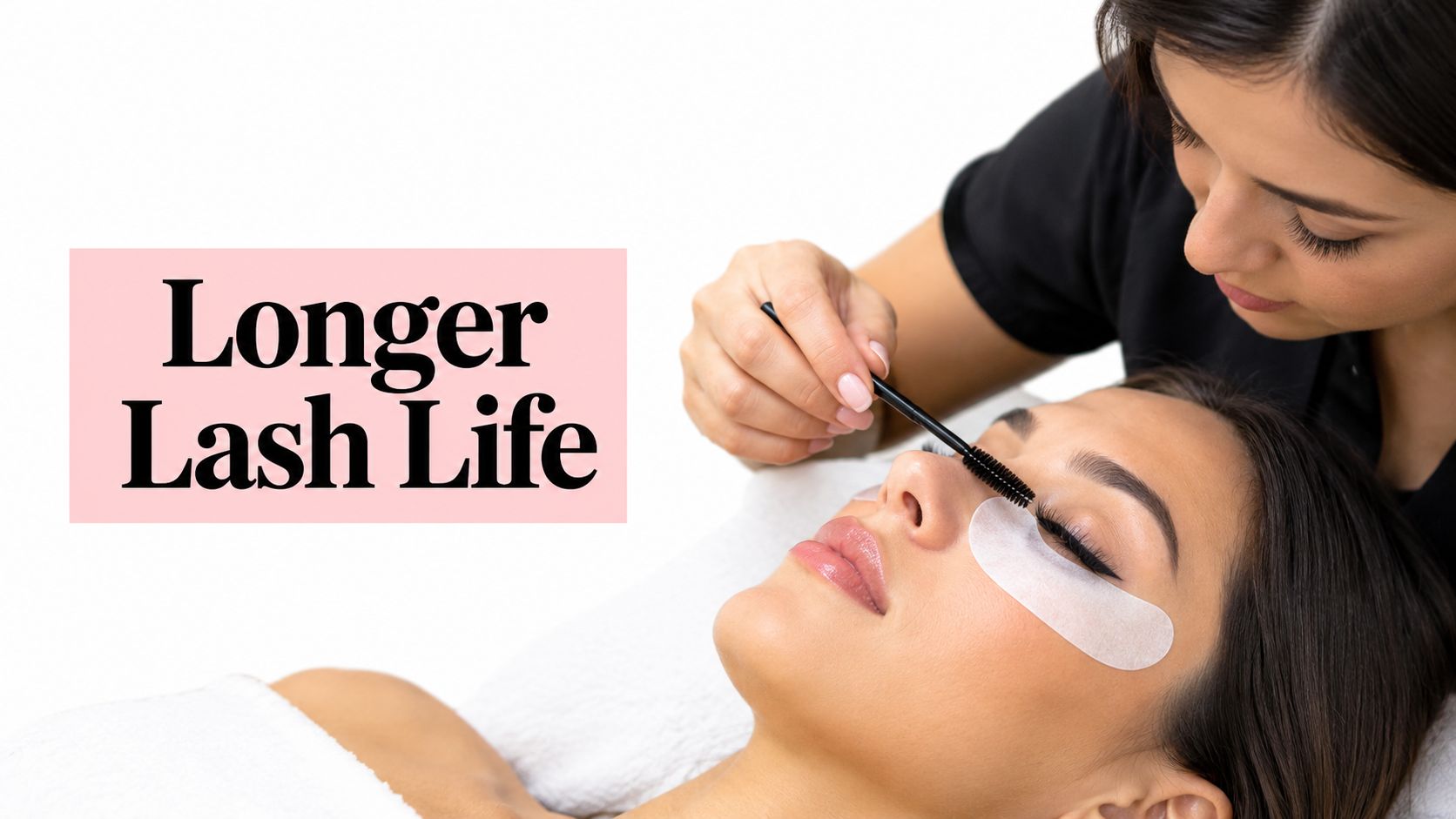
A client leaves a Saturday appointment with a full, soft set and feels perfectly put together. By Wednesday, she notices two extensions on her cheek, a few more on her pillow and a small gap near the outer corner. The immediate thought is usually, “What went wrong with the lashes?”
In Sydney, retention is often decided by ordinary moments rather than dramatic mistakes. It can be the humid walk to the station, oil-heavy sunscreen around the eyes, a quick rub after a dusty commute, or a hot shower taken too soon after an appointment. If you're searching for how to make lash extensions last longer, the honest answer is less about finding a miracle product and more about protecting the bond, cleaning consistently and booking the next infill before the set becomes sparse.
A Train Ride to Bankstown and the Real Lash Retention Question
At 7am, a regular client catches the T3 Bankstown line from Yagoona. Her lashes still look dense after a Saturday appointment, and she's pleased that she can leave home without mascara. By Wednesday morning, she spots two extensions resting on her cheek while checking her reflection in the train window.
That doesn't automatically mean the application failed. Each extension is attached to an individual natural lash, so some shedding is expected. The more useful question is what happened between Saturday and Wednesday. Did she shower with hot steam, apply an oily sunscreen close to the lash line, sleep face-down, rub her eyes after the commute or skip cleansing because she believed water would make the extensions fall out?
As a senior technician, I'd rather ask those practical questions than promise that a particular adhesive or lash style will solve every retention problem. A beautiful set can only stay beautiful when the client protects it at home. Sydney routines create their own challenges, from humid summer air in the western suburbs to salt and wind near Coogee, Bondi and Maroubra. Daily train travel, gym sessions and long days in air-conditioned offices all affect how much sweat, oil and friction reach the lash line.
What actually controls retention
Clients often want a low-maintenance result, but low maintenance doesn't mean no maintenance. It means having a short routine that protects the set without turning lash care into another job.
The most important habits are:
- The first day: Keep the adhesive away from water, steam, sweat, oils and unnecessary touching while the bond cures.
- The daily routine: Remove oil, sweat and debris gently instead of allowing buildup to sit around the lash line.
- The refill timing: Replace shed extensions before gaps become obvious and the remaining set becomes uneven.
- The friction check: Reduce rubbing from pillows, towels, fingers, curlers and makeup removal.
The timing and practical aftercare principles are also reflected in Australian lash retention guidance, which places the emphasis on bond protection and regular maintenance rather than product hacks. The rest of your routine should answer one question: what can you change at the shower, in bed and around week three so the lashes you paid for stay attached for as long as your natural cycle allows?
The 4 to 6 Week Lash Cycle and Why Aftercare Sets the Limit
An extension can't outlast the natural lash it's attached to. Australian salon and supplier guidance commonly describes the natural lash cycle as lasting about 4 to 6 weeks, but the set usually looks full for only 2 to 3 weeks before an infill is needed. You can read the Australian timing explained in this lash lifespan guide.
That distinction matters. A full set doesn't shed all at once because your natural lashes aren't growing and resting in perfect synchronisation. One extension may remain attached for much of the natural lash's cycle, while another falls earlier because the lash beneath it has reached its shedding stage. Aftercare can't stop that biological process. It can, however, prevent avoidable early loss.
Three points where your habits matter
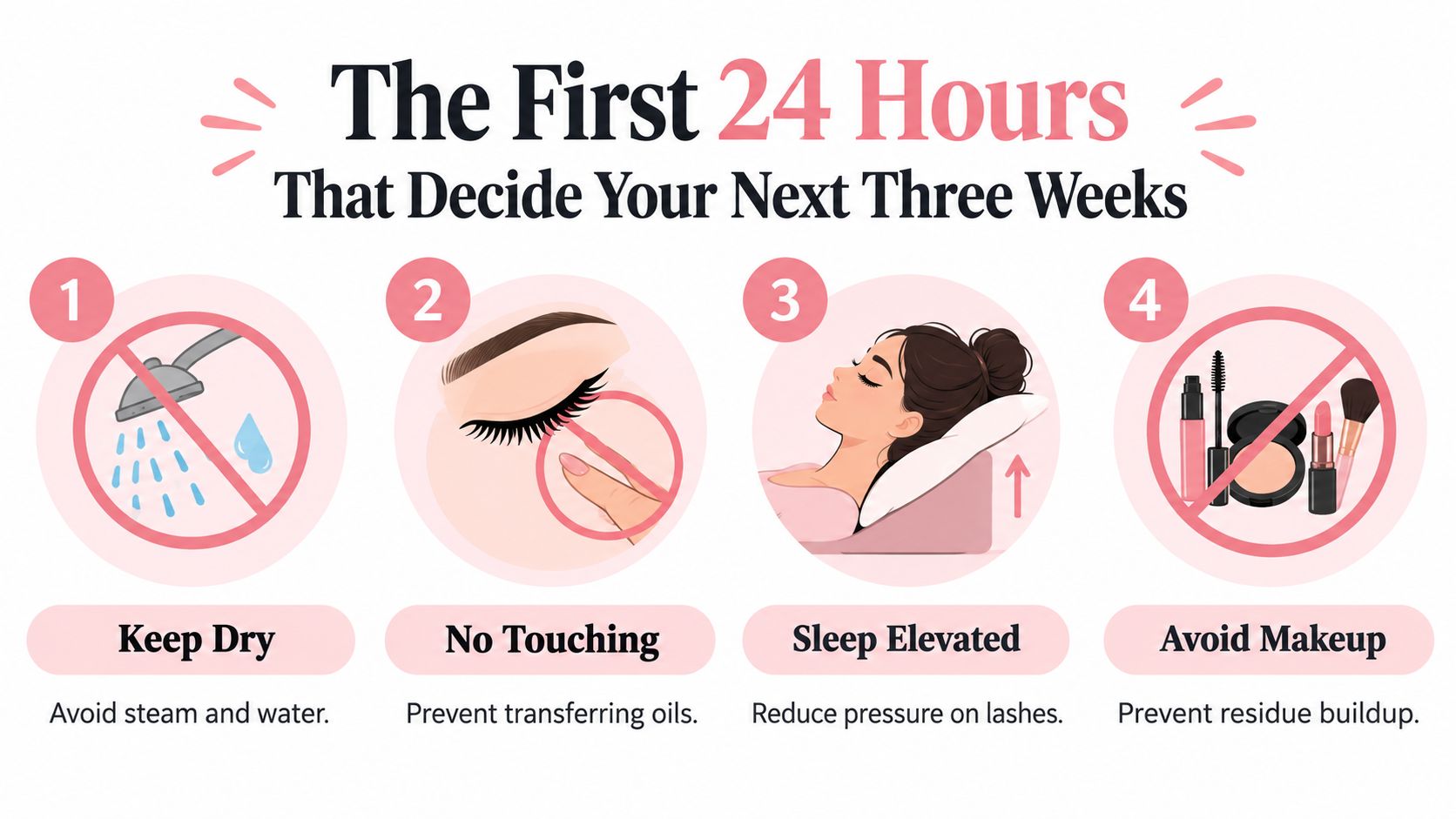
First comes the initial curing period. The first 24 hours deserve the most discipline. Water, shower steam, sweat and heat can interfere with a bond that hasn't fully settled. Oil, rubbing and makeup residue can also disturb the attachment before it has had time to become stable.
Next is daily cleansing. Once the first 24 hours have passed, keeping the lash line clean is more protective than avoiding washing altogether. Sweat, sebaceous secretions, makeup and debris collect at the base of the extensions. A lash-safe, oil-free foam cleanser removes that buildup without the aggressive rubbing that causes mechanical shedding.
The third point is the refill window. Australian aftercare advice commonly places infills within 2 to 4 weeks, with many clients maintaining a fuller result on a 2 to 3 week cycle. The earlier appointment doesn't make natural lashes grow faster. It just replaces shed extensions before gaps become pronounced.
The practical ceiling: Good aftercare helps your set reach the healthier end of its natural retention window. It can't suspend the lash cycle.
The First 24 Hours That Decide Your Next Three Weeks
The first day is when being careful pays off most. You don't need to panic if a little coastal fog reaches your face on the way to work, but you should avoid deliberately exposing the lashes to moisture, heat, sweat and oils.
Follow the appointment-day rules
Keep water and steam away. Skip a hot shower directed at your face, sauna, facial steam, swimming and heavy exercise for the first 24 hours. A steamy Yagoona kitchen while you're cooking, post-yoga perspiration and a humid night with the car windows down all create more exposure than a calm indoor day.
Avoid makeup on the eye area. Mascara, eyeliner, eyeshadow and waterproof formulas leave residue that's difficult to remove without pulling. Eyelash curlers are especially unhelpful because they press and grip the extensions before the bond has settled.
Leave the lashes alone. Fingers carry oil and create direct mechanical pressure. Don't pick at an extension that feels unusual, twist a fan into place or rub an itchy corner. If something feels persistently irritating, contact your technician rather than trying to correct it yourself.
Keep oil-based products away. Oil-based sunscreen, rich eye cream, makeup remover and some micellar formulas can compromise adhesive performance. For the first day, choose an oil-free, water-based alternative around the eyes, and keep the rest of your skincare away from the lash line.
Protect the first night. Back sleeping is the gentlest option because it reduces pillow contact. A clean silk or satin pillowcase can also reduce drag if you move during sleep, although it won't make stomach sleeping harmless.
The complete lash aftercare instructions from Bonna Beauty reinforce the same priorities. You're protecting the bond from moisture and friction first, then building a cleaning routine once the initial period has passed.
By the next morning, the goal isn't to keep the lashes untouched forever. It's to start caring for them properly. The first night influences whether week two still looks balanced or whether one side begins showing gaps before you've had a chance to enjoy the set.
A Daily Lash Routine That Actually Fits a Sydney Morning
A retention-friendly routine should fit between getting dressed and leaving for work. It doesn't need a shelf full of specialist products.
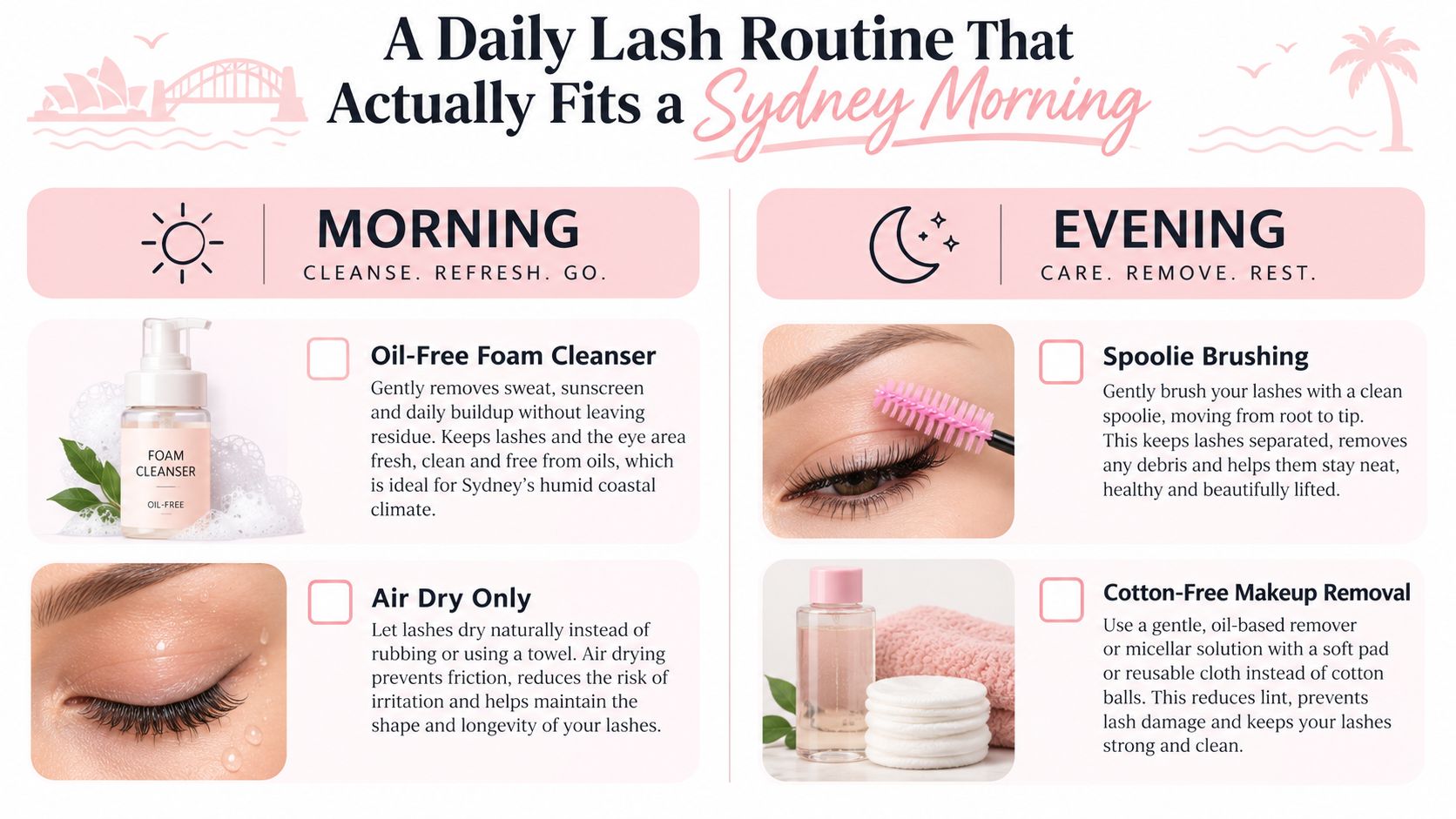
In the morning, wet the lash line with lukewarm water and use a small amount of oil-free foam cleanser. Work it gently through the base of the extensions with clean fingers or a soft lash cleansing brush. Rinse thoroughly, then let the lashes air dry or pat around the eye area without dragging a towel across the fibres.
Once they're dry, use a clean spoolie to brush from the inner corner towards the outer corner. Brush lightly, supporting the base rather than forcing tangled extensions apart. If you train regularly at a gym in Bondi or Maroubra, ask your technician whether a water-based lash sealant suits your set and routine. It should complement proper cleansing, not replace it.
Two habits that earn their place
The first essential step is regular cleansing. Australian guidance ranges from daily washing to cleansing at least every two to three days, with daily cleansing particularly sensible for clients who exercise, wear makeup or live in a humid coastal area. A dedicated foam cleanser is usually easier to rinse from the lash line than micellar water, especially when oily skin and makeup residue are involved. The lash extension cleanser guide explains why a lash-safe, oil-free formula belongs in the routine.
The second is removing products without friction. In the evening, cleanse before applying retinol, vitamin A products or richer skincare elsewhere on the face. Don't let an oil-based remover sit on the extensions while you work around the eye. Use a cotton-free method where possible, because fibres can catch on fans and encourage unnecessary picking during removal.
For clients who want to support the appearance of their natural lashes between appointments, a product such as find Ecrinal gel online may be worth discussing with a professional. Keep any serum or gel off the adhesive bond unless the manufacturer and your technician confirm that it's suitable for extensions.
Before bed, brush only when the lashes are dry and check that your pillowcase is clean. Back sleeping is ideal, but a consistent side sleeper can still improve retention by reducing contact and avoiding a pillow that catches the outer corners.
Why More Cleaning and Earlier Refills Beat Babying Your Lashes
“Don't touch them and don't wash them” sounds protective, but it creates a problem. Oil, dead skin, sweat, makeup fallout and environmental debris remain at the lash line, where they can make the set look dull and encourage premature shedding. Clean lashes aren't neglected lashes. They're maintained lashes.
Clients in Hurstville and Parramatta may have different routines, but the issue is familiar. A long commute, an afternoon workout and sunscreen reapplied during the day can leave more residue around the eyes than a client expects. Gentle cleansing removes that mixture before it becomes a stubborn layer that requires stronger rubbing later.
The refill decision
Waiting until the set looks very sparse usually creates a harder appointment. More natural lashes have shed, the remaining extensions may be at different stages of growth, and the lash line can look uneven. Australian maintenance guidance commonly recommends a 2 to 3 week cycle, while some salons use around 40% of the original set remaining as a refill trigger. Those benchmarks are discussed in Australian aftercare advice for extensions.
A refill isn't an attempt to override biology. It's a way to replace what has naturally gone and preserve a balanced appearance before the gaps become obvious. Stretching the appointment may suit a client who accepts a lighter look, but it won't make the original set last longer.
| Habit or belief | Common assumption | Real effect on retention |
|---|---|---|
| Avoid washing | Water is always the enemy | After the first 24 hours, gentle cleansing helps remove oil, sweat and debris |
| Wait as long as possible for an infill | Delaying appointments saves the set | Waiting can leave more visible gaps and require more replacement work |
| Use rich eye products | Moisture keeps the area comfortable | Oil-heavy products can weaken adhesive performance |
| Touch less but clean less | Minimal handling is enough | Less rubbing helps, but neglected buildup can create another retention problem |
Gentler handling still matters for a delicate natural lash, a post-lift client or hand-tied volume work. The point isn't to scrub harder. It's to clean consistently, dry without friction and maintain the set before it becomes compromised.
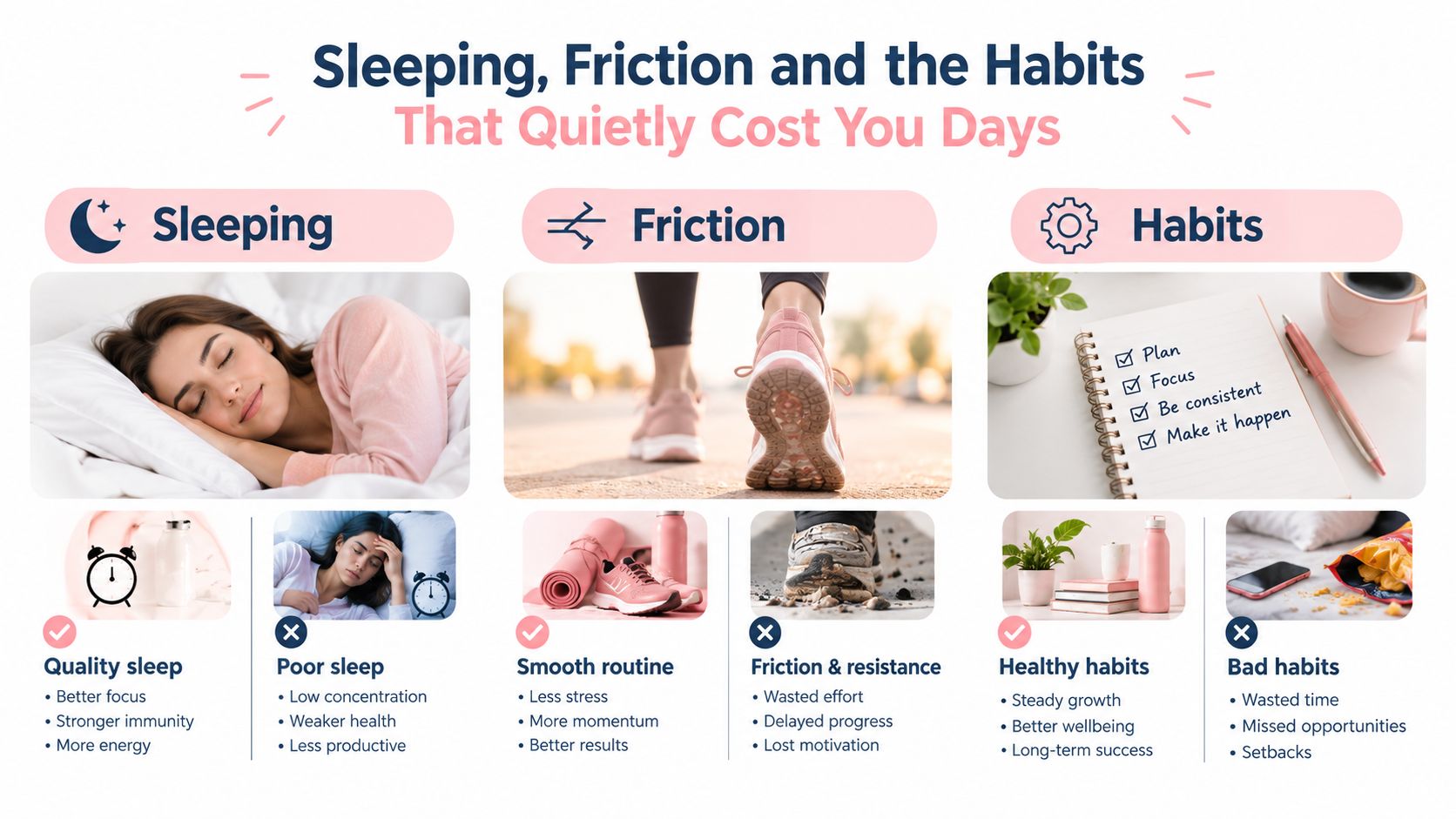
Sleeping, Friction and the Habits That Quietly Cost You Days
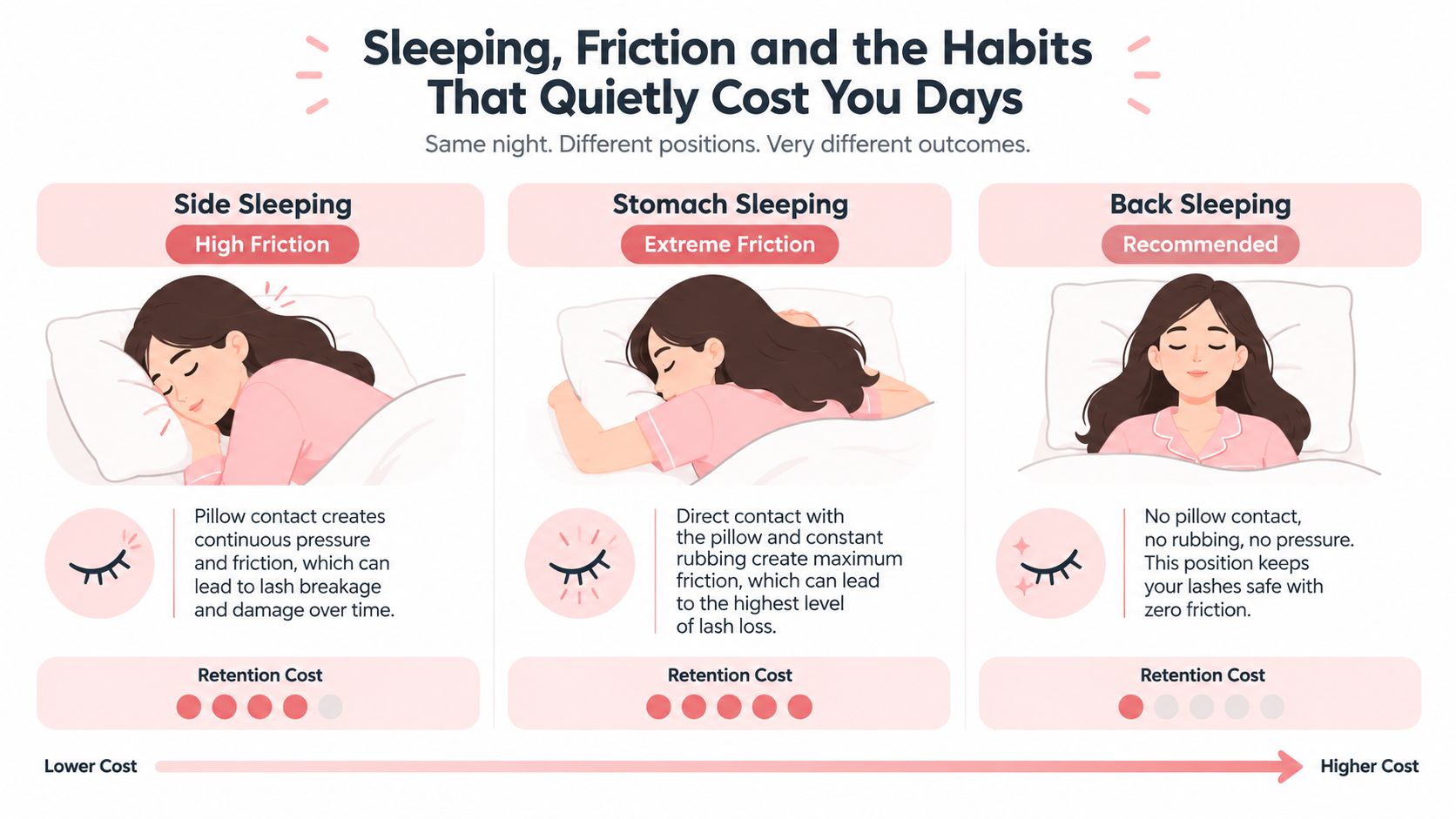
Friction is easier to understand when you look at where the loss appears. Side sleepers often notice the outer-corner extensions becoming untidy first because that area meets the pillow. Stomach sleeping places more direct pressure across the lash line. Back sleeping creates the least contact, so it remains the preferred position when it's comfortable for you.
Pillow material matters, but it isn't the only factor. Cotton sateen can grip and drag more than silk, particularly when the face moves against the fabric. A silk pillowcase for acne prone skin may also appeal to clients who want a smoother surface for both skin and lashes, but changing the pillowcase won't compensate for rubbing, picking or face-down sleep.
Rank the friction before changing everything
Highest concern: Rubbing the eyes, sleeping face-down and using an eyelash curler. These actions apply direct force to the extensions and can pull at the natural lash.
Next: Side sleeping on a rough or unclean pillowcase, drying the face with a towel and dragging hair across the eyes. These habits create repeated contact rather than one isolated touch.
Often overlooked: Removing sunglasses by gripping near the lash line, wiping away spring pollen aggressively and allowing children's hands to reach the face. These moments are brief, but the pressure can be concentrated.
Lower concern: Normal blinking and careful face washing. You don't need to keep your face rigid or avoid ordinary hygiene.
A practical friction checklist is short:
- At night: Use silk or satin, and keep the pillowcase clean.
- After washing hair: Pat the eye area instead of dragging a towel across it.
- During sleep: Tie long hair loosely away from the face.
- For eye sensitivity: Use a clean, soft sleep mask that doesn't press on the lashes.
- During allergy season: Treat irritation appropriately so you aren't tempted to rub.
You don't have to eliminate every movement. Fix the two or three habits that place the most direct pressure on the set, then keep the rest of your routine comfortable and realistic.
Your 30 Day Retention Plan Across Bonna Beauty Locations
A calendar works better than vague advice because it gives each habit a place.
Day 0
Treat appointment day as the protection window. Keep the lashes away from water, steam, sweat, oil and eye makeup for 24 hours. Avoid the hot shower, sauna, heavy gym session and face-down sleep that can disturb a newly applied set.
Days 1 to 7
Start the daily rhythm. Cleanse with an oil-free foam, rinse gently, allow the lashes to dry and brush with a clean spoolie. Replace oil-based remover and heavy eye products if they're sitting close to the lash line. Clients commuting from Liverpool, Hurstville or North Parramatta should keep the routine simple enough to complete before work and again before bed.
Days 8 to 14
Look for pattern rather than panic. A few extensions shedding with natural lashes can be normal. Notice whether one side is becoming less full, whether exercise leaves residue at the base or whether a particular sleeping position is disturbing the outer corners. Adjust the habit that's causing the issue instead of adding several new products.
Days 15 to 21
This is the point to plan ahead. Australian salon guidance commonly places maintenance around 2 to 3 weeks, and aftercare recommendations for lash extensions link regular cleansing, gentle brushing and timely infills with a more consistent appearance. Booking before the set becomes visibly uneven gives the technician a healthier starting point for the refill.
Days 22 to 30
Attend the infill if your set needs it, or have the remaining extensions assessed. The technician can determine whether the appointment should be a maintenance refill or whether a new full set is more appropriate. Sydney conditions can change the feel of your routine. Humid coastal weeks may increase sweat and buildup, spring pollen can encourage rubbing, and indoor heating in winter can leave the eye area feeling dry.
Bonna Beauty operates studios in Yagoona, Roselands and Canterbury, Revesby and North Parramatta, giving clients across western and south-western Sydney options near their usual routes. Digital booking and reminders can make it easier to reserve the next appointment before the calendar fills. Pre-booking the next two infills is particularly useful if you want to maintain a steady cycle rather than waiting for visible gaps.
The same principle applies to any recurring service. If you're interested in the broader thinking behind retention strategies for gyms, the useful takeaway is consistency. A reminder, a realistic routine and an appointment booked at the right time usually outperform last-minute recovery.
If your lashes are shedding early, bring your current routine to a Bonna Beauty technician and review the points that affect retention, including cleansing, product choice, sleep and refill timing. Visit Bonna Beauty to choose a Sydney studio, book an extension or infill appointment and set up a maintenance schedule that fits your week.