
You've just left Bonna Beauty in Yagoona, Roselands, Revesby or North Parramatta with clean, lifted, beautifully mapped lashes. They look effortless now, but the way you wash, sleep, exercise and plan your next appointment will decide how comfortable and even they remain. Good after care for lash extensions isn't complicated, but it does need to fit real Sydney life, from humid days near Bondi and beach trips to late nights in the CBD.
The most useful routine protects two things at once: your natural lashes and the skin around your eyes. Follow your technician's product advice, keep the lash line clean after the adhesive has cured, and treat unusual symptoms seriously rather than trying to cover them with makeup.
Why Aftercare Is the Secret to Stunning Lashes
Leaving a studio with a fresh set can feel like a small daily luxury. Your eyes look more defined without mascara, your morning routine is shorter, and a carefully selected classic, hybrid, volume, wispy or wet-look set can complement your eye shape without looking heavy.
That finish depends on more than the application itself. Extensions sit close to the eye, so rubbing, residue, oil and trapped debris can affect both appearance and comfort. Aftercare also helps you notice changes early, instead of masking irritation with eyeliner or continuing to manipulate the set.

Beauty maintenance is also safety care
Australia doesn't have national minimum training requirements for lash-extension operators. CHOICE's guidance on eyelash extensions, reporting Optometry Australia's 2020 position, explains why proper client aftercare is an important harm-reduction measure when that regulatory threshold isn't in place.
That gap makes your own routine valuable. You can't assess every part of an application at home, but you can avoid tugging, keep the lash line hygienic, follow the technician's water-exposure advice and respond quickly if discomfort develops. Those actions protect your eyes while also reducing preventable shedding.
Practical rule: Beautiful retention is never worth persistent pain, swelling or vision changes. Stop manipulating the set and seek appropriate care.
Australian cosmetics guidance also shows why harsh removers aren't a sensible solution. Products used around the eyes must comply with formaldehyde limits, and the ACCC documented a recall involving eyelash-extension glue that exceeded the relevant safe limit. The Australian cosmetics safety survey also found the tested eyelash glues complied with recognised safety limits, supporting a simple approach: maintain approved products carefully rather than adding solvents, oils or aggressive removers.
The First 48 Hours Protecting Your Investment
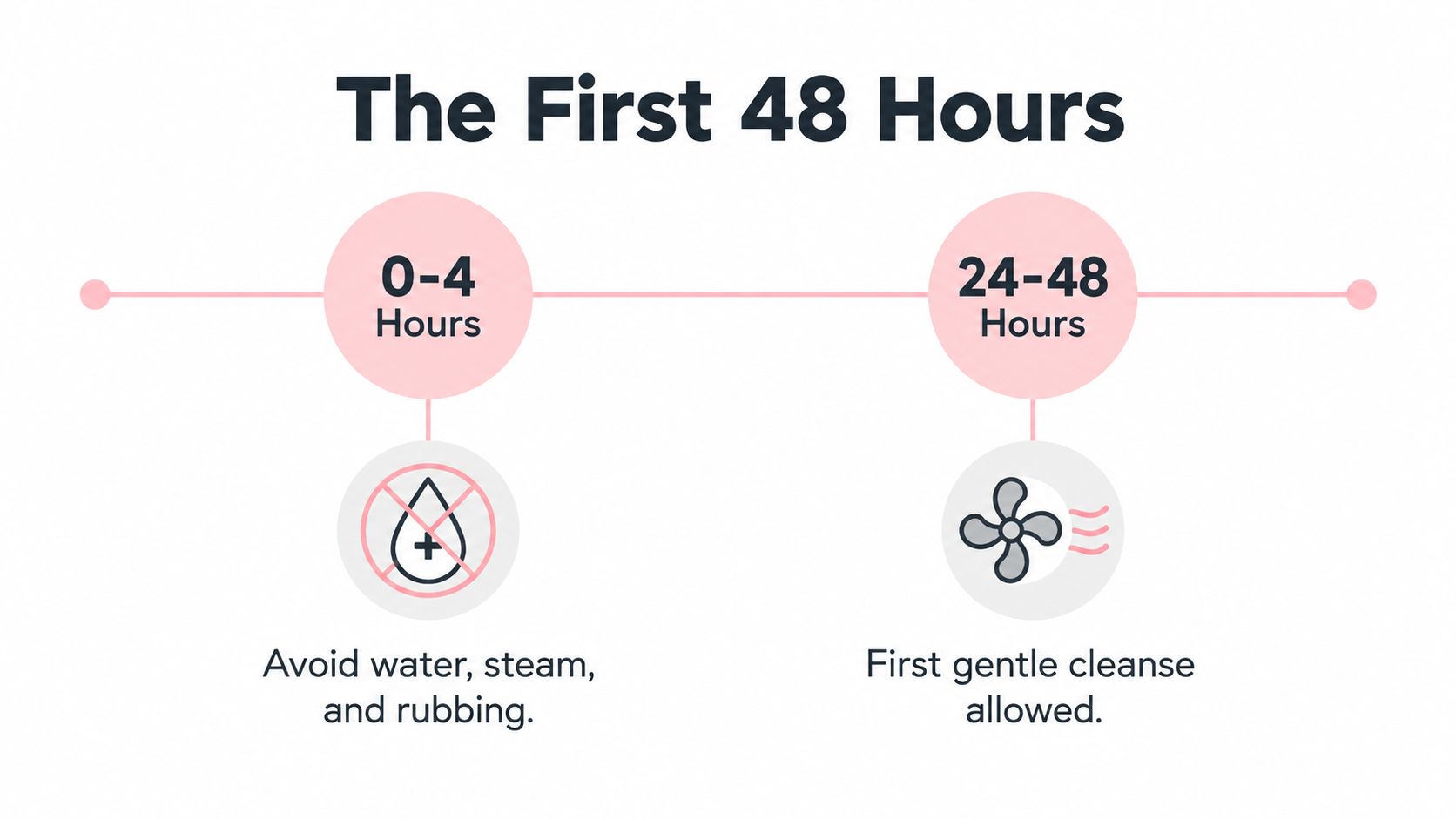
The first day is the adhesive's critical cure window. Australian lash guidance advises avoiding water, steam, saunas and heavy sweat during the first 24 hours to protect the bond, as outlined in Australian lash refill guidance.
That means your appointment timing matters. If you're booking before a Canterbury-Bankstown gym session, a hot shower, a swim or a humid outdoor event, move the activity rather than testing the fresh set.
From leaving the studio to bedtime
- Keep the eye area dry: Avoid splashing, direct shower spray, steam and rain exposure immediately after your appointment.
- Skip intense exercise: Heavy sweat can reach the lash line before the bond has settled. Choose a quiet afternoon instead of a gym class.
- Avoid heat and humidity: Postpone saunas, steam rooms and very hot showers. Humid conditions near the coast can make the first day less forgiving.
- Don't rub or press: Sleeping face-down, wiping the eyes or pushing the lashes into a pillow can disturb their direction.
- Leave makeup alone: Fresh eye makeup can add residue and encourage touching at the most vulnerable stage.
The first 24 hours are the most critical period. After that, your technician may give product-specific advice for the rest of the first 48 hours, particularly if the set feels damp, irritated or exposed to unusual humidity.
Returning to normal care
Once the adhesive has cured according to your technician's instructions, gentle cleansing becomes part of protection rather than a threat. Extensions can be washed carefully. The mistake is allowing water, oil and debris to build up because you're afraid to touch them at all.
If you accidentally get caught in rain or sweat after the cure window, don't panic and don't scrub. Pat around the eyes, allow the area to dry naturally or use a gentle fan, then cleanse with a lash-safe product when practical.
Your Daily Lash Care and Cleaning Routine
Clean lashes are easier to brush, more comfortable to wear and less likely to carry a layer of makeup, oil or environmental debris. The right method is gentle but thorough, especially along the base where residue can collect.
A simple cleansing method
- Remove surrounding makeup carefully. Use an oil-free remover around the eye area and avoid dragging a cotton pad through the extensions.
- Apply a lash-safe foam cleanser. A small amount is enough. Work it through the lashes with a clean, soft cleansing brush or fingertips washed thoroughly.
- Rinse without pressure. Let clean water flow over the area rather than rubbing side to side.
- Pat dry. Use a clean tissue or allow the lashes to air dry. Don't twist them with a towel.
- Brush when dry. A clean spoolie can realign the extensions from base to tip with light strokes.
For product selection, see this lash-extension cleanser guide before choosing a formula. Oil-based products can weaken adhesive bonds, while waterproof makeup tends to require more rubbing during removal.
Match cleansing to your lifestyle
If you wear makeup, Australian salon guidance recommends cleansing daily because makeup, oil and pollutants can collect around the lash line. If you don't wear makeup, cleansing every two to three days can be sufficient, provided the area stays comfortable and free from visible residue. See the Australian cleansing guidance for the lifestyle-based distinction.
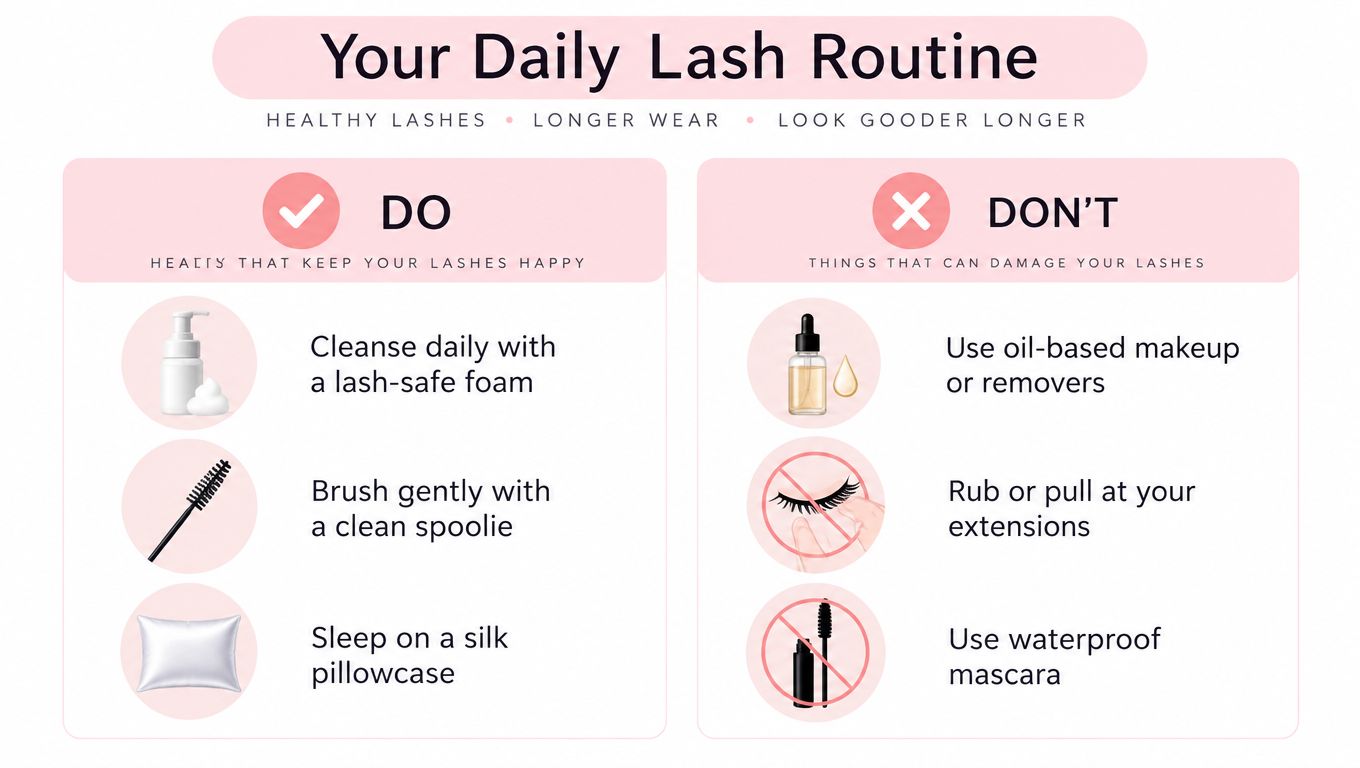
| Eyelash Extension Aftercare Do's and Don'ts | Do | Don't |
|---|---|---|
| Cleansing | Use a lash-safe foam and rinse gently | Leave makeup, oil or debris sitting at the base |
| Grooming | Brush lightly with a clean spoolie | Pull, pick or twist extensions |
| Makeup | Choose light, removable, oil-free products | Use waterproof mascara |
| Sleeping | Use a silk pillowcase if it helps reduce friction | Sleep face-down with lashes pressed into bedding |
| Planning | Book maintenance before the set becomes sparse | Wait until the remaining extensions are badly grown out |
For clients preparing for a special event, remember that other beauty services need their own product timing. A mobile spray tan guide can help you plan tanning around appointments without bringing unnecessary product near the eyes.
Do:
- Clean with purpose: A clean lash line is healthier than a set left untouched.
- Use clean tools: Wash your hands and keep your spoolie or cleansing brush hygienic.
- Brush lightly: Groom only when the lashes are dry and never force a tangled section.
Don't:
- Use oil-based removers: Oils can interfere with adhesive performance.
- Apply waterproof mascara: It creates buildup and makes removal more abrasive.
- Rub tired eyes: Pressing and pulling can remove extensions with the natural lash attached.
Lashes in Action For Sports Swimming and Camping
Sydney clients don't live in a climate-controlled beauty studio. You might train at a gym in Canterbury-Bankstown, swim at Cronulla, walk through the Royal National Park, camp away from home or spend a humid afternoon near Bondi. Your extensions can fit that lifestyle, but each environment adds moisture, salt, chlorine, sweat or friction.
Consider a Cronulla swim. Wait until the initial cure window has passed, then wear well-fitting goggles if they don't press directly against the extensions. Once you're out of the water, rinse the eye area with fresh water to remove chlorine or salt, pat dry and cleanse gently when you're back somewhere hygienic.
Exercise and sweat
For a workout, the first question is timing. Avoid heavy sweat during the first 24 hours, then return to training with a clean towel and a rule against wiping across the lash line. Blot the surrounding skin instead of dragging fabric over the extensions.
City humidity can also make lashes feel less neat by the end of the day. Don't compensate with extra brushing while they're damp. Let them dry, then use a clean spoolie with short, light strokes.
Camping, hiking and outdoor travel
Camping adds a hygiene challenge because clean hands, clean water and clean tools aren't always immediately available. Pack a lash-safe cleanser, a small cleansing brush, tissues and a clean spoolie in a sealed toiletry bag. If you can't wash properly after a dusty hike, avoid touching the lashes until you can cleanse with clean water.
A Royal National Park walk may expose your face to sweat, sunscreen and airborne grit. Keep rich or oily products away from the lash line, and apply sunscreen carefully around, not through, the extensions. If wind makes your eyes water, pat rather than rub.
Snow and cold-weather trips
Snow activities create a different combination of cold air, moisture and protective eyewear. Goggles can rub if they sit against the extensions, so check the fit before a full day outdoors. When returning inside, don't immediately scrub away condensation. Allow the area to settle, then follow your normal gentle cleanse.
Active-lifestyle reminder: The cure window comes before the adventure. Schedule appointments when you can protect the first day, not immediately before swimming, sport or camping.
Why Regular Infills Are Essential for Aftercare
Daily cleaning protects the set you currently have. Regular infills protect the shape and balance of the set as your natural lashes shed and grow. That's why an infill isn't just a cosmetic top-up when the lashes look less full.
Australian lash references connect maintenance to the natural lash cycle, which runs through six to eight weeks. They recommend booking before the halfway point of that cycle, with many salons using a two-to-three-week rhythm for the most efficient refill appointment. The Australian lash FAQ guidance explains the relationship between lash growth, shedding and refill timing.
The practical refill benchmark
Local Australian guidance commonly recommends an infill every two to three weeks, while some salons use roughly 40% of the original set remaining as the threshold for a refill. If retention falls below that point, the appointment may be treated as a full set rather than an infill, which changes the work involved, timing and pricing. This benchmark is described in Sydney eyelash-extension guidance.
Waiting too long can leave a mixture of new natural lashes, grown-out extensions and empty spaces. A technician then has less stable coverage to work with, and the result may need more rebuilding than a timely refill would have required.
Aftercare and infill success
Your cleansing routine directly affects the appointment. Clean lashes allow the technician to assess retention, identify grown-out extensions and work without a heavy layer of makeup or oil. Brushing also helps you notice twisting early, before several neighbouring extensions become difficult to separate.
For clients in Revesby, Bankstown, Roselands or North Parramatta, the useful habit is to book the next appointment while the current set still looks balanced. You'll preserve symmetry, keep the style intentional and avoid turning routine maintenance into a complete reset. Bonna Beauty's guide to how long lash extensions last provides further planning context.
Troubleshooting Common Issues and When to Call Us
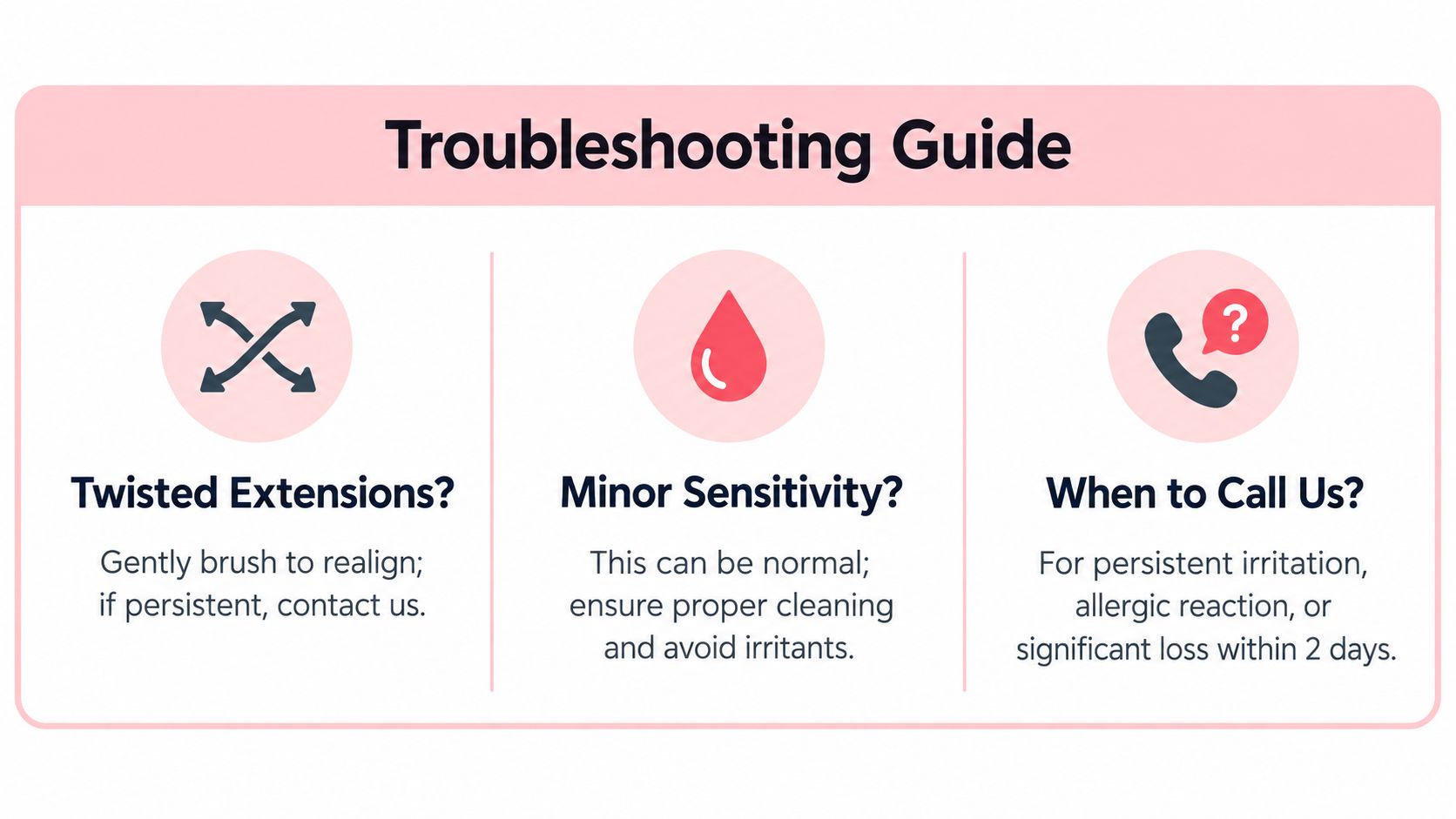
A single extension may twist as the natural lash grows. If the set remains comfortable, brush gently from base to tip with a clean spoolie. Do not pull the extension, trim it, or remove adhesive at home. If twisting continues, contact your technician so it can be assessed before it catches on neighbouring lashes. For more detail, see our guide to common eyelash extension complications and how to avoid them.
Mild, short-lived sensitivity may settle when you pause eye makeup and cleanse with a suitable lash-safe product. If cleanser or makeup stings, stop using it and contact the studio rather than testing it repeatedly. Humidity around Bondi, sweat after outdoor exercise and saltwater can all make irritation harder to judge, so rinse carefully with fresh water after beach activities and monitor the area.
Stop home care when warning signs appear
Australian salon compliance guidance recommends escalation for irritation, swelling, pain, discharge or vision changes. Contact your technician and seek medical care from an optometrist or GP. Do not apply home remedies or keep manipulating the set. The Australian beauty-service compliance guidance treats these symptoms as a safety concern, not only a retention issue.
Repeated redness or itching may indicate an ingredient reaction or sensitisation. A review found a ninefold higher risk of contact allergy to HEMA among hairdressers and beauticians than controls. Read the contact-allergy review and arrange professional assessment for recurring symptoms.
Keep your aftercare card with your cleanser, and call Bonna Beauty before your next infill if anything feels abnormal. Our Yagoona, Roselands, Revesby, North Parramatta and Bankstown studios can advise on the safest next step for Sydney routines.