
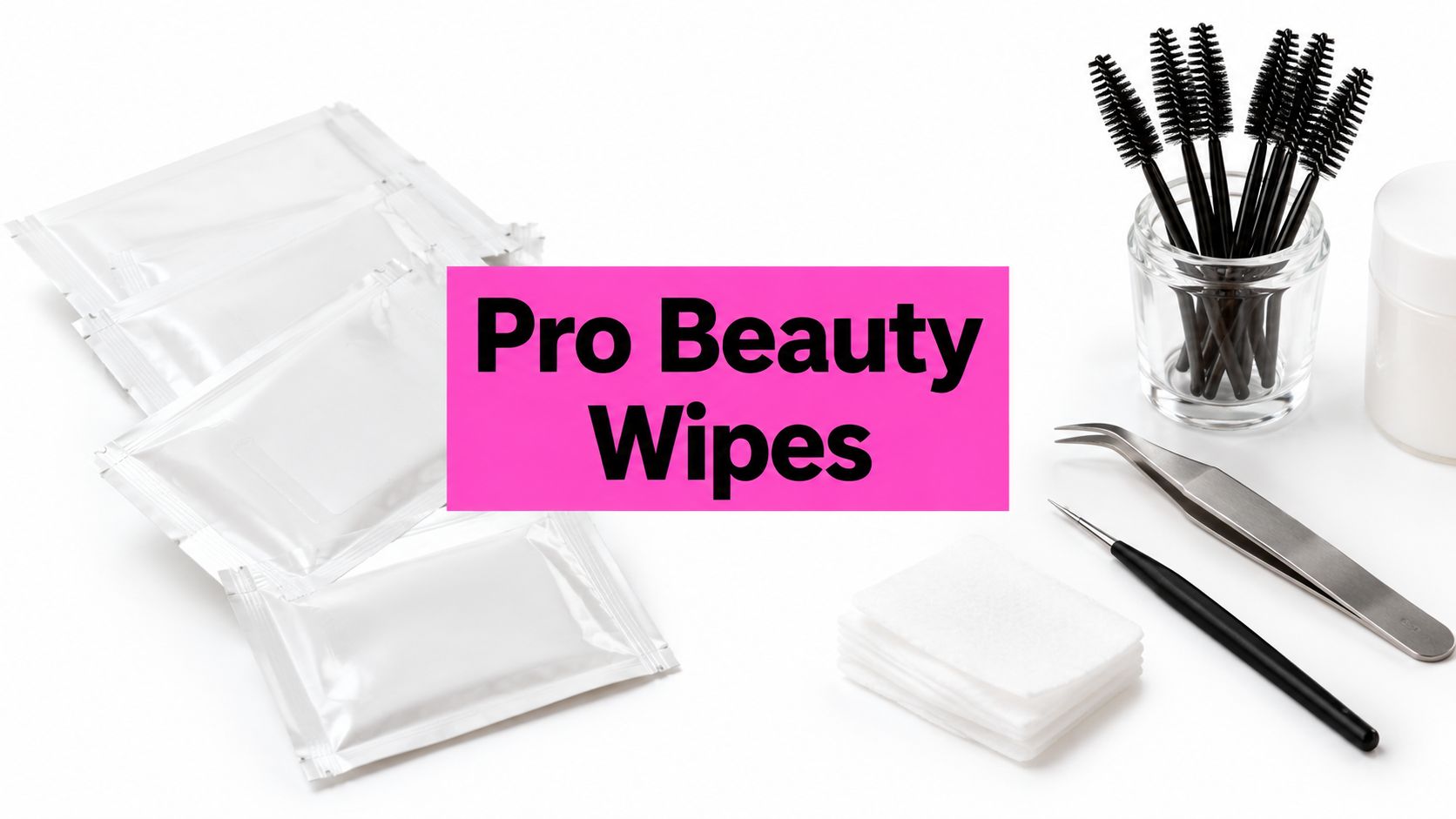
Individually wrapped wet wipes are single-use, hygienic, pre-moistened cloths sealed in foil or plastic sachets to prevent contamination before opening, making them the preferred standard for professional beauty studios servicing clients in Sydney. Australia's personal-care wipes market generated approximately US$842.3 million in 2022 and is projected to reach US$1.32 billion by 2030, although those figures cover personal-care wipes broadly, not individually wrapped units alone (Grand View Research).
A client arrives in Yagoona for a lash refill, carrying yesterday's makeup residue and expecting a calm, polished appointment. You open a fresh sachet, cleanse the treatment area, dispose of the wipe immediately, and continue without reaching into a communal tub. That small action affects client comfort, workflow consistency, waste handling, and the claims your studio can responsibly make about hygiene.
For lash, brow, and cosmetic-tattoo professionals, the sachet isn't just attractive packaging. It's a controlled point of use. The right wipe can support cleansing around lashes and brows, while the wrong formula can irritate sensitive skin, interfere with adhesive, or create regulatory problems if its label promises disinfection or infection prevention.
What Are Individually Wrapped Wet Wipes
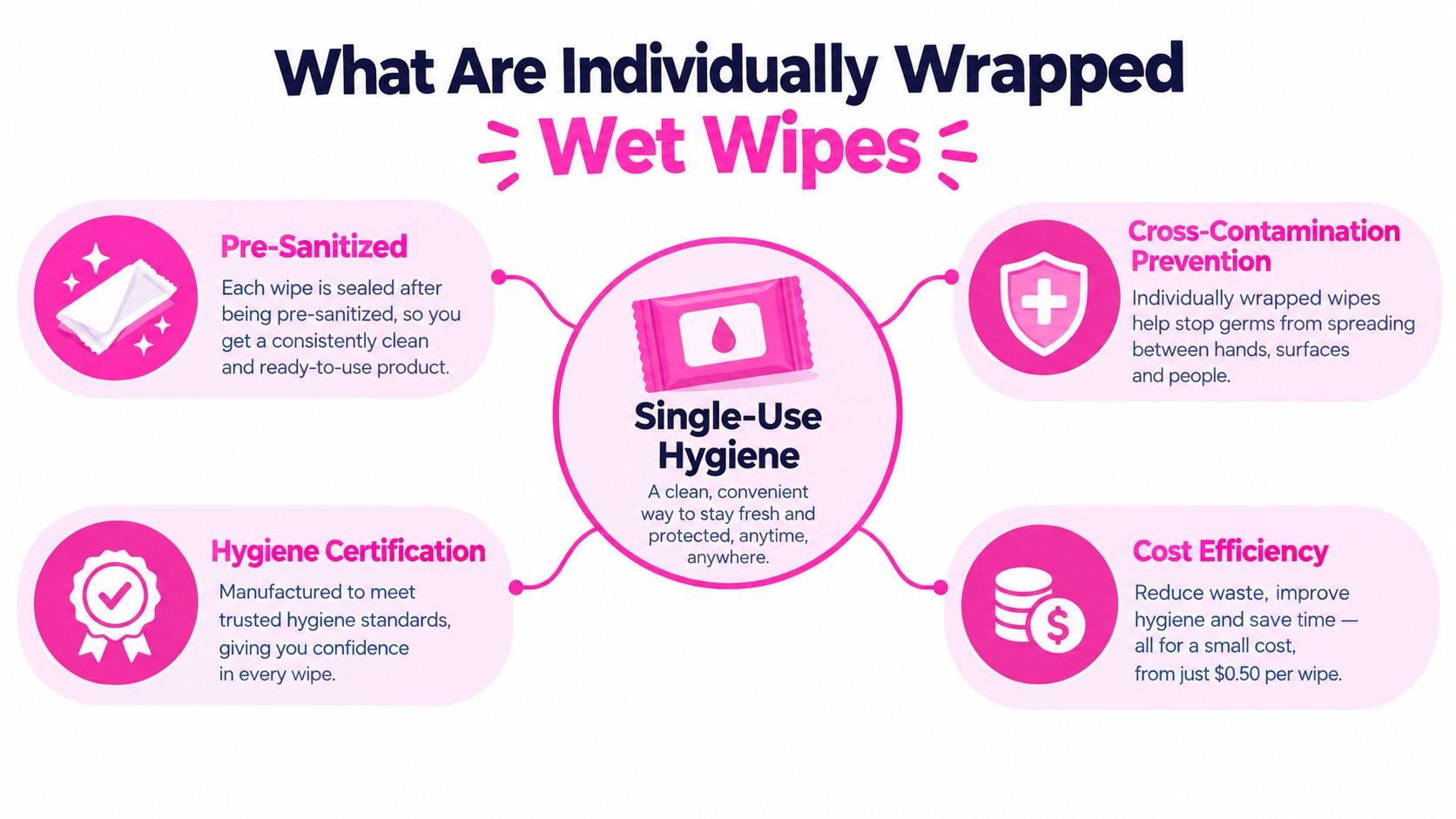
An individually wrapped wet wipe is a pre-moistened, single-use cloth sealed in its own foil or plastic sachet. The sealed pack keeps the cloth and lotion contained until the moment of application. It also limits exposure to air, hands, dust, and surrounding surfaces before use.
That differs from a refillable tub or bulk canister. With a shared container, staff repeatedly open the lid and remove wipes from the same supply. Even with good hand hygiene, the opening and dispensing process creates more opportunities for handling errors, evaporation, and contact with the remaining stock.
Practical rule: Open one sachet for one clearly defined task, use it promptly, and discard it rather than storing a partly used wipe.
The format suits studios where the treatment area changes quickly. A lash technician in Bankstown can keep sealed wipes beside the bed, open one after the consultation, and cleanse natural lashes before extension bonding. A brow artist in North Parramatta can use a fresh unit before tinting or lamination without placing used gloves or tools near a bulk container.
The sachet doesn't prove that the product is sterile. It proves that the wipe has remained enclosed before opening, provided the seal is intact. Suppliers should still be able to explain the product's preservation system, microbial specifications, shelf life, storage requirements, and packaging integrity.
Why the format works in professional settings
The strongest benefit is controlled dispensing. Staff don't need to estimate how much product to pull from a tub, and clients can see that a new sachet has been opened for their appointment. The format is also practical for mobile-style and home-based salons in Revesby, Roselands, and Canterbury, where compact storage and quick reset routines matter.
The trade-off is packaging waste and sometimes a higher unit cost than bulk wipes. A professional studio should therefore use individually wrapped wet wipes where single-use control adds value, rather than treating every cleaning task as identical. Skin cleansing, equipment disinfection, and general surface cleaning require different products and shouldn't be confused.
How Beauty Studios Use Them in Practice
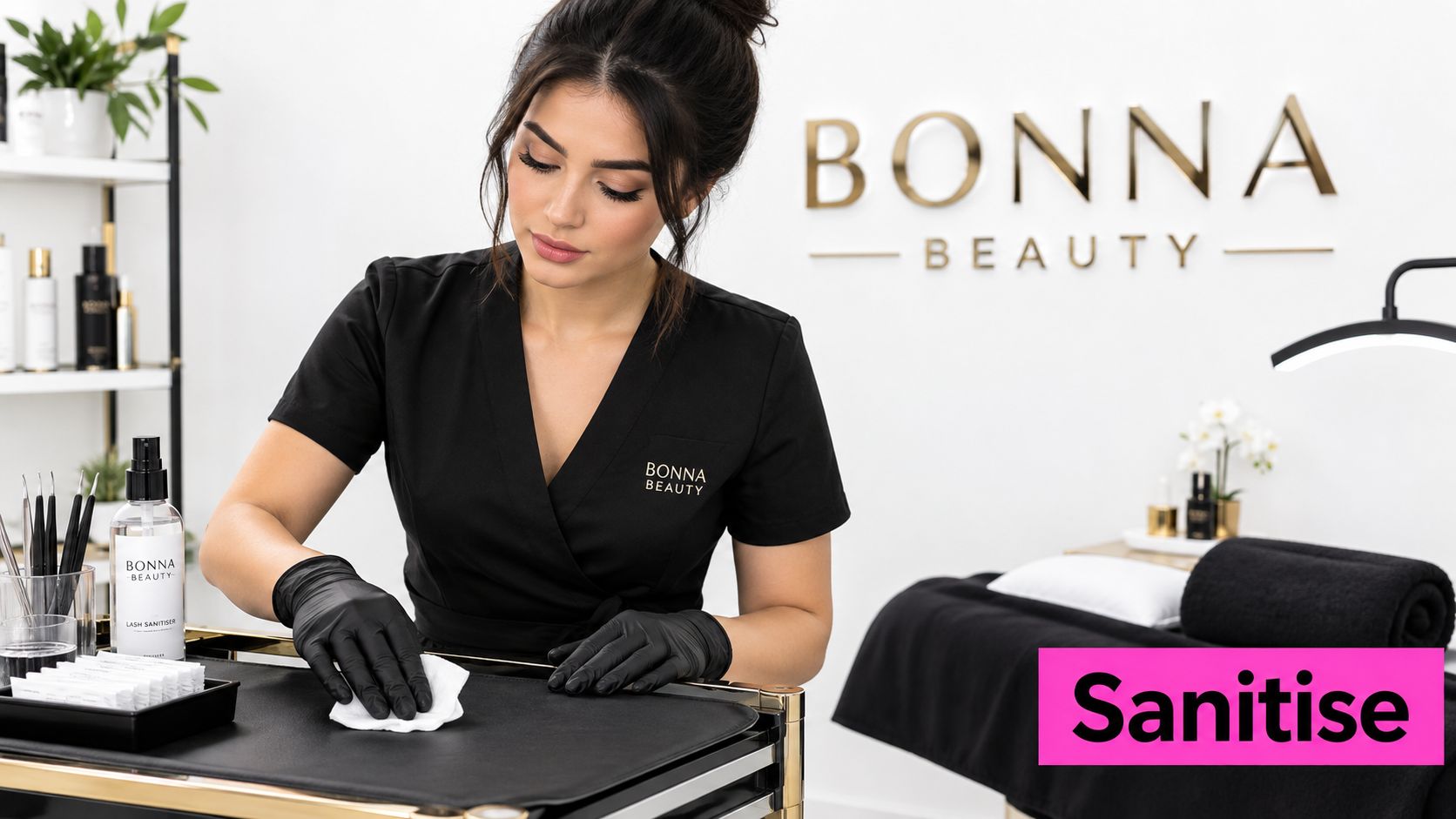
A lash appointment usually has several hand-off moments. The client removes eye makeup, the technician checks the natural lashes, and the treatment area is prepared before adhesive work begins. An individually wrapped wipe can be opened at the cleansing stage, used gently around the eye area, and discarded before the technician handles extensions or adhesive.
For a lash lift, the wipe may help remove cosmetic residue before shields and solutions are positioned. The technician still needs to follow the product manufacturer's instructions, protect the eye area, and avoid saturating materials that shouldn't become wet. The wipe is a preparation tool, not a replacement for the service's full infection-control process.
Brow services have a different rhythm. Before tinting, waxing, or lamination, a fresh wipe can remove foundation, sunscreen, and loose residue around the brows. Around freshly waxed skin, light pressure matters because friction and harsh ingredients can increase discomfort. A wipe intended for hands or surfaces isn't automatically appropriate for facial skin.
Cosmetic tattoo appointments demand even more care. After an eyeliner, lip, or brow procedure, the technician must follow the applicable aftercare and wound-management instructions. A sealed wipe may be useful for a specified cleansing task, but it shouldn't be described as sterile unless the product documentation supports that claim.
A workable appointment sequence
A reliable routine is simple:
- Prepare the station. Clean and disinfect surfaces with the correct product before the client is positioned.
- Check the skin area. Ask about sensitivity, recent reactions, and any relevant treatment restrictions.
- Open the sachet at point of use. Inspect the pack for leaks, damage, or an unusual odour.
- Use the wipe only for its intended purpose. Don't move from skin to equipment or from one client to another.
- Discard it immediately. Close the used wrapper around the wipe and place it in a lined rubbish bin.
For mobile-style services in Revesby or Roselands, this process prevents used materials from travelling between appointments. It also creates a visible, professional routine that clients can understand without a lengthy explanation.
Choosing Hypoallergenic and Gentle Formulas
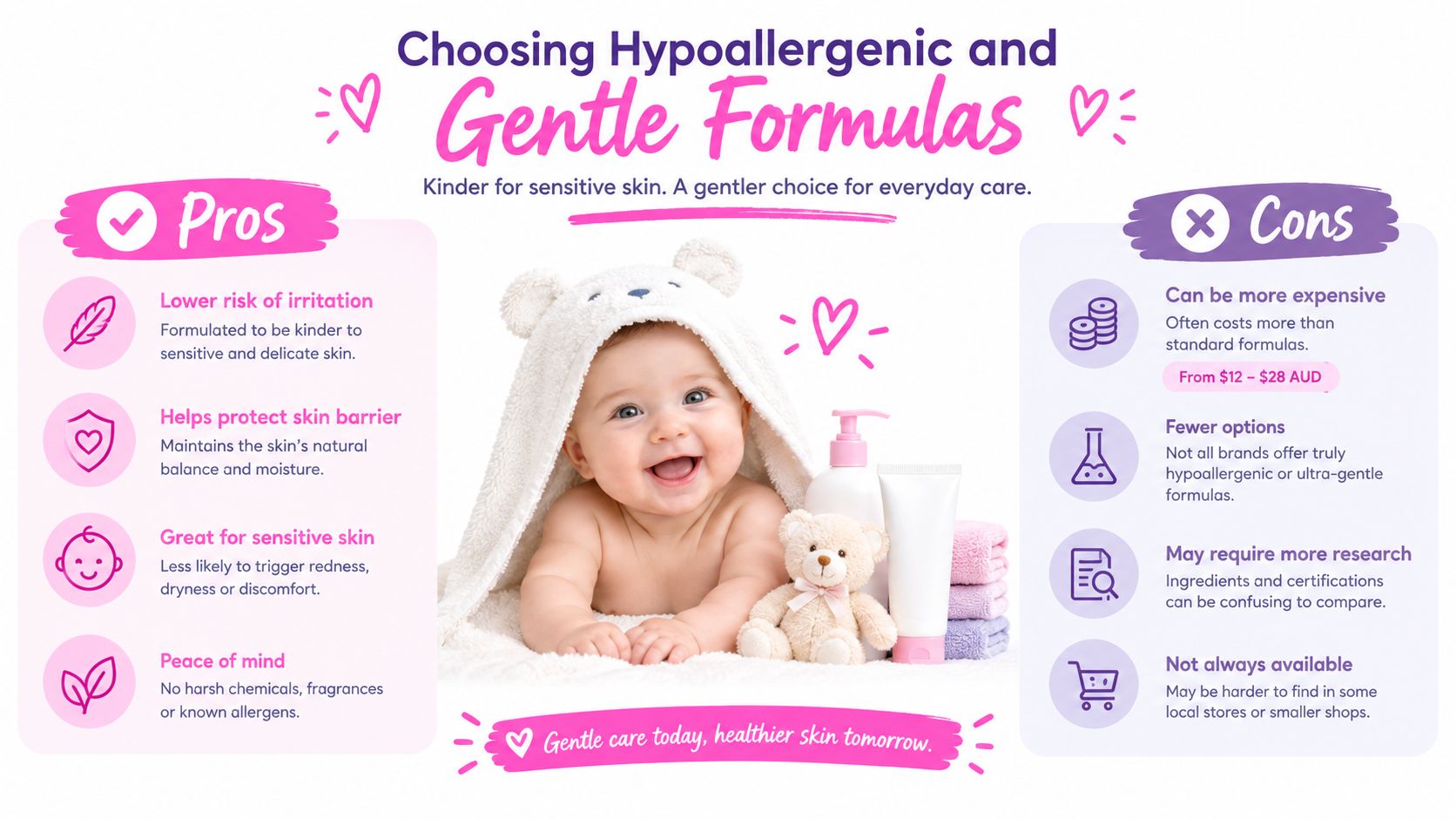
Individually wrapped doesn't mean universally gentle. Packaging controls exposure before opening, but the lotion determines whether the product suits periorbital skin, brows, recently waxed areas, or cosmetic-tattoo treatment zones.
Start with the intended contact area. A wipe for hands may contain fragrance, alcohol, stronger surfactants, or disinfectant ingredients that aren't appropriate near eyelashes. A wipe for surfaces belongs on equipment or benches, not on a client's face. Product labels should state a clear intended use rather than relying on vague words such as “fresh”, “clean”, or “antibacterial”.
RACGP guidance notes that disinfectant-impregnated wipes are single-use and work by applying enough liquid to a clean surface and allowing it to dry. It also warns that some disinfectant chemicals, including quaternary ammonium compounds, can cause hand contact dermatitis (RACGP cleaning agents and methods).
Read the formula, not just the front label
For facial and eye-area preparation, many studios prefer fragrance-free, alcohol-conscious, low-irritant formulas. “Hypoallergenic” can be useful as a positioning signal, but it isn't a substitute for reviewing the ingredient list, intended use, and supporting documentation.
Healthdirect advises avoiding perfumed wipes and harsh products for vaginal or groin irritation, while Melbourne Sexual Health Centre guidance warns that prolonged wetness can weaken skin and increase irritation, dermatitis, and infection risk. The same practical principle applies to delicate beauty-treatment areas: don't leave skin unnecessarily wet, and don't assume a soothing-sounding claim guarantees compatibility.
Use a supplier questionnaire that asks:
- Fragrance: Is perfume present, and is it necessary for the intended use?
- Alcohol: What type is used, at what purpose, and is the product intended for facial skin?
- Preservatives: Does the preservation system suit the lotion's water activity, pH, surfactants, and botanical ingredients?
- Contact area: Is the wipe designed for skin, equipment, or another application?
- Testing: Can the supplier provide microbial challenge results and finished-product microbiological specifications?
Australian claims also matter. A wipe marketed only for cleansing around the eye or brow may sit within cosmetic or industrial-chemical oversight. Claims that it disinfects skin, prevents infection, or provides therapeutic antisepsis can move it into TGA-regulated territory. The TGA guidance on cosmetic and therapeutic goods explains why wording on the sachet, website, packaging, and staff instructions must remain consistent.
For lash preparation, pair the wipe decision with a suitable cleanser and service method. A useful reference is this lash extension cleanser guide, but always follow the instructions for the specific products used in the studio.
How Avistar Can Help
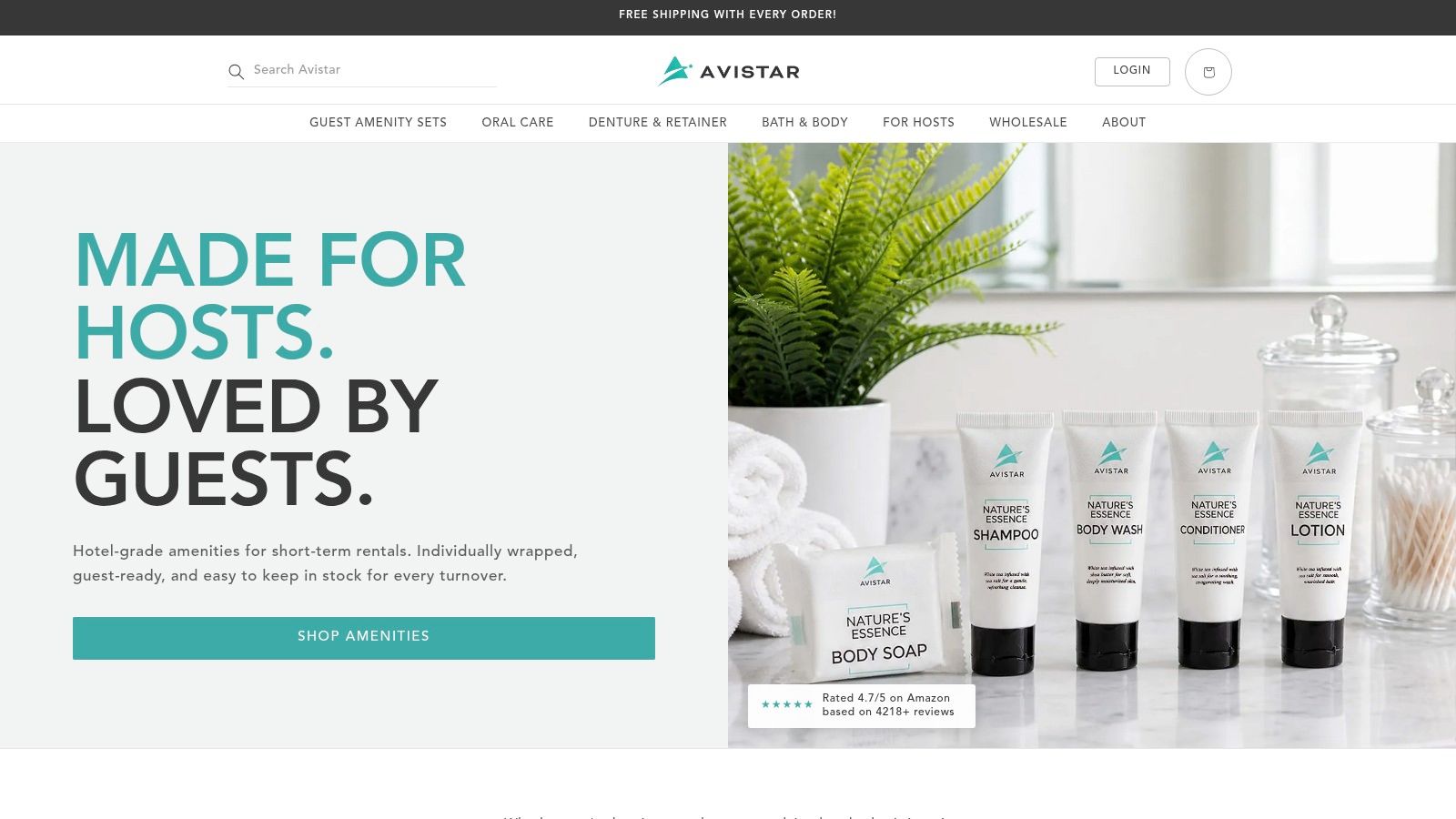
Avistar approaches individually wrapped amenities from a hospitality perspective, where the product must be easy to stock, simple to present, and ready at the point of use. Its stated focus is on helping hosts create a reliable guest experience through well-designed essentials, rather than treating supplies as an afterthought.
That perspective can help a beauty professional assess a wipe more practically. A sealed towelette may suit a mobile appointment, a guest amenity pack, a travel kit, or a quick refresh after a service. It can also be useful when a studio wants a compact format that avoids opening a larger container during every appointment.
The relevant product category is moist towelettes individually wrapped, which illustrates the convenience of sealed, pre-moistened units for travel, spa, restaurant, and hand or face use. That context is helpful, but it doesn't remove the need to check whether a particular formula is suitable around lashes, brows, or freshly treated skin.
Where Avistar fits, and where it doesn't
Avistar-style hospitality wipes may be the right choice when the priority is portable presentation and contained dispensing. They may be less appropriate where a studio needs a documented clinical or therapeutic claim, a fragrance-free formula for highly reactive skin, or a product specifically validated for a particular treatment area.
Before adding any wipe to a professional protocol, confirm:
- Intended use: Skin cleansing and surface cleaning aren't interchangeable.
- Scent and ingredients: A refreshing fragrance may not suit periorbital skin.
- Documentation: Request composition, shelf life, batch details, and packaging information.
- Claims: Don't describe a general amenity wipe as disinfectant or sterile without evidence.
The product can support a clean, convenient workflow, but the salon remains responsible for matching the wipe to the service, client, and disposal method.
Responsible Disposal and Compliance
In a busy Sydney studio, disposal errors usually happen at the end of the service. The wipe has done its job, the sachet is small, and someone is tempted to drop it into the toilet because it looks tidy and disposable. That is where hygiene habits can drift into a plumbing problem, and in some cases a compliance problem too.
For lash, brow, and PMU work, the practical rule is simple. Treat used wipes as general waste unless the actual product is clearly marked as meeting AS/NZS 5328:2022. Standards Australia released the standard on 23 May 2022, and products using a flushable symbol must pass six tests, including breaking into pieces smaller than 2.45 centimetres after one hour. Qualifying products must also contain no plastic (Urban Utilities guidance).
Studios should also keep the regulatory boundary clear. A single-use wipe can support infection-control practice through point-of-use dispensing and reduced cross-handling, but that does not make it a disinfectant, sterile item, or therapeutic good. If the product claims drift into treatment, prevention, or disinfection territory, the wording and supply position need closer checking under Australian rules.
Day to day, disposal needs one method across every room. Sustainability Victoria advises that wet wipes generally do not break down like toilet paper, can contribute to sewer blockages and fatbergs, and belong in general rubbish. It also states that “biodegradable” does not mean suitable for flushing (Sustainability Victoria wet-wipes guidance).
The studio disposal routine
- Provide a lined rubbish bin within easy reach of the technician.
- Wrap the used wipe in its sachet where practical, keeping the waste contained.
- Never flush the wipe unless the product itself is labelled as compliant with AS/NZS 5328:2022.
- Separate service waste correctly under the studio's waste procedures.
- Tell clients the same rule if wipes are included in an aftercare or travel pack.
Australian water authorities still promote the 3Ps, pee, poo, and paper, as the default rule. Individual wrapping improves handling before use. It does not change where the used wipe should go.
Evaluating Suppliers and Product Specifications
A supplier's attractive sachet and confident sales copy aren't enough. A studio needs evidence that the wipe will remain intact, stable, suitable for the intended skin area, and accurately described in Australia.
Ask for a complete product file before approving a new line. The useful documents include composition details, intended use, shelf-life evidence, batch traceability, storage limits, safety data, packaging specifications, microbial-quality information, and evidence supporting the product's claims.
The procurement test
| Check | What to verify | Why it matters |
|---|---|---|
| Seal integrity | Seal strength, leak resistance, and pack stability | A damaged sachet compromises point-of-use control |
| Formula compatibility | Ingredients, pH, preservatives, surfactants, and botanical content | The lotion must suit the contact area |
| Microbial control | Challenge testing and finished-product specifications | Water-based products require effective preservation |
| Traceability | Batch numbers and expiry dating | Problems can be isolated and stock can be rotated |
| Regulatory wording | Claims across labels, websites, and staff instructions | Therapeutic claims may trigger TGA obligations |
The TGA information on supplying therapeutic goods in Australia explains that therapeutic goods generally need entry in the Australian Register of Therapeutic Goods before importation, supply, or advertising. A wipe doesn't become exempt because it is sold in a beauty setting.
Why retail can make sense
Aftercare retail works when it solves a real client problem. A travel-sized pack can help a client maintain a gentle cleansing routine between appointments, while a starter kit can make the studio's instructions easier to follow. The product should complement the service, not become an unexamined add-on.
For a broader supply checklist, use this guide to professional lash extension supplies. The same discipline applies to wipes: buy on documentation, suitability, and repeatable use, not on packaging alone.
Aftercare Wording and Client Retail Options
Clients don't need alarming language. They need precise instructions that explain what to use, what to avoid, and where the used wipe belongs.
A useful explanation after a lash or brow appointment might be:
For gentle cleansing: Use only the product recommended by your technician, apply it lightly to the treated area, and avoid rubbing, fragrance, and harsh chemicals. Stop if irritation develops and contact the studio for advice.
That wording avoids promising sterility or infection prevention. It also leaves room for different healing and maintenance requirements across lash extensions, lash lifts, brow lamination, waxing, and cosmetic tattooing.
Build the message around the service
For lash extensions, emphasise gentle cleansing and careful drying without pulling or rubbing the extensions. For a lash lift, give the client the manufacturer-aligned timing and care instructions rather than assuming every wipe is suitable immediately after treatment. For brows, distinguish between lamination, waxing, tinting, and cosmetic tattooing because the skin condition and aftercare needs differ.
For cosmetic tattoo clients, don't place a general-purpose wipe in a home-care kit unless the treating professional has verified its suitability. Freshly treated skin can react to fragrance, alcohol, preservatives, or excessive moisture. The lash aftercare instructions can help structure client-facing guidance for lash services.
Retail without overpromising
A responsible retail option can be:
- A small approved pack: Useful for travel or clients who need a convenient single-use format.
- A service-specific starter kit: Include only products the technician has checked for compatibility.
- A written care card: State the intended use, disposal method, and warning signs clearly.
- A staff recommendation: Explain why the product suits the service instead of calling it “medical grade” or “sterile”.
Bonna Beauty's Sydney service areas, including Bankstown, Canterbury, Revesby, and North Parramatta, make local convenience relevant, but the protocol should remain consistent across locations. Clients should receive the same plain-language advice whether they book near Yagoona, Roselands, or another verified service area.
Keep booking and consultation data equally disciplined. The OAIC guidance on protecting customer personal information explains that the Privacy Act 1988 contains 13 Australian Privacy Principles and that businesses should collect only information they need, use it for the stated purpose, and protect it from unauthorised access, misuse, loss, or disclosure.
Implementing a Complete Studio Protocol
A wipe protocol works when staff can follow it during a busy day without improvising. Put the decision in writing, train every technician, and check that the stock on the shelf matches the approved product file.
Start with one nominated wipe for each approved use. Don't let staff substitute a hand wipe for a surface disinfectant or a fragranced amenity wipe for a sensitive eye-area cleanser. Keep the sachets in a dry, accessible storage area, rotate stock by expiry date, and remove any unit with a damaged seal, leak, unusual odour, or unclear labelling.
The appointment-cycle checklist
Before the client arrives
- Confirm that the station has the approved wipe, gloves, lined bin, and required cleaning products.
- Check the sachet condition and expiry information.
- Review relevant sensitivity notes through the studio's secure booking or consultation system.
During the service
- Explain the purpose of the wipe when the client asks.
- Open it at the point of use.
- Use it only on the approved area and follow the treatment manufacturer's instructions.
- Discard it immediately after the task.
After the service
- Close the wrapper around the used wipe and place it in general rubbish unless the product is specifically compliant with AS/NZS 5328:2022.
- Give the client written aftercare matched to the service.
- Record supplier batch details when the studio's quality process requires it.
- Escalate irritation, packaging faults, or unexpected reactions rather than proceeding with the same stock.
Review the protocol when the formula, supplier, claim wording, packaging, or service menu changes. Local relevance also matters. Greater Sydney's population increased by 107,500 people, or 2.0%, during the 2023–24 financial year, while the rest of New South Wales grew by 30,600 people, or 1.1%, according to the Australian Bureau of Statistics. Growing service areas can bring more clients, but they don't justify vague location claims or inconsistent hygiene practices.
Use precise suburb references only where a studio genuinely operates or serves clients. ABS regional data identifies areas such as Box Hill–Nelson, with 18,386 residents in 2022–23, and Zetland, with 13,968 residents, showing why geographic detail can improve local relevance when it accurately reflects the business (ABS regional population data).
Before publishing a Sydney service page or hero image, also write useful alternative text. Australian accessibility guidance says meaningful images need descriptive alt text, decorative images should use empty alt text, and alt text shouldn't begin with “image of” because screen readers already identify an image as such (South Australia accessibility guidance).
Choose your approved individually wrapped wet wipes, request the supplier documentation, train your team on skin use and bin disposal, and update your client aftercare cards before the next appointment cycle. If you're booking lash, brow, or cosmetic-tattoo services in Yagoona, Roselands, Canterbury, Revesby, or North Parramatta, contact Bonna Beauty and ask how the studio matches product choice, service technique, and aftercare to your treatment.