
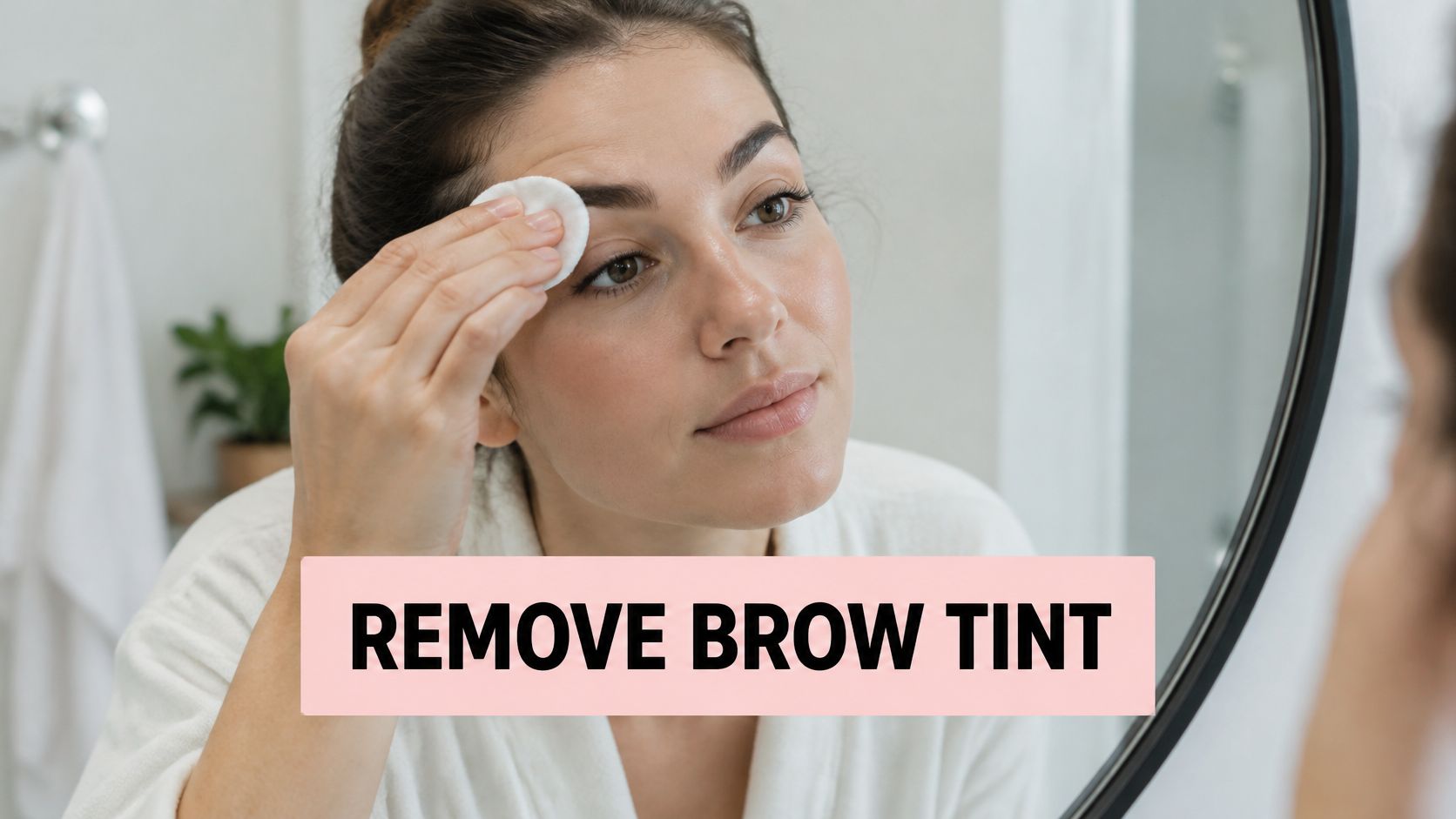
You've checked your brows in the bathroom mirror and they look much heavier than they did at the salon. Perhaps you've just come home from an appointment near Parramatta Square, and the soft brown you wanted now looks almost charcoal. Before you reach for a cleanser, check how the skin feels.
The safest way to remove brow tint starts with a decision, not a remover. Unwanted colour on comfortable skin is a cosmetic correction. Burning, swelling or eye irritation needs a different response, and trying to fade it faster can make the problem worse.
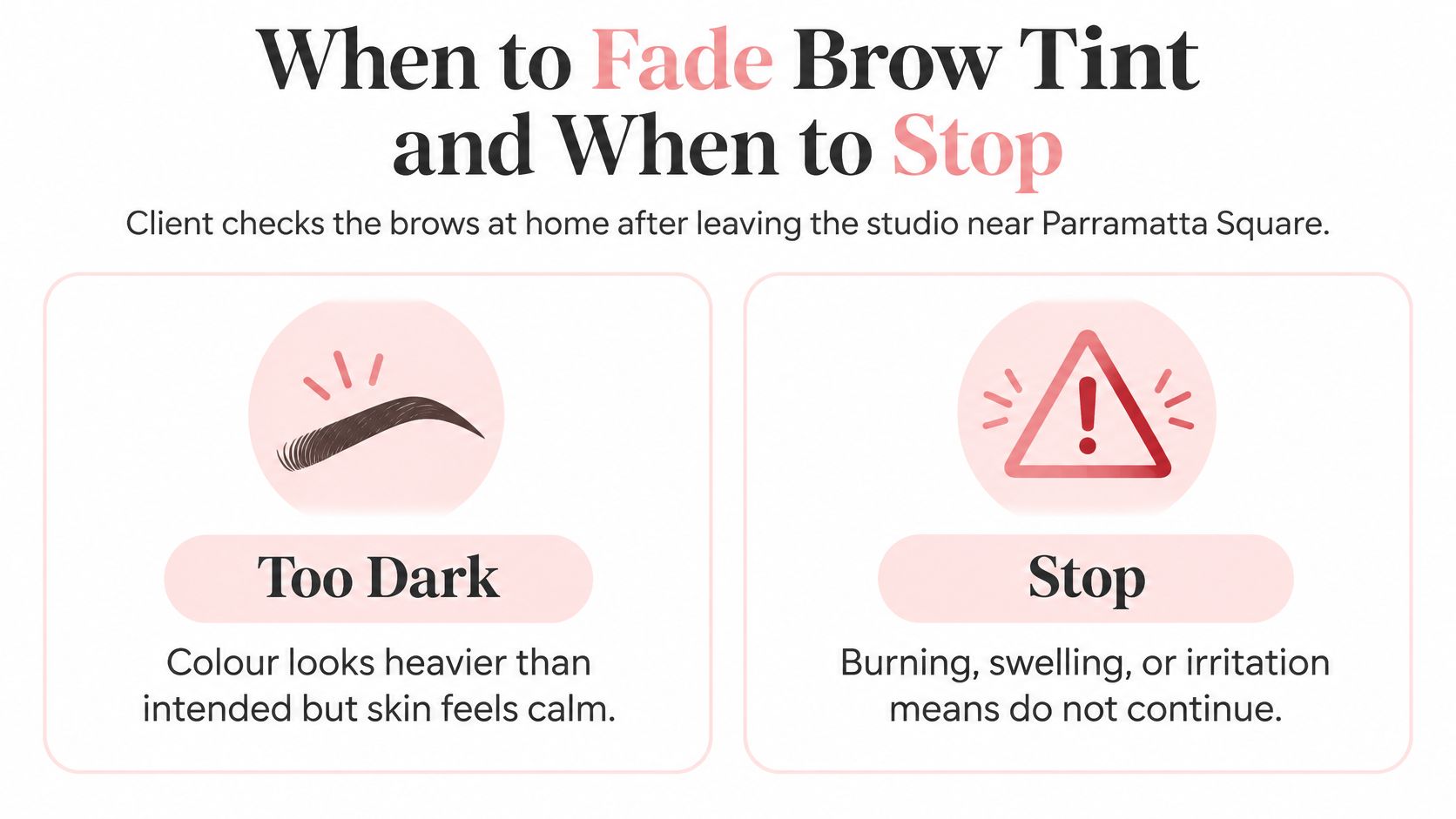
When to Fade Brow Tint and When to Stop
Dark colour and an allergic reaction aren't the same problem. Look at the skin beneath the hairs and around the brow, not just the shade. Check whether the area feels comfortable, whether redness extends beyond the tinted shape, and whether your eyes feel normal.
SA Health's cosmetics guidance explains that reactions can appear 12–96 hours after exposure, worsen with repeated exposure and spread beyond the application area. That means a comfortable appointment doesn't rule out a later reaction.
Brow tint triage before any remover
| Situation | Skin and eye check | Next action |
|---|---|---|
| Too dark, comfortable skin | No sting, swelling or broken skin | Fade gently or wait 2–3 weeks |
| Fresh stain on skin only | Intact skin, colour away from the eye | One cleanser pass, then reassess |
| Colour mainly on the brow hair | Calm skin and a known tint | One short oil contact, then stop for the day |
| Itch, heat or redness at 12–96 hours | Redness spreading past the brow | Stop all products and get medical advice |
| Blisters or eye irritation | Broken skin, swelling or eye symptoms | No remover; see a GP or urgent care |
| Breathing trouble or major swelling | Face, airway or eyelid involved | Call 000 in Australia |
For comfortable brows, our tint effects start to diminish within 2 to 3 weeks as hair grows out and the colour fades. That's a gradual softening, not a promise that every trace will disappear within that window.
Keep the product details, not just a photograph
If you're concerned about a reaction, retain the packet and ingredient list. Write down the brand, shade, application time and processing time, along with anything you've applied afterwards. A photograph can help document changes, but it doesn't replace an examination.
Rinse away remaining product promptly if irritation develops. If product enters the eye, rinse with clean running water and seek urgent medical advice rather than trying to clean the brow first. Don't add oil, another tint or an unfamiliar solvent to inflamed skin.
Safety first: A brow that looks too strong can wait. A brow that burns, blisters or swells needs attention, not stronger removal.
The same decision applies whether you're in Bankstown, Yagoona, Roselands, Canterbury, Revesby or North Parramatta. For future appointments, our brow tint advice for sensitive skin helps you prepare the right conversation about previous reactions and skin sensitivity.
Which Brow Tint Fading Method to Choose
Choose according to where the unwanted colour sits. A stain around the brow needs a different approach from colour developed inside the hair. Pick a suitable row below before opening any product, and don't combine methods because the first result looks subtle.
Brow tint fading methods compared
| Approach | Use it when | Contact guide | Do not use if |
|---|---|---|---|
| Lukewarm water and cotton | Fresh residue on calm skin | One wipe with hair growth | Colour is in the eye or skin is broken |
| Micellar water or mild cleanser | Skin stain with an intact barrier | One short pass, then stop | Eczema, swelling or a mixed unknown solvent |
| Plain oil such as jojoba | Hair is too dark and skin is calm | 5–10 minutes, once that day | Any reaction sign or product near the eye |
| Salon tint remover | Technician knows the exact dye | Maker's short interval only | Home use, irritation or an unidentified tint |
| Waiting it out | Oxidised colour on healthy skin | Review across 2–3 weeks | Don't rely on waiting alone if skin is reactive or urgent assessment is needed |
| Bleach, acetone, peroxide, acids, scrubs | Never for eyebrow tint | Not applicable | Every case |
The oil option is a conservative attempt to loosen surface residue, not a reliable way to reverse developed dye. If you use it, the listed contact is a ceiling, not a target you should push through discomfort. Waiting may give a better balance of comfort and colour than another application.
What each option can realistically do
Water and a damp cotton pad can lift leftover product. A mild cleanser or micellar water may improve a skin stain, but neither should become an extended rubbing session. Plain jojoba is an optional hair-focused approach only when the skin is comfortable and you can keep it away from the eyes.
A dedicated remover isn't automatically suitable because its label says tint remover. The technician needs to know which dye was used, whether the remover is compatible and where the manufacturer permits application. Our brow tinting product guide gives useful background for that discussion.
Victorian local-government beauty guidance classifies eyebrow tinting as a low-risk beauty service while still requiring attention to dye allergies and hygienic product handling. Low risk doesn't mean irritation-free, and it doesn't justify working over eczema or damaged skin.
Avoid bleach, peroxide, acetone, acid toners, abrasive scrubs and repeated waxing. These aren't sensible shortcuts around the eyes. Removing skin along with the stain isn't successful colour correction.
Don't use heat, sunlight or a sauna as a fading treatment either. You're choosing controlled contact on a small area, not trying to accelerate everything at once.
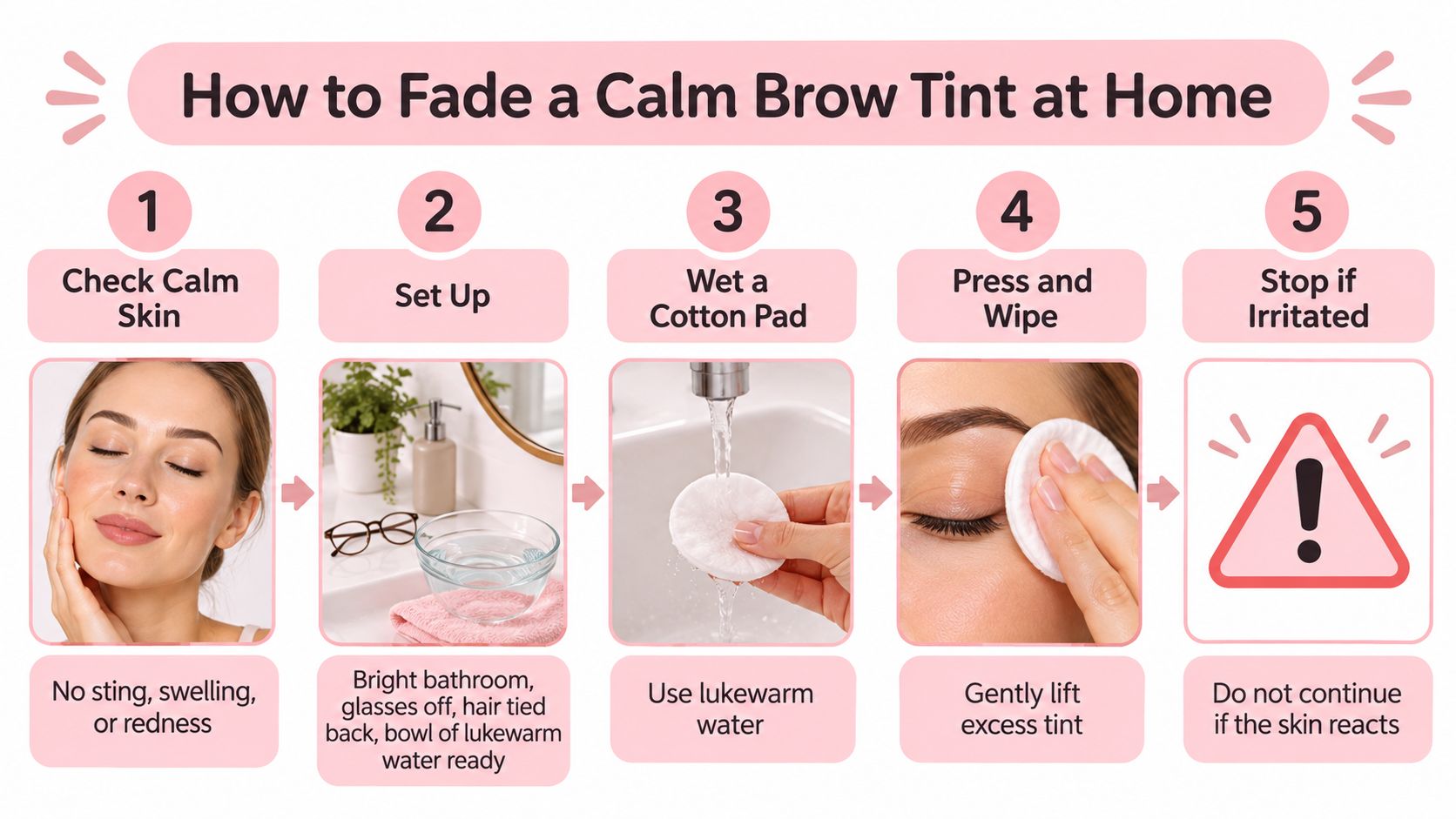
How to Fade a Calm Brow Tint at Home
A tint can look too dark while your skin feels perfectly comfortable. If you know what product was applied and there is no irritation, one gentle attempt may help. If your brows were also laminated, wait until the dry aftercare period has passed before trying an elective correction.
Prepare before touching the brow
Choose a bright spot, tie back your hair and set out a clean towel, lukewarm water and fresh cotton pads. Use a mirror you can see clearly; don't work by feel.
The Australian Industrial Chemicals Introduction Scheme evaluation discusses sensitisation and potential eye-injury concerns associated with relevant dye ingredients. Some phenylenediamine products aren't suitable for brow or lash dyeing. If you can't identify the product, pause rather than improvise.
Make a single targeted attempt
Check the skin and identify the colour. Look for stinging, redness, swelling, broken skin or product near the eye. Work out whether the colour is on the skin, the hairs, or both. Treat only the area that concerns you.
Lift loose residue gently. Dampen a fresh cotton pad and squeeze out excess water. Wipe in the direction of hair growth, keeping the pad away from the eyelid margin and waterline. Use light pressure.
For a skin stain, use a cleanser. Put a small amount of familiar mild facial cleanser or eye-area-suitable micellar water on a pad. Make one brief pass over the stained skin, remove the product according to its directions, then pat dry.
For dark hair, use plain jojoba instead. Smooth a thin film over the brow hairs, keeping it away from the eyes. Leave it on for no more than 5–10 minutes, once that day, then remove it gently with a dry cotton pad, or sooner if anything feels uncomfortable. Don't add cleanser as a second fading treatment.
Put the products away. Check the dry result in daylight and leave the brow alone until the next morning. If the colour looks a little softer, stop there rather than repeating the treatment.
Keep toothpaste, baking soda, peroxide and acid pads out of this routine. Household availability doesn't make them suitable for delicate skin around the eyes. Avoid using heat, sunlight or a sauna to speed fading; controlled, limited contact is the safer choice.
If you can't identify the tint, ask the original salon for the product name, ingredients, batch information, application time and patch-test record. Missing details are not a reason to try a stronger remover. A preliminary skin test may help identify risk, but it cannot guarantee that a later reaction won't occur.
One home attempt is the whole session. The aim is a calmer-looking brow without creating a skin problem.
If both skin and hair look dark, focus on the concern that bothers you most. Leave the rest alone, or seek a technician's advice rather than trying to correct everything at once.
What a Technician Does for Brow Tint Correction
A brow can look too dark for different reasons: tint may have stained the skin, the hairs may have taken on too much colour, or the shape may feel heavier than intended. A careful correction starts by identifying which part needs attention, rather than automatically applying a chemical remover.
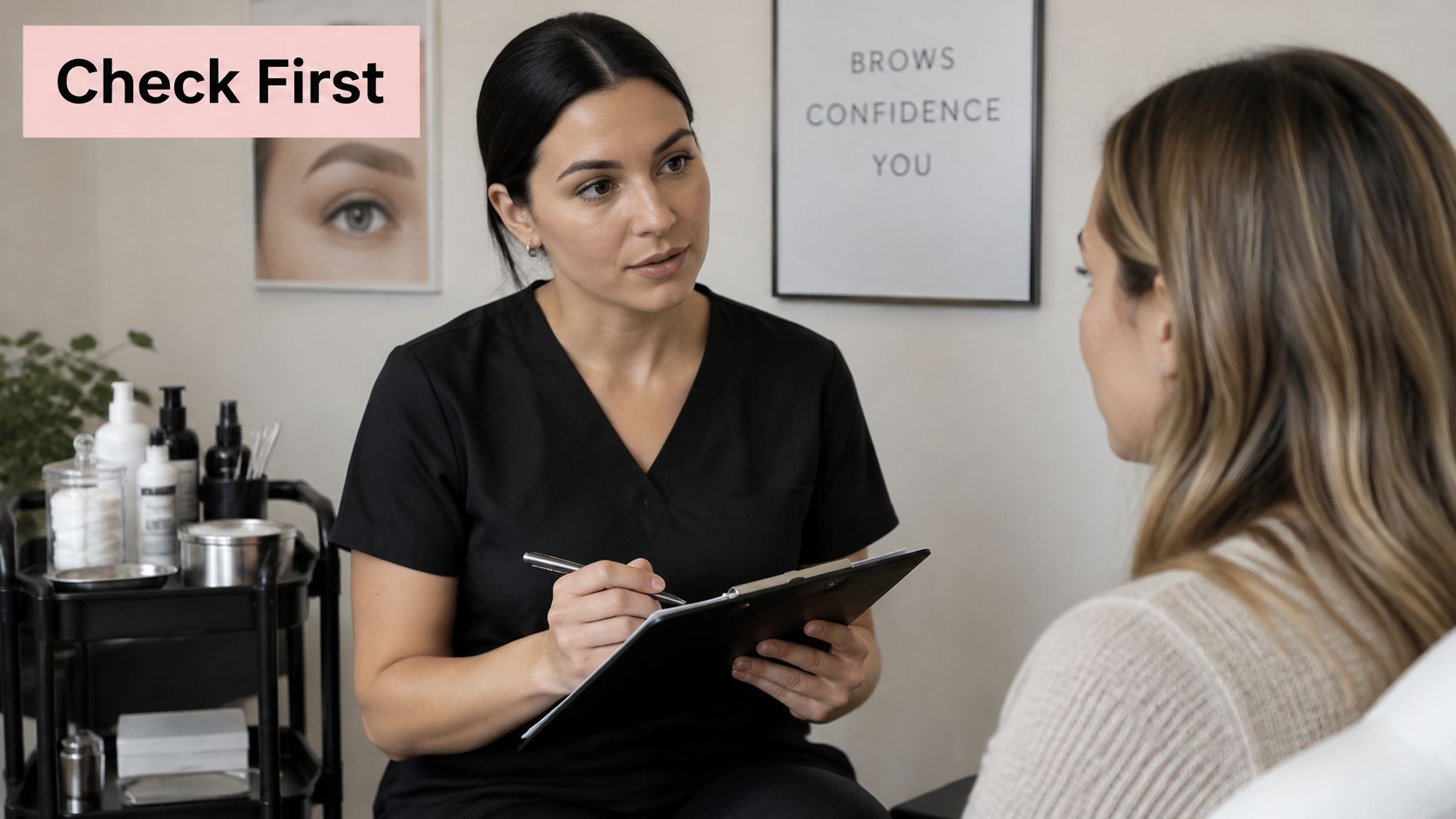
The technician asks for the tint name, shade and processing time, along with any symptoms and products already used at home. Skin staining, hair colour and brow shape are assessed separately. This helps set a realistic goal and avoid treating the whole brow when only one area is the concern.
Burning, blistering, swelling, eye exposure or rapidly worsening redness means the cosmetic service should stop. Seek medical advice, urgent care or emergency assessment according to the symptoms, rather than trying another remover.
Assessment before correction
For comfortable skin, the technician checks the brows in neutral lighting. Warm bathroom bulbs can make colour look different, so the assessment should distinguish a dark outline on the skin from over-darkened hairs.
The consultation clarifies what you want changed:
- Less skin staining: Focus on the visible outline instead of processing all the brow hairs.
- Softer hair colour: Check what the known dye system allows, and whether waiting is the safer choice.
- A less heavy shape: Examine the direction and arrangement of the hairs before deciding that colour needs removing.
- An uneven result: Identify the darker section rather than treating both brows equally by habit.
Correction depends on inspection, not an automatic extra chemical step. The technician should consider the product information, the condition of the skin and the specific concern before deciding whether any treatment is appropriate.
Short passes with a defined stopping point
If correction is suitable, residual surface product may be lifted with a clean, damp applicator. A manufacturer-approved remover should be used only where the product instructions permit it, with care around stained skin. It must not enter the eye or be applied to compromised areas.
Each pass should follow hair growth, with the technician checking skin comfort and visible colour before proceeding. Hair correction is appropriate only when the manufacturer specifically permits it for that product system. The brow is then rinsed as directed, dried and inspected again. Stop if discomfort develops or the skin response changes.
The treatment record matters as much as the visible result. It should note the original product and developer, processing time, remover, exposure duration, skin response and outcome. These details help another practitioner avoid unknowingly repeating an unsuitable treatment.
A salon should not promise a fixed percentage of removal or complete erasure. Dye chemistry, hair condition, development and elapsed time all affect what can be achieved without excessive processing.
Avoid re-tinting irritated skin or adding another treatment immediately after waxing, lamination or other barrier disruption. Persistent eczema-like symptoms need medical assessment, with formal allergy testing where appropriate, rather than repeated salon exposure.
For brow tint correction in Bankstown or Canterbury, sharing the original product details before an appointment can make the consultation more useful. Booking a review allows the technician to assess the brows; it does not commit you to chemical correction.
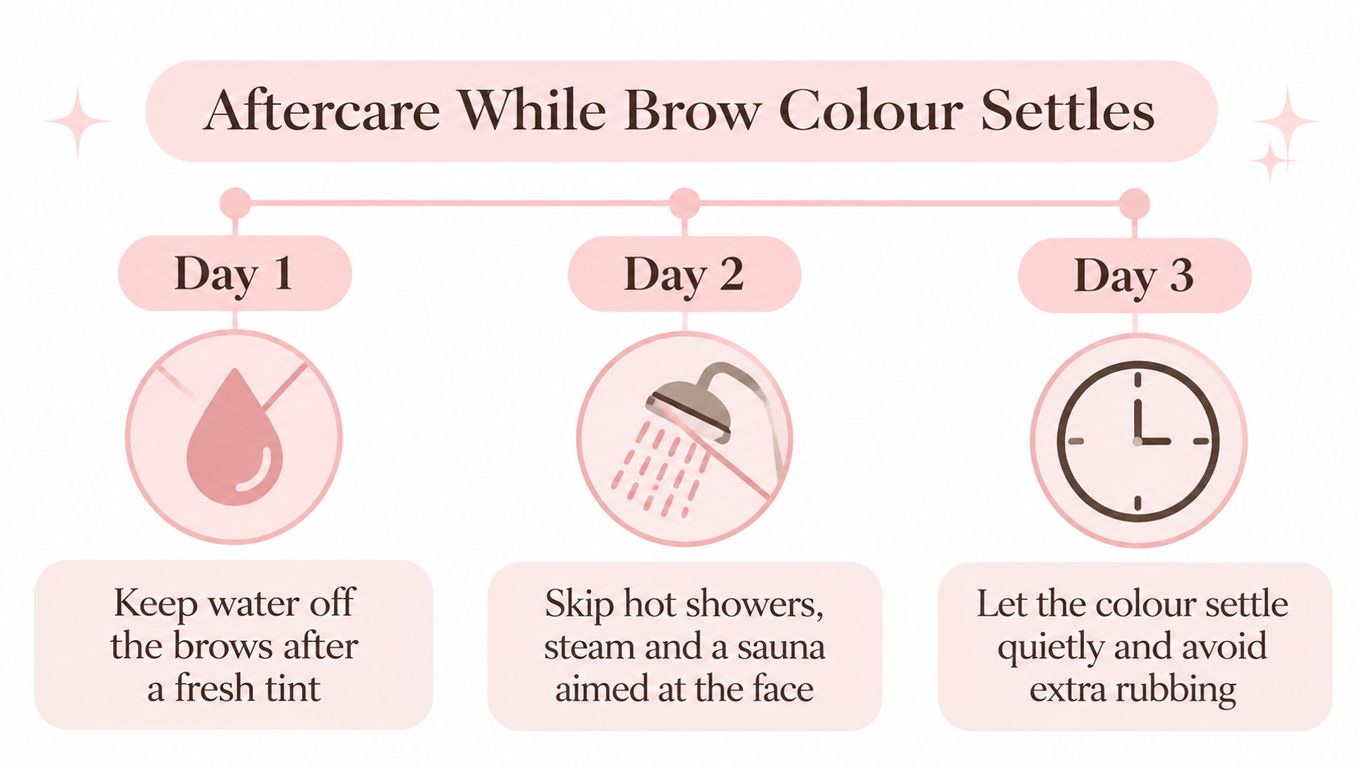
Aftercare While Brow Colour Settles
After the correction attempt, give the area a quiet recovery period. The goal is to keep the skin comfortable while you judge the colour fairly, not to keep encouraging fade with a different product each evening.
Routine dry aftercare never overrides rinsing an irritant or dealing with eye exposure. If you've needed to remove product because of a suspected reaction, follow medical advice rather than trying to preserve the tint.
Follow the days in order
- Day 1 after a fresh tint: Our aftercare is to avoid water contact on the brows. If the colour is darker than you hoped, leave it undisturbed rather than using washing as a fading strategy.
- Day 2: Avoid hot water or steam on the face. Keep your face away from a hot shower stream and skip facial steaming or a sauna.
- Day 3 onwards: Let the colour settle without extra rubbing. Don't turn nightly cleansing into another removal session or park exfoliating creams along the brow bone.
If you also had brow lamination, our policy is to keep the brows dry for 24 hours, with makeup permitted after that period. Don't apply concealer over tender or irritated skin just because the dry window has ended.
Separate colour care from shape care
Lamination isn't permanent. If the hairs lose their arranged shape, use the supplied spoolie daily to brush them into place; adding more tint won't restore their direction. Brush dry brows gently rather than pressing the bristles into the skin.
Our pre-lamination policy is to avoid retinol, AHA and BHA creams for 72 hours before treatment. Keep those actives away from a freshly corrected brow as well, and don't use them deliberately to strip colour. Follow your clinician's advice if you use prescribed skincare.
Let comfortable brows settle in daylight. Don't make another chemical decision under yellow bathroom lighting late at night.
For the next tint appointment, plan preliminary skin testing before each application, not just when trying a salon for the first time. Previous tolerance isn't a guarantee, and a successful fade doesn't eliminate the possibility of delayed symptoms.
Stop home treatment and seek medical advice for redness, itching, blistering, swelling or eye symptoms. Keep the tint and correction notes available so you can explain exactly what contacted the area.
Our brow tint aftercare guide provides the ongoing care reference. For laminated brows, we recommend allowing growth and scheduling the next shaping appointment in about three weeks, rather than repeatedly tidying the same freshly treated skin.
Book a Brow Correction or Wait It Out
Choose between waiting, a professional assessment and medical care according to the brow in front of you. You don't need to justify an unwanted shade by putting up with discomfort, and you don't need to erase comfortable colour immediately to make the appointment worthwhile.
Choose the next step, not another product
If the skin feels normal and the shade is only slightly deeper than you wanted, waiting is the least intrusive choice. Brush the hairs into a softer arrangement and judge the overall result without adding more dye or removal products.
If a visible stain remains after a gentle home attempt, or the colour is uneven enough to bother you, book an assessment. Bring a daylight photograph and the tint details. Tell the technician whether you want a softer front, less skin staining or a different shape, rather than asking for everything to be stripped away.
If you have swelling, blisters or eye irritation, medical care comes first. A beauty appointment can wait until the skin has recovered and any suspected allergy has been assessed.
- Wait when comfortable: A minor colour mismatch doesn't require another chemical service.
- Book when uncertain: Unknown dye, uneven colour or a complicated tint-and-lamination result deserves an informed review.
- Seek care when symptomatic: Don't use a salon correction as a substitute for medical assessment.
Keep the appointment local and realistic
For eyebrow tint correction near Yagoona and Bankstown, or brow reshaping around Roselands, Canterbury and Revesby, compare the appointment location before choosing a time. North Parramatta also gives Parramatta-area clients a suburban option without planning a CBD trip.
Bonna Beauty's brow services include tinting, waxing, lamination, feathering hair stroke and ombre powder shading to address faded colour, poor shape and uneven brows where appropriate. Brow lamination or brow reshape is now from $70; for a limited time, first-time clients receive $10 off lash and brow services with code ONL10. Confirm current pricing, availability and offer conditions when booking, because an assessment may call for waiting rather than treatment.
Cosmetic tattooing isn't an immediate fix for irritated, freshly over-tinted brows. Discuss longer-term options only after the temporary colour and skin condition can be assessed properly.
If your preferred artist isn't available, our booking arrangements let you reschedule or choose another lash and brow artist in your area. A suitable later appointment is better than forcing a same-day chemical fix.
Bonna Beauty offers brow assessment, shaping and colour services to help you work towards softer, more balanced brows without rushing the correction. Visit Bonna Beauty to choose your nearest Sydney studio, check availability and organise a review, bringing your tint details and a daylight photograph.