
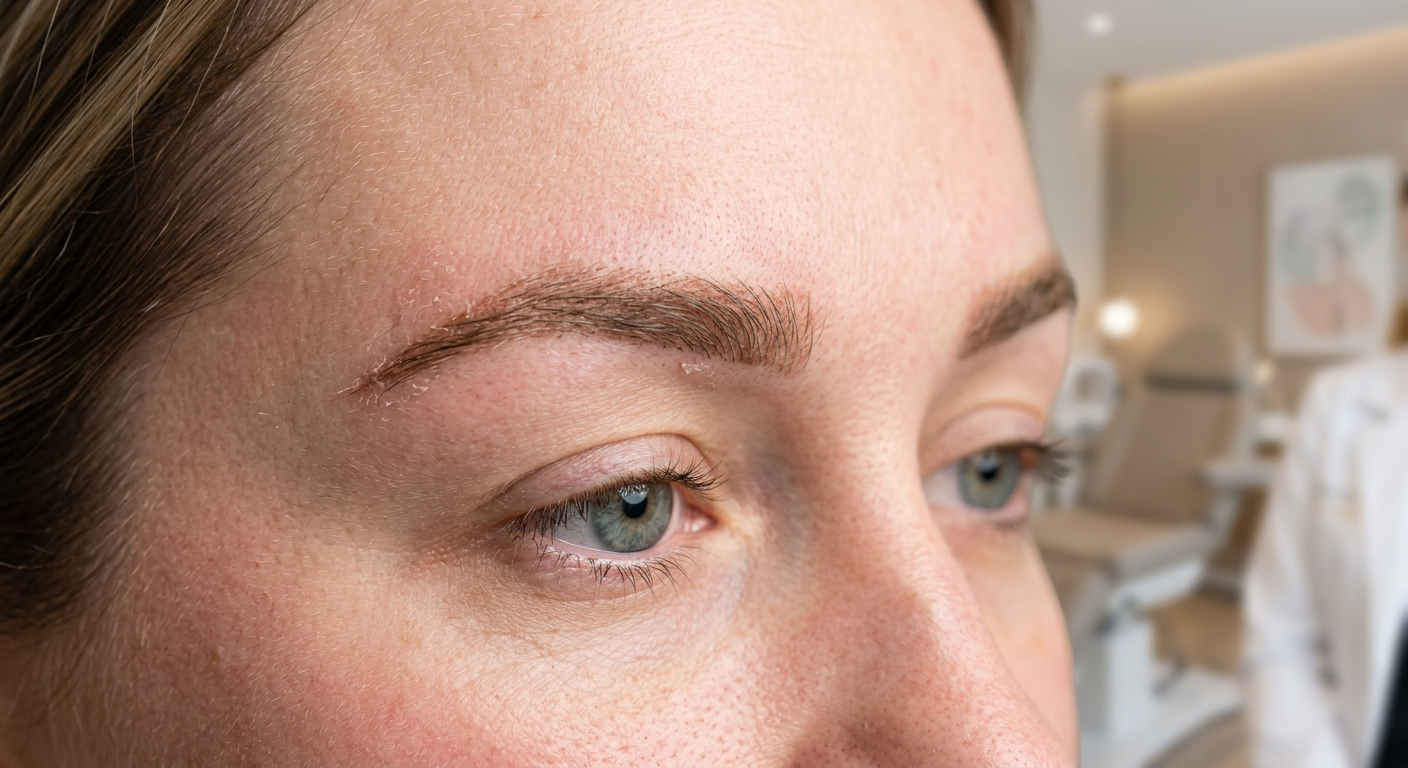
Stepping into the world of cosmetic tattooing can feel like a leap of faith. You are essentially asking an artist to reshape your face, and while the results are often life-changing, the journey to get there involves a patience-testing eyebrow tattooing healing process. It is not just about the procedure; it is about what happens in the weeks that follow when your skin begins its natural restoration.
Quick Summary
The eyebrow tattoo healing process is a multi-week journey where the skin undergoes inflammation, scabbing, and eventual color stabilization. Proper aftercare is the bridge between a fresh tattoo and a perfect result. Successful recovery requires avoiding sun exposure, harsh chemicals, and physical picking to ensure pigment retention and smooth, healthy skin regeneration.
- Day 1-3: Initial redness and bold color intensity.
- Day 4-7: Scabbing and light peeling begins.
- Day 8-14: Flaking subsides as skin smooths out.
- Weeks 4-6: Final pigment settle and touch-up assessment.
Table of Contents
- Understanding the eyebrow tattooing healing process
- Essential eyebrow tattoo aftercare
- The stages of eyebrow tattoo healing
- Common concerns regarding the eyebrows tattoo healing process
- FAQ
- Recommended Reads
Understanding the eyebrow tattooing healing process
If you ask me, the biggest misconception people have is that the work is finished the moment they leave the studio. Honestly, I believe the real work is just beginning. The eyebrow tattooing healing process is biologically complex. Your body sees the pigment as a foreign invader – which, technically, it is – and launches a healing response to push it out. If you are looking to start your journey, consider booking a consultation online to discuss your skin type.
Think of your healing brows like a fresh wound that needs to be pampered, not poked. You are going to go through a phase where the color looks way too dark. Don’t panic. It is just the pigment sitting on the surface of the skin before the magic of cellular turnover kicks in. It is a bit of a rollercoaster, but the destination is usually worth the stress.
Essential eyebrow tattoo aftercare
Good maintenance is the secret sauce. If you neglect your professional eyebrow tattoo aftercare protocol, you are basically throwing your investment in the trash. Keep it clean, keep it dry, and for heaven’s sake, keep your hands off it.
- Use a gentle cleanser recommended by your artist.
- Apply the healing ointment sparingly; a thin layer is all you need.
- Stay away from saunas, pools, and heavy sweating for at least a week.
- Avoid picking at the scabs – seriously, leave them be!
If you find yourself wondering why your brows feel tight or itchy, just remind yourself that your skin is working hard to knit itself back together. It is temporary, and it will pass.
The stages of eyebrow tattoo healing
The initial shift
Right after the session, your brows will look intense. Like, ‘Sharpie-drawn-on’ intense. The surrounding skin might be red or puffy. This is just inflammation. It usually settles down within forty-eight hours.
The flake phase
Somewhere around day four, the itching starts. This is when the dreaded scabbing occurs. Some people experience thick flakes, while others just see a light dusting. Resist the urge to peel them! If you pull a scab prematurely, you risk pulling out the pigment attached to it, leaving you with a patchy result.
The ‘ghosting’ period
Here is a hot take: the most stressful part is when the scabs fall off and the brows look like they have disappeared. The color might look faded or ‘milky.’ Relax! The pigment is still in the skin; it is just obscured by the new, thin layer of tissue that has formed over it. It will return to its true color as the skin clarifies over the next few weeks.
Common concerns regarding the eyebrows tattoo healing process
People often ask, ‘Is it supposed to look this uneven?’ during the eyebrows tattoo healing process. The answer is almost always yes. Because the skin heals in patches, the color saturation will look inconsistent until the entire area has completed the cycle.
Another common fear is infection. If you notice excessive swelling, yellow discharge, or heat radiating from the brow area, that is a red flag. Keep everything sanitary. If you are feeling uncertain, reach out to a professional rather than guessing. It is always better to be safe when it comes to your face.
FAQ
How long does the healing actually take?
Most of the surface healing happens within 14 days, but full color maturity takes about 6 weeks.
Can I wear makeup during the healing process?
No. Keep makeup away from the treated area for at least two weeks to avoid infection.
Will the color stay as dark as it looks on day one?
Absolutely not. The color will fade by about 30-40% as the scabs fall off and the skin stabilizes.
What if I pick the scabs by accident?
It happens. Don’t panic, but do not do it again. You may need a touch-up later to fill in the spot where the pigment was pulled.