
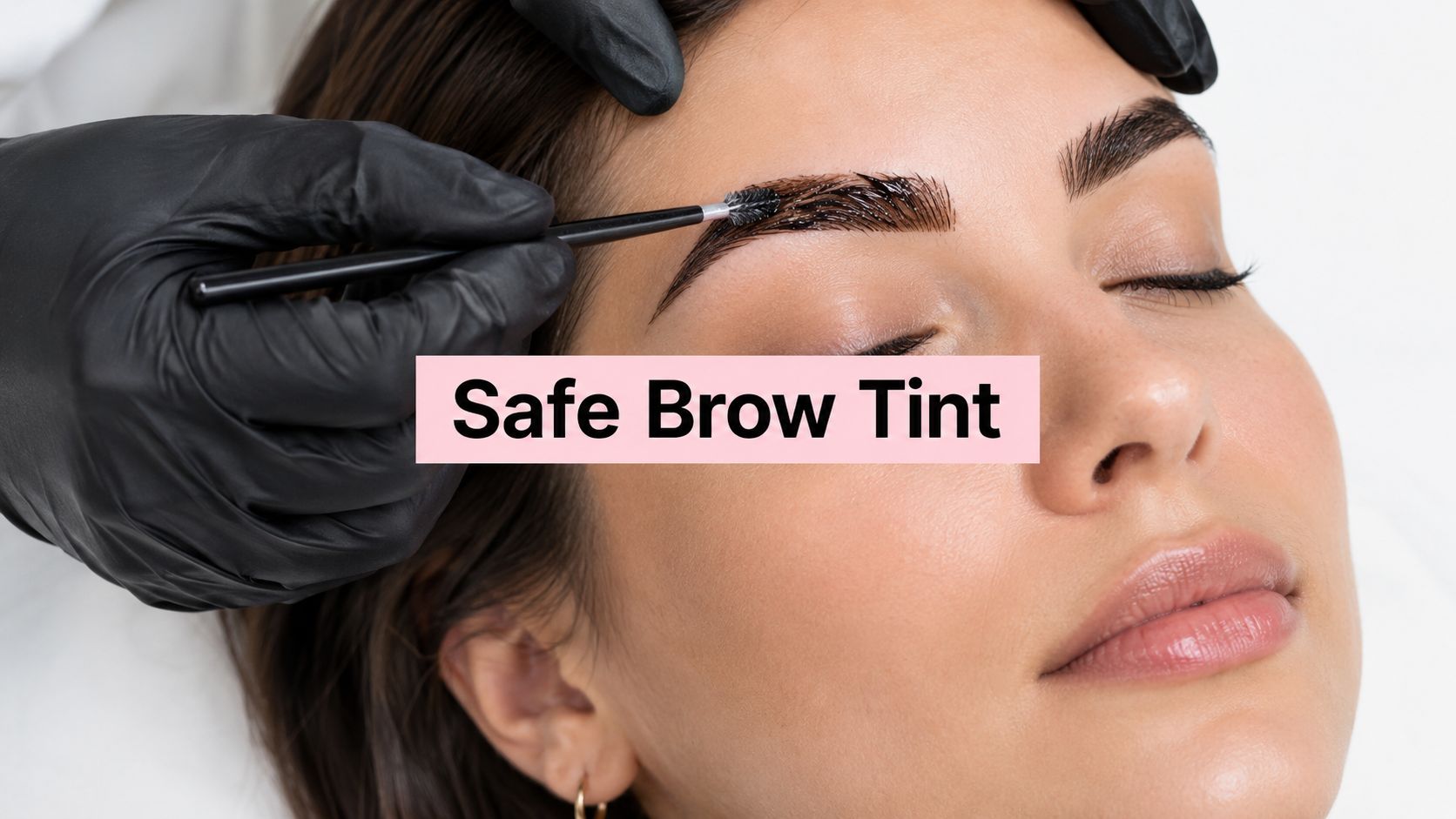
A safe brow tint for sensitive skin requires a PPD-free formula and a documented 48-hour patch test before every treatment. That process gives you the best chance of achieving defined, natural-looking brows without treating irritation as an acceptable trade-off.
You may be booking a brow appointment because your brows look pale, uneven or sparse, yet standard tint has previously left the surrounding skin itchy or red. The colour result matters, but the skin around the eyes needs more careful handling than a routine beauty service. In Sydney, a responsible brow appointment should begin with an ingredient conversation, a fresh patch test and a willingness to stop if your skin gives a warning.
What Brow Tint for Sensitive Skin Requires
A client may arrive wanting stronger, more even brows after standard tint has left the skin around her eyes uncomfortable. In that situation, colour payoff is only one part of the service. The brow area sits close to the eyelids, where thin, exposed skin can be disturbed by product spread, removal, movement or imprecise placement.
A safety-first appointment accepts that the darkest possible colour isn't always the best result. A softer shade can provide definition without encouraging a stronger formula or a longer processing time. That is a practical trade-off, not a compromise in technique.
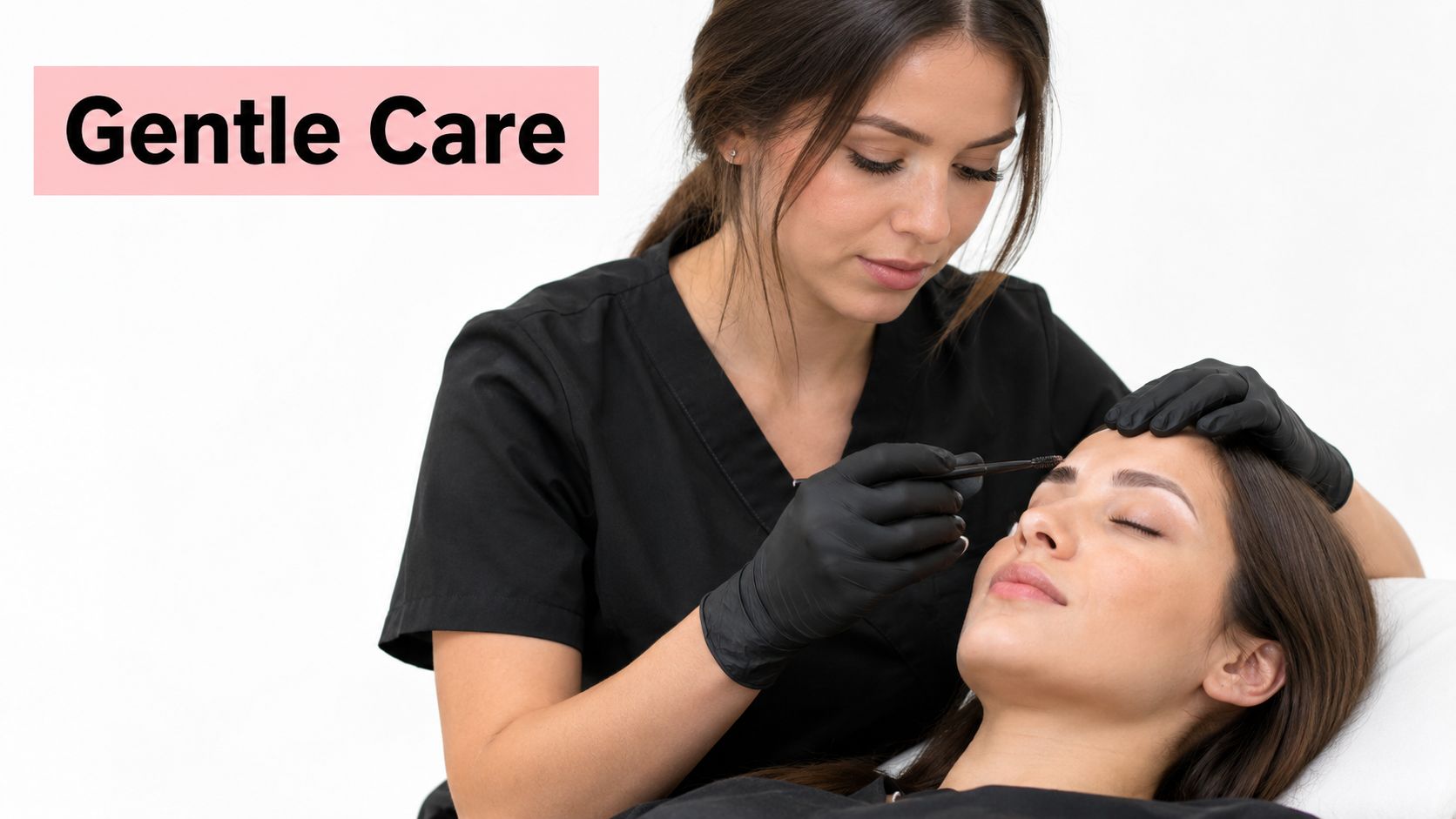
A safer appointment starts before the tint
Ask the technician to review four points:
- The formula: Confirm whether it contains PPD or other oxidative dye precursors, and discuss whether a gentler alternative is appropriate.
- The test record: The salon should document the product used, the date, the outcome and relevant skin concerns.
- The application plan: Product should be placed accurately on the brow hair rather than spread across the surrounding skin.
- The condition of your skin: Broken, inflamed, freshly exfoliated or irritated skin should not be tinted.
Australian cosmetics guidance identifies cosmetics as common triggers and reports that around 10% of the general population experience side effects, hypersensitivity or allergy-related irritation from cosmetics. Australian cosmetics consultation guidance also notes that cosmetic allergic contact dermatitis commonly affects the face and eyelids. This places brow tinting within Australia's broader chemical safety and labelling context. Ingredient review, clear records and controlled application are part of compliant professional practice, not optional extras.
Practical rule: If a salon cannot explain its product ingredients and safety process, choose another salon rather than trading safety for convenience.
Why Patch Testing Matters for Eyebrow Tint Reactions
A brow tint can look comfortable in the salon and still cause problems later. Irritation may appear quickly, while allergic contact dermatitis can develop after exposure and become noticeable within 24 to 48 hours. Australian cosmetics safety information explains why a comfortable appointment does not confirm lasting tolerance. Repeated use can also trigger a reaction after months or years without trouble.
Sensitisation changes the risk. Previous contact may prime the immune system, so a familiar formula is not automatically safe for the next appointment. A patch test checks for a possible reaction before the product is applied to both brows. It reduces risk, although it cannot guarantee that a reaction will not occur.
Why Australian regulation changes the conversation
Brow tinting is also a chemical safety and compliance issue, not just a choice between lighter or darker colour. The Australian industrial chemicals evaluation statement states that phenylenediamines such as PPD are used in semi-permanent hair dyes. It also notes that some related phenylenediamines are prohibited in cosmetic preparations and skin colouration under the Poisons Standard.
The same regulatory material warns that products containing these dyes must not be used to dye eyelashes or eyebrows because they may injure the eye. A Sydney beautician should therefore use a product made for eyebrow services, follow its directions and never adapt hair dye for the brow area.
A patch test is a risk-control step. It cannot confirm that a product is suitable simply because the colour looks attractive.
Hypoallergenic Brow Tint Options and Safer Formulas
The word hypoallergenic should never end the conversation. It may describe a product's positioning, but it doesn't prove that every person with reactive skin will tolerate it. Read the ingredient list, tell the technician about previous reactions and ask what changes when a sensitive client is booked.
Many oxidative brow tint systems use dye precursors such as PPD, toluene-2,5-diamine and m-aminophenol, often alongside a hydrogen peroxide developer. These ingredients help create durable, visible colour, but they also create a more important question for sensitive clients: does the colour payoff justify the potential exposure?
Comparing practical choices
| Formula approach | What it can offer | The trade-off |
|---|---|---|
| Oxidative tint | Stronger, more lasting colour on suitable brow hair | Greater concern for clients with dye sensitivity or previous reactions |
| PPD-free tint | Removes PPD from the formulation | PPD-free doesn't mean allergy-free, so testing still matters |
| Peroxide-free system | May reduce exposure to developer-related irritation | Colour intensity and durability may be more limited |
| Henna-based option | Can create a fuller-looking stain and a softer makeup effect | Plant-based doesn't automatically mean safe for every client |
For a client with reactive skin, I favour the lowest-irritancy system that can deliver the requested result, rather than using the strongest tint by default. A PPD-free or peroxide-free option may produce a gentler, less dramatic finish, but that can be a sensible exchange for better comfort and a more conservative service.
Shade selection matters too. A light brown or soft brown can define the brow without the heavy, painted effect that often leads clients to over-process the skin. You can see how a light brown eyebrow tint can support a more restrained colour direction.
How to Do a Proper Brow Tint Patch Test
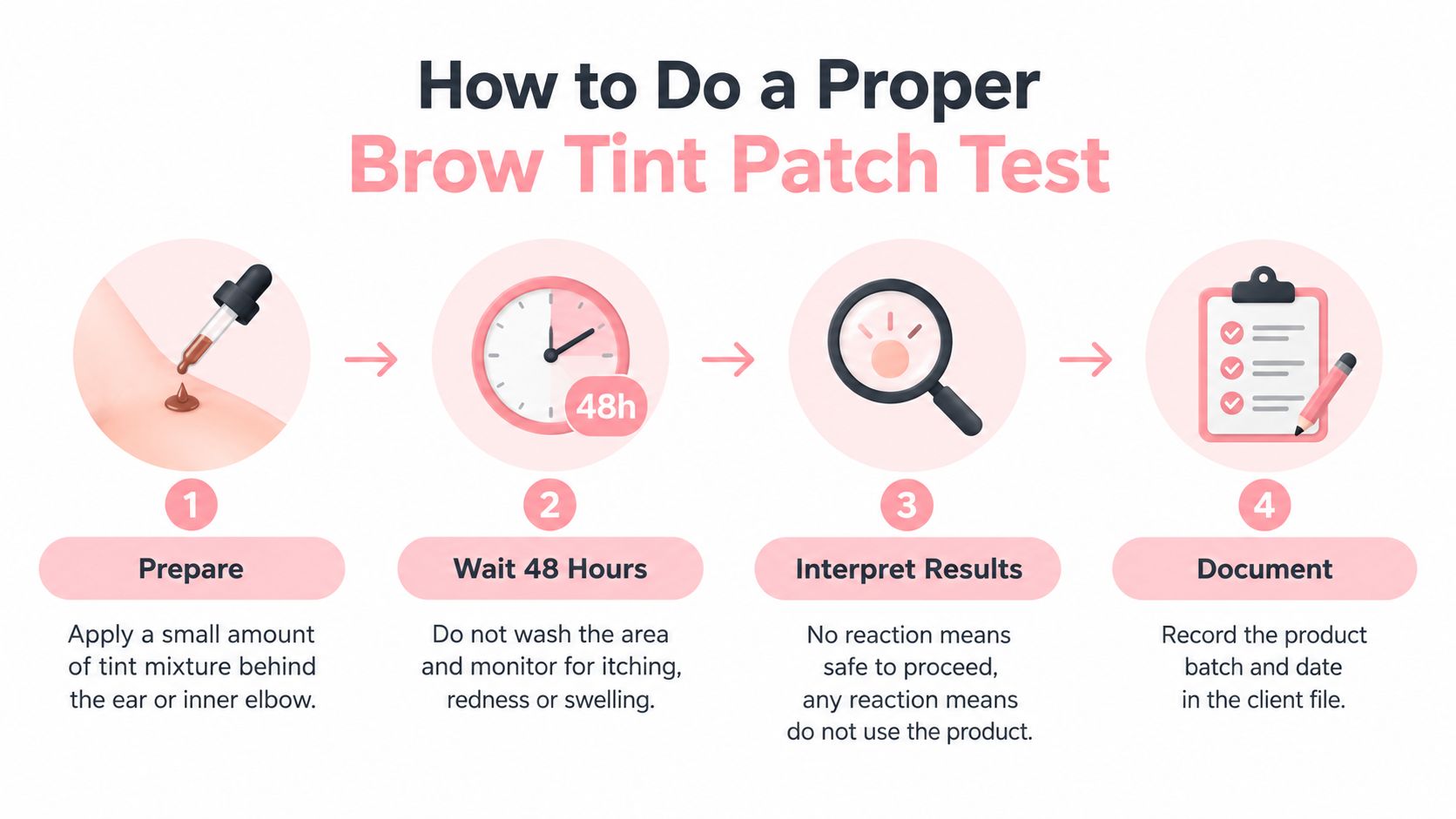
A proper patch test uses the prepared product according to the manufacturer's instructions and gives the skin enough time to respond. For sensitive skin, the safe working standard is a documented 48-hour test before every treatment, especially for a new client, a new tint brand, a changed formula or a client whose skin condition has changed.
Follow a repeatable process
Prepare the test. The technician mixes the product as directed and applies a small amount to an appropriate test area, such as behind the ear or on the inner elbow. The test area should be clean and free from active irritation.
Wait the full 48 hours. Don't treat the waiting period as a formality. Observe the area for itching, burning, redness, swelling, rash or unusual dryness. A delayed reaction can be missed if you check only immediately after application.
Interpret the result carefully. If any reaction develops, don't use that product on the eyebrows. A clear test reduces uncertainty, but it doesn't remove the need for careful application around the eyes.
Document the decision. The salon should record the product, shade or batch information, test date and result in your client file. If you report a previous reaction, that information should remain part of your service history.
Australian brow guidance commonly uses a 24 to 48-hour waiting window because reactions may be delayed. Australian eyebrow tint guidance reinforces the importance of testing before the service rather than relying on a client's previous experience with a similar shade.
Don't proceed if the test area reacts, if your skin is currently inflamed, or if you feel uncertain about the product. Clients with repeated reactions or significant cosmetic allergies should discuss the issue with a GP or qualified medical professional.
Pre-Care and Post-Care for Sensitive Brows
Sensitive-skin preparation begins before you arrive. Don't book brow tint over sunburn, broken skin, a fresh rash or an area that feels unusually hot, tight or sore. Tell the technician about active skincare, recent exfoliation, retinoid use, eczema around the brows and any previous reaction to hair colour or cosmetics.
Keep the appointment simple. Arrive with clean brows unless the salon gives different directions, and avoid adding new skincare products to the area just before treatment. Your technician needs to see the actual skin condition and apply the tint precisely without working through layers of makeup or residue.
After the appointment
For the first part of the aftercare period, avoid rubbing, scratching or repeatedly checking the brows. Use gentle cleansing, keep strong exfoliants away from the tinted area and don't apply fragranced products directly over newly treated skin.
Colour naturally softens with washing and skincare, so don't try to force a darker result by leaving products on longer or scrubbing the brow area. Sensitive skin usually responds better to calm, consistent care than to corrective over-treatment.
- Watch comfort first: Mild temporary awareness can settle, but increasing itch, heat or swelling deserves attention.
- Protect the skin barrier: Avoid exfoliating directly over the brows until the area feels normal.
- Follow the salon's directions: The brow tint aftercare guidance should complement, not replace, the product manufacturer's instructions.
- Report changes clearly: Tell the salon what you used, when symptoms began and whether they are spreading.
Signs of Reaction After Brow Tint Treatment
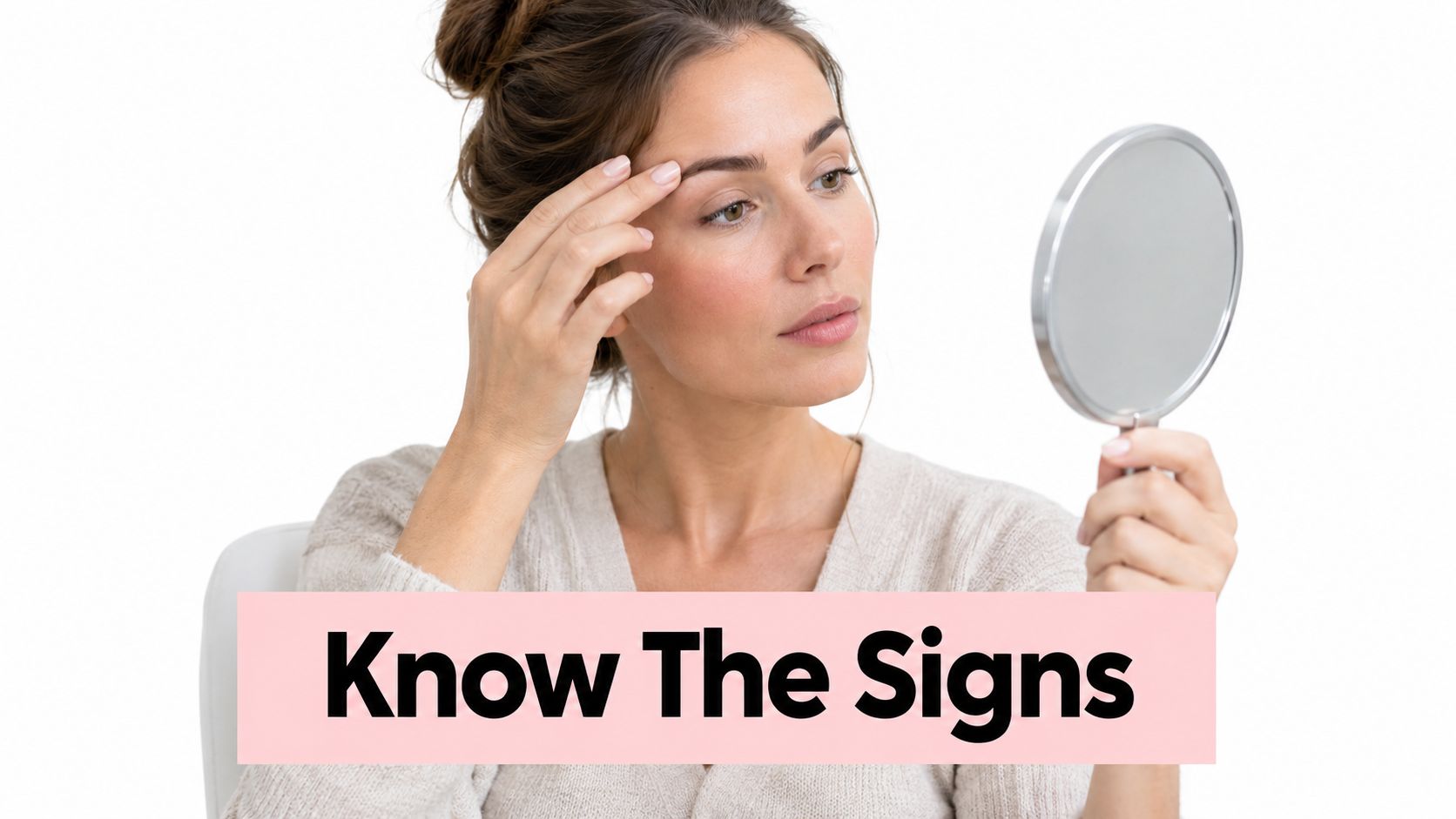
The first signs of a brow tint reaction can include itching, redness, swelling, burning, tightness or a rash around the brow and eyelid area. Symptoms may be localised at first, then become more noticeable later. Australian cosmetics guidance places common allergic contact dermatitis symptoms within 24 to 48 hours, although individual responses vary.
Mild short-term sensitivity isn't the same as a progressing reaction. The direction matters. Skin that is becoming more swollen, increasingly itchy or visibly inflamed shouldn't be managed by applying more cosmetics over the area.
What to do next
Stop using the tint and avoid rubbing or scratching the skin. Don't apply another dye, exfoliant, fragranced cream or unfamiliar home remedy to cover the symptoms. Contact the salon so the product, shade and application details can be recorded, then speak with a GP if symptoms persist, worsen or concern you.
Seek urgent medical attention for rapidly increasing facial swelling, breathing difficulty or a severe reaction. Those symptoms aren't a routine brow aftercare issue.
Keep a note of when the service occurred, when symptoms began and what the skin looked or felt like. That record can help a healthcare professional assess the reaction and can prevent the same formula from being used again.
Stop signal: Burning that intensifies, swelling around the eyes or a rash that continues to spread means the colour result no longer matters. The service must stop.
Choosing a Safe Brow Tint Salon in Sydney
A Sydney salon should be able to answer practical questions without making you feel difficult for asking. Before booking, ask whether the tint is intended for eyebrows, whether a PPD-free option is available, how the salon records patch tests and what happens if your skin reacts.
Location is useful, but convenience shouldn't replace safeguards. Bonna Beauty operates home-based style studios in Bankstown at Yagoona, Roselands and Canterbury, Revesby, and North Parramatta, with access designed around local clients and nearby transport routes. If you're comparing options for brow tint around Bankstown in Sydney, use the same safety questions wherever you book.
Questions worth asking
- Product choice: Is the formula PPD-free or peroxide-free, and can I see the ingredient information?
- Testing: Will you complete and document a fresh 48-hour patch test?
- Technique: How do you keep the mixture away from the eye and limit contact with surrounding skin?
- Training: Are technicians trained in brow tinting, patch-test procedures and reaction protocols?
- Client records: Will you note my result and any previous sensitivity for future appointments?
Sydney's local search area extends beyond one suburb. Clients may look for sensitive-skin brow tint in Bankstown, brow tinting in Roselands, eyebrow tint in Canterbury, brow services near Revesby or brow tint near North Parramatta. The right choice is the studio that combines location access with clear safety processes.
Making Safe Brow Tint Choices With Confidence
A sensible plan is straightforward. Choose a brow-specific, PPD-free formula where appropriate, request a documented 48-hour patch test, and postpone the appointment if the skin is inflamed or damaged. Discuss previous reactions before colour selection, not after the tint has been mixed.
The safest result may be softer than the darkest result. That isn't a failure. A controlled shade, precise application and calm aftercare can give the brows definition while respecting the skin's tolerance. If a formula causes a reaction, don't assume another shade in the same system will automatically be suitable.
Bring your product history to the appointment, ask direct questions and treat any delayed symptoms seriously. In Sydney, whether you're travelling from the CBD, The Rocks, Surry Hills, Darlinghurst, Pyrmont, Ultimo, Redfern, Waterloo or Alexandria, professional caution should remain the same.
Bonna Beauty provides brow tinting, brow shaping and related brow services across its Sydney studios, with patch testing and sensitive-skin discussions forming part of a careful booking process. Visit Bonna Beauty to review the available locations and book a consultation before your next tint.