

You're probably juggling a due date, a hospital booking, and a partner who keeps asking whether a doula is “really necessary”. In Australia, that question usually comes down to money, access, and how much continuity you can get from the maternity system. If you want steady support, clear communication, and someone who isn't rushing out of the room, finding the right doula can make the whole experience feel more manageable.
That doesn't mean a doula replaces your midwife or doctor. In Australia, doula care is non-medical emotional, physical, and informational support during pregnancy, labour, birth, and early parenting, and the Better Health Channel is clear that doulas are not registered health professionals, aren't covered by Medicare or private health insurance, and charge privately set fees that vary by provider (Better Health Channel). So if you're looking for a doula, you're really choosing a private support person to fill the gaps the formal system often leaves open.
Why Finding the Right Doula Matters for Australian Families
A lot of Australian parents start here because they have already hit the limits of the system. You call the hospital, get a short answer. You ask friends, get six different opinions. You search “find a doula” and realise there are plenty of names, but no clear standard for quality.
A doula sits alongside the formal maternity system, not inside it as a regulated clinical profession. The Better Health Channel's guidance makes that plain, and it also points people to a national directory, which tells you the service had an established footprint in Australia by the mid-2010s (Better Health Channel).

What a doula does in Australia
A doula provides emotional support, physical comfort, and practical information. In plain English, that means someone who can help you prepare, stay calm during labour, and keep the conversation understandable when the room gets busy.
That matters because Australian maternity care is often fragmented. Some families have a good midwife relationship, others are handed from one clinician to another, and that gap is exactly where a doula earns their keep. In regional Australia, media reporting has shown doulas becoming more visible as maternity services close and families try to secure continuity of care. ABC's March 2024 coverage described that shift, and earlier reporting from 2019 said there were only about 12 doulas operating in Tasmania at the time, which gives you a sense of how niche the service once was in some places (ABC coverage summary).
Practical rule: If your local maternity pathway feels fragmented, a doula is often less about “extra help” and more about having one consistent person who knows your preferences.
What to expect if you are comparing options
Do not assume every doula offers the same thing. Some are stronger on birth preparation, some on calm labour support, some on postpartum help, and some work mainly with specific communities. That matters because Australian access is uneven, especially outside major cities and outside the few funded continuity models families hear about.
A smarter way to think about it is this. If you cannot access a full midwifery continuity model, a doula can be the next-best continuity layer. That is a practical call, not a clinical one, and it reflects how people are using the service across Australia.
Where to Search for a Doula Near You
Start local, then widen the search. If you want someone who can get to your hospital, birth centre, or home in time, there is no point chasing names from across the city. Use directories and referrals first, then check the basics before you call anyone, and keep your search close enough to your birth setting to be workable (Selection Criteria for doula selection).
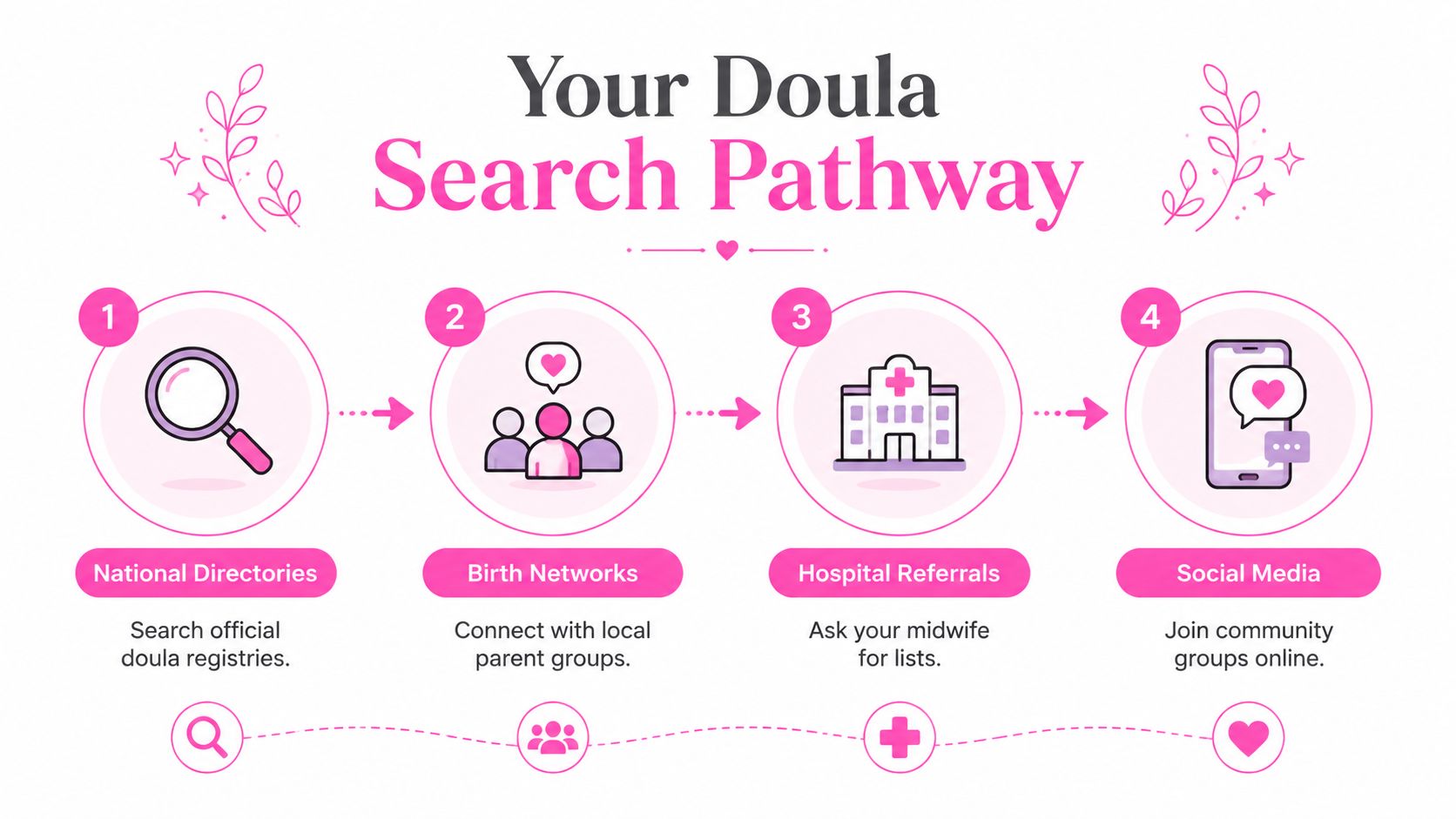
Use directories first, not last
Directories save time because they put availability, training, and contact details in one place. They are the cleanest starting point if you want to compare options without chasing scattered posts and old recommendations.
After that, ask your midwife, GP, or local parent group for names. Midwife referrals are especially useful because they tell you how a doula works in practice, not just how they describe themselves online. Searching from Sydney or a nearby region, a local directory can be more useful than a generic search, and the regional guide approach used in Sydney-area beauty content shows why location-specific listings tend to work better than broad, vague lists.
Match the search to your suburb and hospital
Search by suburb and hospital catchment, not just “Sydney doula”. Parents in Bankstown, Parramatta, Roselands, Canterbury, and North Parramatta often need someone who knows hospital routines, parking, and birth centre rules. That matters when your care is split across reception staff, obstetric teams, and shift changes.
Use this filter: Can they attend your actual hospital, not just “somewhere in Sydney”? If the answer is vague, keep looking.
Don't ignore social proof, but don't worship it
Facebook groups, birth networks, and community pages can help you find names quickly. Use them to build a shortlist, then check each doula's training, availability, and contract terms. Popularity is not the same as fit.
Regional families need an extra layer of scrutiny. Ask whether the doula will travel, whether they offer remote planning support if in-person attendance is difficult, and whether they understand the practical limits of regional maternity care. If they cannot explain that clearly, move on.
Cultural fit matters too. Ask how they support families with different languages, customs, and decision-making styles, and whether they are comfortable working alongside hospital interpreters or family advocates. If your care needs are specific, your doula search should be specific as well.
Birth Doula vs Postpartum Doula
Parents mix these up all the time, and the distinction matters. A birth doula supports you through pregnancy, labour, and the birth itself. A postpartum doula steps in after birth, when sleep is broken, feeding is messy, and the house is not running on your old schedule.
That difference changes who you hire, when you hire them, and what you pay for.
| Aspect | Birth Doula | Postpartum Doula |
|---|---|---|
| Main focus | Labour and birth support | Recovery and newborn transition |
| Timing | Pregnancy through birth | After the baby arrives |
| Typical support | Birth planning, comfort measures, emotional support | Feeding support, baby settling, practical household help |
| Best for | People wanting continuity during labour | Families who need help at home after birth |
| Usual decision point | Before the due date | Before or shortly after the baby arrives |
Choose the one that matches your biggest stress point
If labour is your main fear, hire a birth doula. If your main fear is coming home with a baby and no sleep, hire a postpartum doula. If both are stressing you out, paying for both can make sense, but only if your budget can handle it.
A lot of families assume they need one package that covers everything. That is not realistic for most households. Birth support solves one problem, post-birth recovery solves another. In Australia, where hospital care is often fragmented and continuity models are scarce, that split matters even more. If you are juggling different clinicians, shift changes, and limited public follow-up, be honest about where the gap is.
Don't buy overlap you don't need
If you already have strong family help after birth, a postpartum doula may be optional. If your labour support is already covered by a trusted support person and you mainly need help with feeding, settling, and recovery, a postpartum doula is the better use of money.
Ask yourself what the plan looks like once you leave hospital. If your family is multilingual, culturally diverse, or relying on an interpreter or family advocate, choose someone who can work cleanly alongside that support and with your hospital team. The right hire solves the gap you have, not the one that sounds like the best option on paper.
How Bornbir Can Help
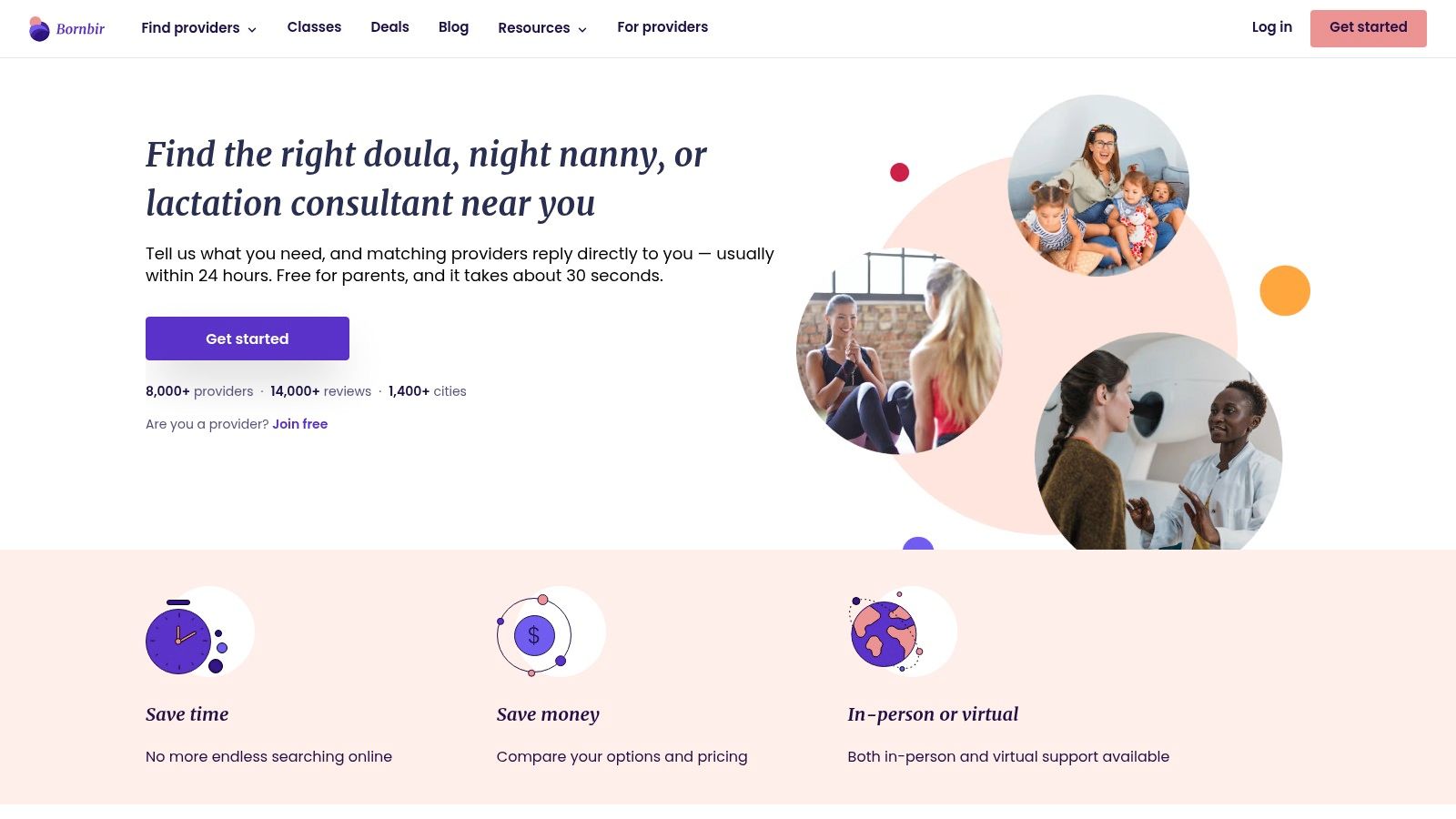
If you're tired of jumping between directories, social groups, and random recommendations, a marketplace can make the search faster. Bornbir is useful because it connects expecting and new parents with perinatal support providers across pregnancy, birth, and postpartum, so you're not rebuilding the shortlist from scratch every time.
The practical value is speed and comparison. You can narrow down options, compare services, pricing, and availability, and message providers directly. If you want a starting point rather than a blank search page, their find a doula page is a sensible place to begin because it keeps the process organised instead of chaotic.
What it solves for Australian parents
The biggest problem with doula shopping is fragmentation. One person has availability but no fit. Another has good reviews but no clear fee structure. A third is a great match but can't travel to your hospital.
A platform helps you compare those variables side by side. That matters most if you're trying to make a decision before the due date and you don't want to spend evenings chasing half-answered messages. Providers listed are independent professionals, so you still need to verify licensure, insurance, and fit yourself.
When it makes sense to use it
Use a platform when you want a faster shortlist, when you're juggling multiple care needs, or when you want a clearer sense of who is available. It's especially helpful if you're early in the process and still deciding whether you need birth support, postpartum help, or both.
If you already know exactly who you want and you've been referred directly by a trusted midwife, you may not need a marketplace at all. But if you're starting from zero, it saves time.
How to Interview and Vet Doula Candidates
A good doula interview should feel direct and practical. You are hiring someone for a serious family role, so do not get distracted by polished photos or a friendly tone. Ask about training, experience, insurance, working-with-children clearance, ethics, and how they handle pressure when a birth changes course.
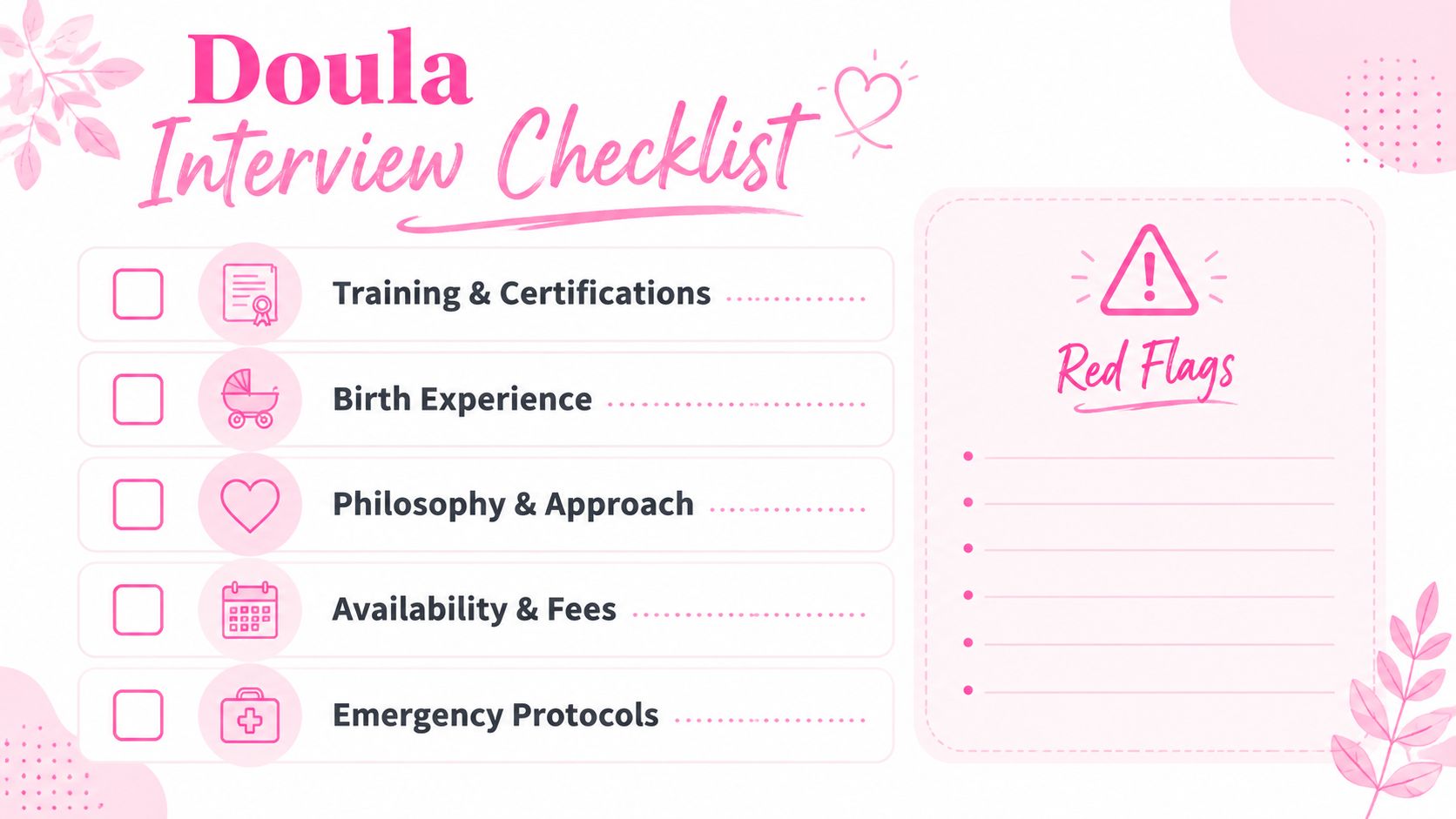
Ask blunt questions, then listen for straight answers
Use questions that force clarity. A decent doula should answer cleanly when you ask about availability, inclusions, backup coverage, and how they work with your hospital or birth centre.
Use the same discipline you would apply to any other family service, including a city-specific selection guide, compare scope, credentials, and fit before you commit.
Here's the minimum set I'd use:
- Training and certification: What training have you completed, and what does it cover?
- Experience: Have you supported families with situations like mine?
- Availability: Will you be on call around my due date?
- Fees and inclusions: What's included, what costs extra, and do you offer payment plans?
- Hospital coordination: Have you attended births at my hospital before?
- Ethics and boundaries: How do you work alongside midwives and doctors?
Watch for red flags, not just weak answers
A doula who promises a specific birth outcome is overstepping. So is someone who pushes you to book immediately, won't explain their contract, or can't tell you what happens if they are unavailable.
Use the selection criteria in the Selection Criteria for doula selection PDF as your benchmark for checks like a working-with-children check and a clear code of conduct.
Don't sign on the spot
Wait at least 24 hours after the interview before deciding. That pause gives you time to separate relief from sound judgment.
Bottom line: A good doula interview should leave you calmer, not pressured.
Budget and Contract Considerations
Start with the blunt truth. In Australia, doula care is usually a private expense. Medicare does not cover it, private health insurance rarely does, and fees vary by provider.
That means you are paying for continuity, not a standard clinical service. In a fragmented hospital system, that support can be worth the money, but only if you know exactly what you are buying.
What a sensible budget should cover
A proper doula package may include prenatal meetings, labour attendance, phone support, postpartum check-ins, and backup coverage. If a provider is vague about inclusions, treat that as a warning sign. You do not want surprise charges after you have already committed.
Ask for the fee schedule and contract before you book. A good provider should spell out the basics in plain English:
- Scope of support: Pregnancy, labour, birth, postpartum, or a mix.
- Cancellation rules: What happens if your plans change.
- Backup arrangement: Who steps in if the doula is sick or already at another birth.
- Payment terms: Deposit, instalments, and due dates.
- Hospital limitations: Whether they can attend your chosen hospital or birth centre.
Payment plans help, but the fine print matters
A payment plan can make private support more manageable if you cannot pay the full fee upfront. Read the contract carefully. Flexible payment does not mean flexible expectations, and it does not mean you should accept unclear terms.
Ask how the provider handles late payments, missed meetings, refunds, and changes to your birth plan. If they cannot explain those points without confusion, keep looking.
You also need to be realistic about the system around you. Public continuity-of-care models are limited, hospital care can be fragmented, and a doula is not a substitute for good clinical communication. In culturally diverse families, ask how the doula works with interpreters, supports different birth practices, and coordinates with midwives and doctors without taking over the room.
For current fee guidance, check the provider's own schedule or compare several local doulas side by side. That is the only way to judge whether the price matches the support on offer.
What the Evidence Shows About Doula Support
Australian evidence is useful because it is less glossy than the marketing. In a realist evaluation of a volunteer doula program, 44% of supported women reported increased birth confidence, 28% reported no change, and 28% reported a decline (PMC realist evaluation). That is the part too many websites skip. Doula support helps many people, but the experience is not identical for everyone.
So don't buy the fantasy that a doula automatically fixes birth. She doesn't. What she can do is improve the experience around the birth, especially when the room feels rushed or confusing.
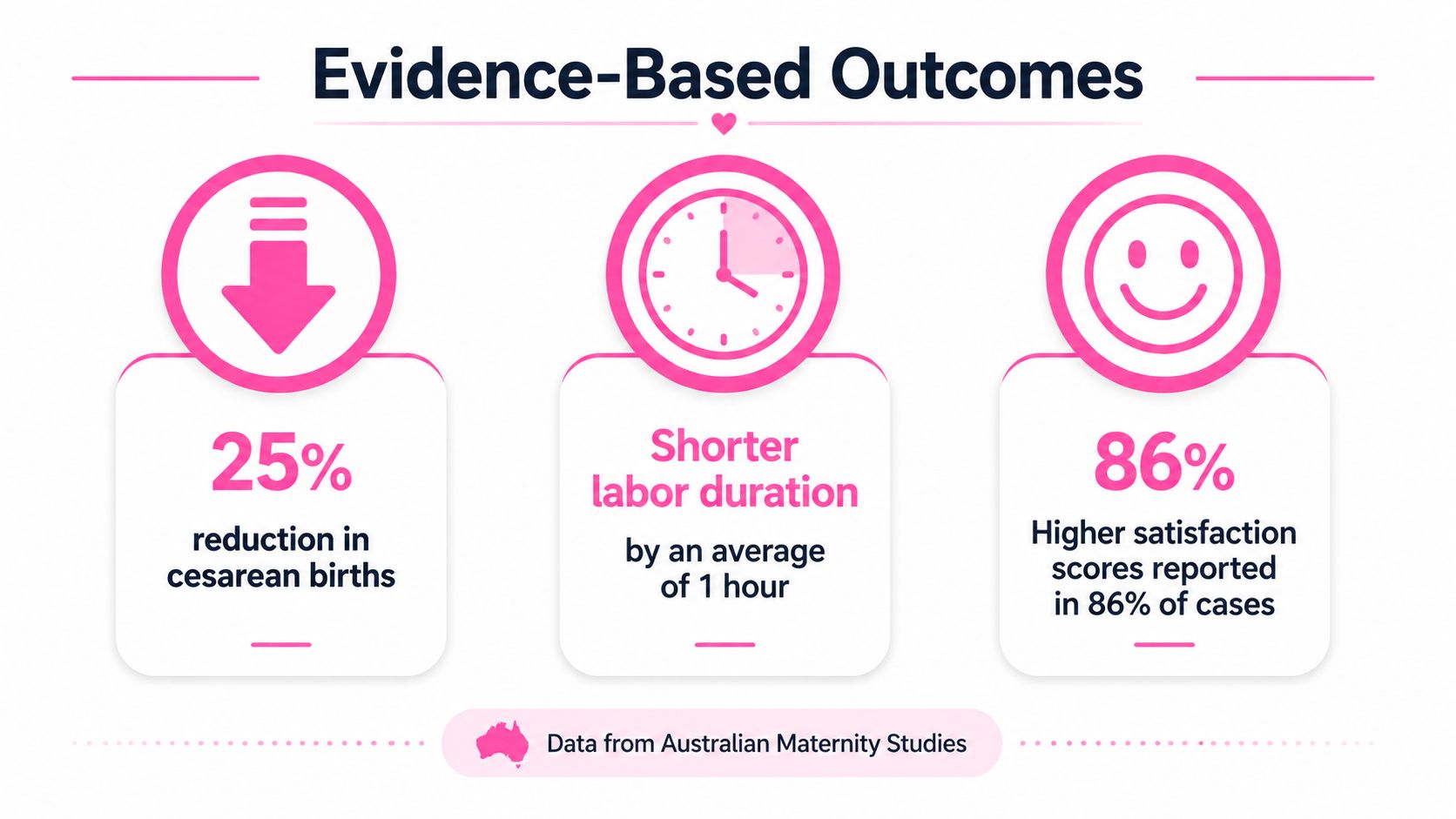
The system problem is bigger than the support role
Australian qualitative research found that community-based doulas were seen as strengthening culturally responsive maternity care for migrant women, but it also pointed to barriers such as limited understanding of the doula role, limiting behaviours, and too little chance for doulas and providers to build rapport (Australian qualitative research). That matters because the question is not only whether you like the doula, it is whether the hospital team will work with her properly.
That is the issue for migrant, refugee, and culturally diverse families. The support can be valuable, but it still has to fit inside a system that does not always know what to do with it.
Access is uneven, so set expectations properly
Australian access to continuity of midwifery care is limited, and one study cited only 3–5% of women being able to access it (PLOS One continuity-of-care study). That is why families so often end up comparing a private doula, fragmented hospital care, or a scarce continuity model rather than choosing between perfect and imperfect care.
For Sydney parents, the practical takeaway is simple. If you want a doula, ask early, ask locally, and ask how they coordinate with your specific hospital team. If you are in a community that needs culturally responsive support, ask about language, respect for family structures, and experience working with diverse care teams.
Next Steps and Local Resources for Sydney Families
Start your search as soon as you know you want extra support. If you wait until late pregnancy, you'll get fewer choices and more stress. The cleaner move is to shortlist early, interview more than one candidate, and then confirm availability against your due date and hospital plan.
Sydney families should also ask directly whether the doula has attended births at their hospital or birth centre before. If your provider is unfamiliar with your location, give them the facility name and ask how they coordinate with staff. For families comparing local service areas and suburb-specific guidance, this Sydney-area selection resource shows the value of using local search terms instead of broad city-level searches.
Use a simple decision rule
If the doula is warm but vague, keep looking. If the fee is clear but the scope is fuzzy, keep looking. If they answer your questions plainly, understand the hospital context, and don't pressure you, that's the person worth considering.
A few practical FAQs come up again and again. Can a doula attend every hospital? Not always, so check. What if the ward team doesn't understand the role? Your doula should be able to explain it calmly. What if your first-choice provider is unavailable? Keep a second and third choice ready so you're not starting from scratch.
For Sydney parents who want more than one pathway, community-based support still matters. The Australian evidence on underserved communities makes it clear that access is patchy, so ask about local programs, volunteer support options, and culturally responsive providers if that's relevant to your family.
Book a few interviews, compare them against the same questions, and trust the provider who gives you direct answers without hype. If you want to move from searching to booking with less back-and-forth, explore the local options, check your hospital's rules, and make the decision before the due date pressure gets loud. For a curated starting point, Bonna Beauty's Sydney network can help you compare nearby services and book with confidence.