

You've booked your brow wax for Friday, then noticed new hairs appearing before the appointment. Or perhaps you've waited so long that the clean arch has disappeared and you're wondering whether you should have returned sooner. In Sydney, I see both mistakes every week. The answer to how often should you wax your eyebrows isn't a fixed calendar rule. For many clients, it sits somewhere in a three-to-six-week maintenance window, with four weeks acting as the practical starting point for many Australian clients (Cosmetic Tattooing Brisbane explains the common four-to-six-week cycle).
The right interval depends on your regrowth, skin condition, hormones and the shape you're trying to preserve. Wax too early and the product may break short hairs or irritate skin that hasn't settled. Wait too long and a maintenance visit can turn into a full reshaping appointment.
The Real Answer Depends on Your Hair, Not the Calendar
On a busy Monday in a Bankstown salon, three clients can sit in the same chair with completely different expectations. One bride may ask for weekly touch-ups because she wants an immaculate outline before her wedding. A university student may prefer a four-week booking that fits around classes. A nurse returning after eight weeks may feel she's left it far too long, even though her brows still have enough growth for a careful reshape.
None of them is automatically right or wrong. Their brow hair, skin and preferred finish set the timetable.
Why regrowth looks uneven
Eyebrow follicles don't all produce hair at the same speed or at the same time. Hair moves through anagen, the active growing stage, catagen, the transition stage, and telogen, the resting stage. Because follicles are staggered, a few hairs can appear under the brow line while the main shape still looks tidy.
That's why a single stray at the end of the second week doesn't necessarily mean you need another wax. The hair may be too short for clean removal, while the surrounding skin may still be recovering from the previous service.
Three factors usually shift the interval:
- Follicle dormancy: Some follicles stay quiet for longer, so sparse or slow-growing brows can remain presentable well beyond the first visible sprout.
- Hormonal signals: PCOS, thyroid changes, pregnancy and contraception changes can alter the speed or unevenness of regrowth. A previously reliable appointment pattern may suddenly stop working.
- Previous shaping: A precise, well-maintained brow line gives a technician a clear design to protect. An overgrown or previously over-plucked brow needs a different approach because the priority may be rebuilding balance rather than removing every visible hair.
Practical rule: Book around the point where regrowth compromises the design, not the moment the first hair appears.
Australian guidance generally places eyebrow waxing within a three-to-six-week band, with many providers using four to six weeks as a normal maintenance rhythm (Browz and Beauty by Usha describes four-to-six-week bookings and the 28-day milestone). In Sydney, a monthly appointment is a sensible starting benchmark. From there, your specialist should adjust the timing rather than force your brows into somebody else's booking pattern.
How Hair Growth Cycles Set Your Waxing Rhythm
The useful question isn't whether every brow hair follows the same cycle. It's when enough regrowth has become visible and long enough for the wax to remove it cleanly.
Anagen is the active growing phase. Catagen is the short transition in which growth stops and the hair separates from its previous support. Telogen is the resting phase, when the older hair remains in the follicle before it eventually sheds. These stages overlap across your brows, so perfect symmetry between appointments isn't realistic.
Australian brow specialists often watch two practical markers. Regrowth may become visible at around 21 days, while hair may detach from the bulb at about 28 days, making four weeks a useful operational point (Art of Brow Lash outlines the 21-day visibility and 28-day detachment markers).
What happens across the cycle
- Before around day 21: New hairs may be too short for reliable wax adhesion. Removing them can encourage surface breakage instead of a clean pull from the root.
- Around day 28: More regrowth has reached a workable length, and the technician can usually remove hairs that have crossed the mapped design line without repeatedly going over the same skin.
- Around weeks five and six: Later telogen stragglers can become obvious, particularly in coarse brows. Waiting can suit clients who prefer a softer shape or have slower growth, but the appointment may involve more reshaping.
A three-week visit can suit fast regrowth, especially when hormonal changes make the outline blur quickly. A five-to-six-week interval may work better for sparse, coarse or slower-growing brows, provided the client is comfortable with a less crisp period. Australian service guidance also notes that booking too soon may leave insufficient hair for precise shaping, while longer gaps can shift the service from maintenance towards reshaping (Blys explains this practical three-to-six-week workflow).
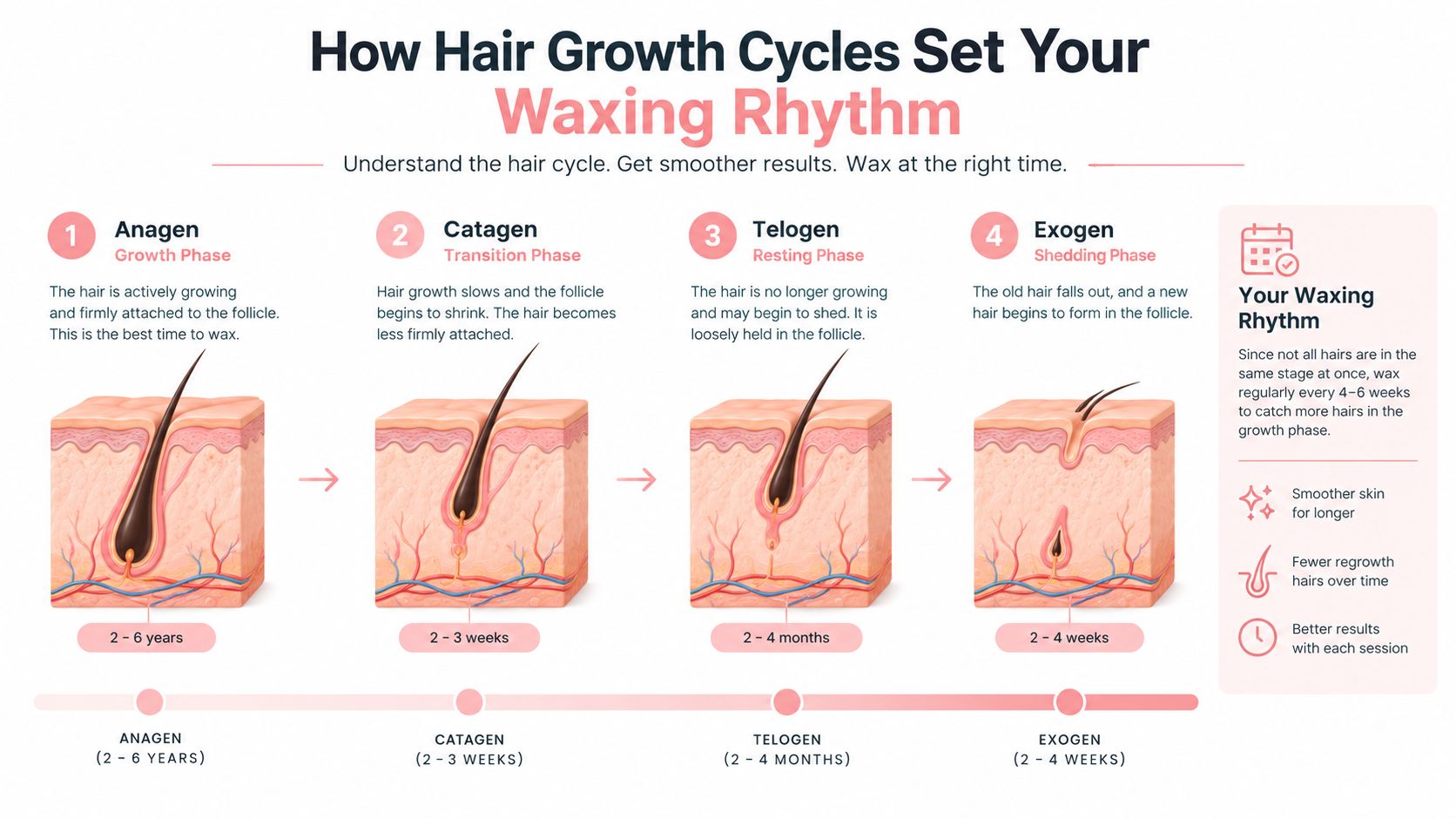
Four weeks works for many adult brows because it balances visible regrowth with adequate hair length. It also limits the temptation to keep removing tiny sprouts that aren't ready, which is where many over-waxing problems begin.
Finding Your Personal Brow Waxing Interval in Australia
A client from Bankstown may show visible regrowth sooner than a client from Roselands, but suburb isn't the cause. The useful comparison is between hair characteristics, hormonal changes and the finish each person wants. At Bonna Beauty's Sydney clientele, the same service can look entirely different on dense brows in Revesby, fine growth in Roselands, or a naturally fuller brow in North Parramatta.
A razor-sharp arch needs a tighter maintenance rhythm because small hairs outside the design line become noticeable quickly. A client who wants a soft, feathered brow can usually tolerate more variation and may prefer to wait closer to six weeks. Hair density also matters. Dark, coarse or tightly curled hair is more visible as it returns, while fine hair may be present without disrupting the overall shape.
Variables that change the booking gap
Hormonal life stages can override an established pattern. PCOS and thyroid shifts may change growth speed or density, while pregnancy and contraception changes can alter the way hairs appear across the brow. Medication changes deserve a direct conversation with your technician. Roaccutane, hormone replacement therapy and biotin can affect how your skin or hair behaves, so a previous interval shouldn't be treated as permanent.
Skin health can matter more than neatness. If your brow area is irritated, recently sun-exposed or reacting to active skincare, delaying the wax is safer than chasing a perfect outline. Retinoids and acne treatments are particularly important to disclose before an appointment.
| Regrowth Profile | Typical Drivers | Recommended Interval |
|---|---|---|
| Fast and highly visible | Dense hair, coarse texture, hormonal fluctuations or a very structured arch | Around three to four weeks, when the skin is calm and the hair can be removed cleanly |
| Moderate and predictable | Average regrowth with a defined but not ultra-sharp shape | Around four weeks as a starting point |
| Slow or softly styled | Sparse growth, lighter hair, slower follicles or a feathered natural look | Around five to six weeks, adjusted when the shape begins to blur |
A simple self-assessment
Take a clear brow photo after your wax, then compare your regrowth at days 18, 25 and 32. Those checkpoints help you see whether the shape remains intact or whether hairs outside the design line are becoming distracting. Record the point at which you start filling in the brow with makeup or feel compelled to tweeze.
Move your next appointment by roughly five to seven days based on that observation. If the outline loses definition before the later photo, shorten the interval. If the brow still looks balanced and the skin feels sensitive, extend it. The personal target is the interval that keeps the design line clear without repeatedly stripping the surrounding skin.
What a Sydney Brow Wax Appointment Actually Looks Like
A professional brow wax should begin with assessment, not immediate wax application. Once you're seated, the technician should discuss whether you want a defined arch, a softer natural line or a reshape after a long grow-out.
Mapping before removal
The brow is mapped against your facial structure. A technician may use calipers, string or a freehand pencil to identify the head, arch and tail, then compare those points with the bone structure and overall symmetry. Mapping doesn't mean forcing both brows into identical shapes. Natural faces aren't perfectly symmetrical, so the aim is visual balance.
The skin is cleansed with an antiseptic solution to remove oil, makeup and residue. Wax choice follows the skin assessment. Hard wax may suit some sensitive areas, while soft strip wax can be useful for efficient removal where the skin tolerates it. The technician should test the temperature on the wrist before applying wax near the eyes.
Removing only what has crossed the line
The mapped outline acts as a boundary. Wax should remove regrowth that has cleared the design line, not gradually reduce the brow every time you visit. This is how a technician protects fullness and avoids the over-waxing trap.
A tweezer finish catches isolated hairs the wax can't grip. The service should finish with a cool compress and soothing gel to settle the follicles. For a first-time shape, allow around 20 to 25 minutes. A maintenance wax commonly takes around 10 to 15 minutes.
Reactive skin may justify a patch test and a more conservative plan. A brief sting is normal, but the treatment shouldn't feel relentlessly painful. In an air-conditioned Sydney studio, redness commonly settles within about an hour, although individual skin can take longer.
Before booking, you can also review what to do before your eyebrow waxing appointment so your skin arrives clean, calm and ready for assessment.
Aftercare in the Australian Climate and Sun
Freshly waxed skin is more reactive to heat, sweat, friction and ultraviolet exposure. That matters in Sydney, where an ordinary commute, outdoor lunch or walk near Bondi can expose the brow area to strong sun before the skin barrier has settled.
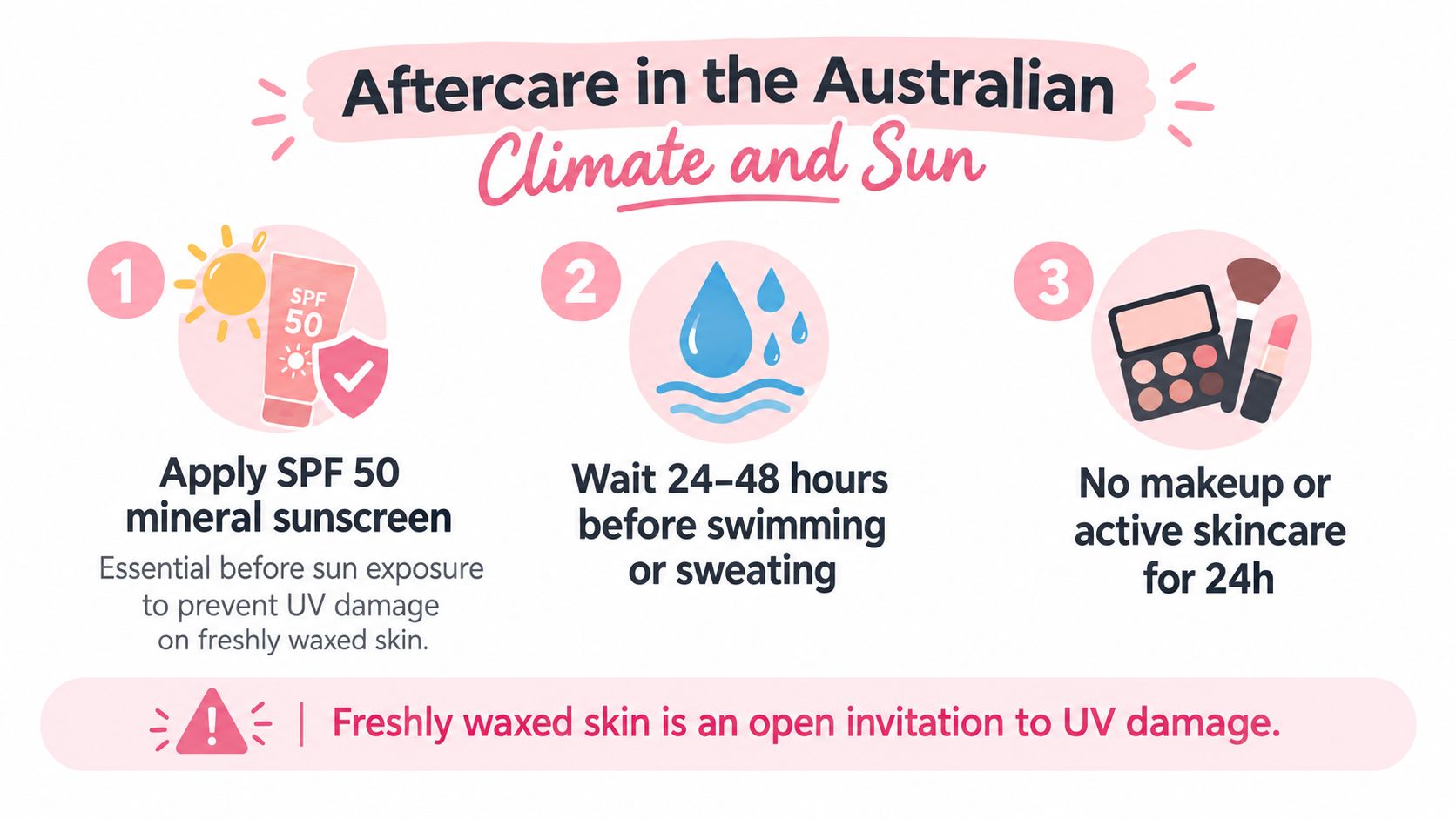
For the first 24 to 48 hours, keep the routine deliberately plain. Avoid makeup on the waxed area, swimming, heavy sweating, hot showers, saunas and exfoliation. This window is also relevant to clients heading to coastal pools such as Bondi Icebergs, where chlorine can add another irritant to freshly exposed follicles.
A calmer first day
Use a gentle, fragrance-free cleanser and avoid rubbing the brow. A soothing gel containing aloe or centella can help comfort the area, while a cool compress is preferable to heat. Apply sunscreen around the brow when you're going outdoors, taking care not to drag or saturate freshly waxed skin.
An SPF 50 mineral sunscreen is a sensible Sydney precaution around the area, particularly during the high-UV months from October to March. If the skin is very fresh or tender, ask your technician how to place protection around the brow without irritating the treatment zone.
Retinol, vitamin A derivatives, AHAs and other active skincare should stay away from the waxed area for at least 48 hours. On irritation-prone skin, waiting longer is reasonable. Resume light exfoliation only after 72 hours, and keep it gentle. Aggressive scrubbing doesn't prevent ingrowns. It can create more inflammation, particularly when coarse hairs are already prone to curling back into the skin.
Sydney climate rule: Schedule outdoor activities, hot yoga and swimming around the skin's recovery, not just the salon calendar.
If you have a major event, allow at least a week between the wax and the occasion. That gives redness, sensitivity or an unexpected reaction time to settle. More practical guidance is available in these brow aftercare tips, particularly if you're managing reactive skin or regular sun exposure.
The interval may also need to stretch when the skin has been sunburned, exfoliated or exposed to retinoids. Waxing through irritation is not a sign of commitment. It's a preventable route to dermatitis, folliculitis and uneven pigmentation.
Building a Sustainable Brow Maintenance Plan
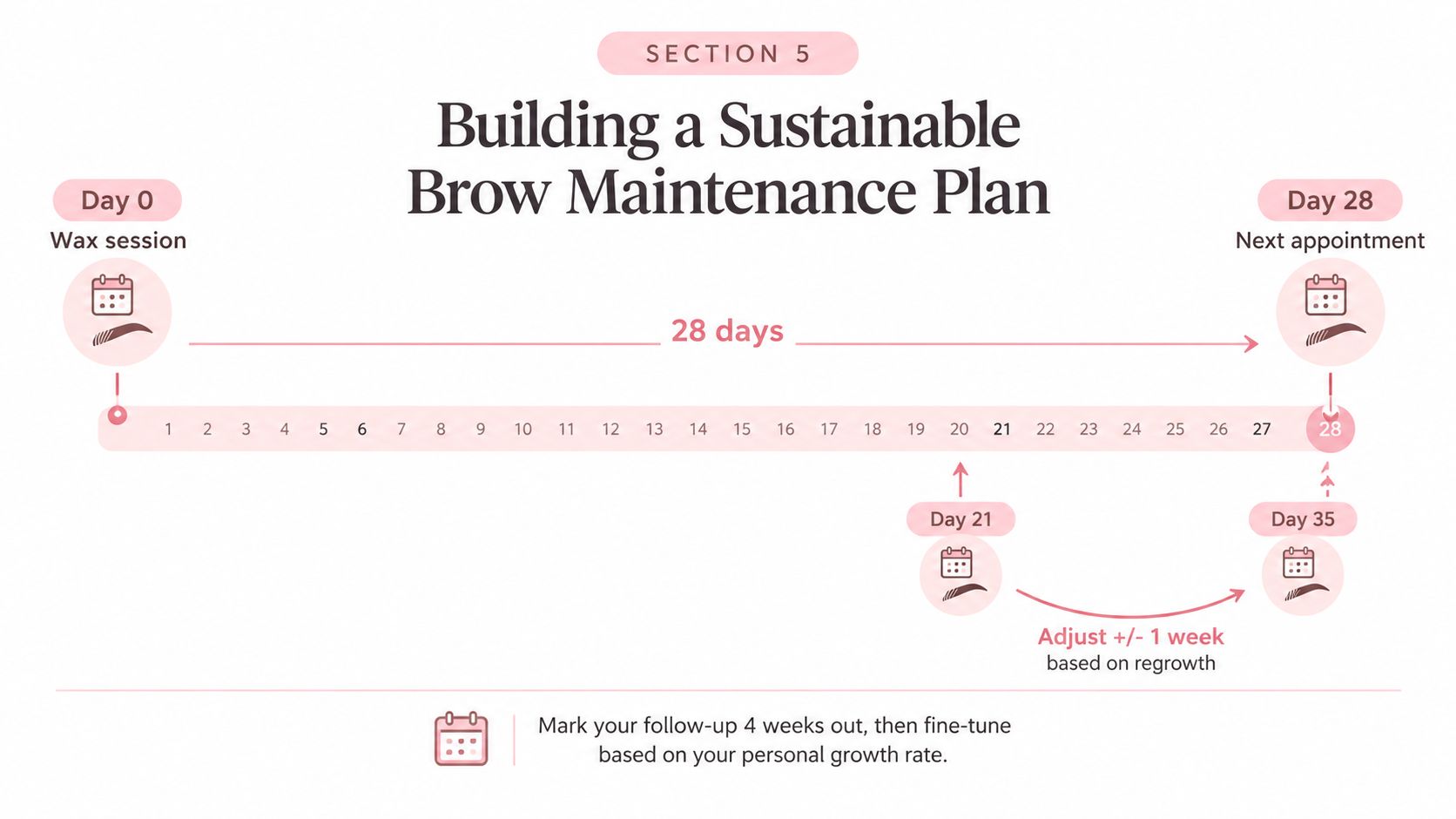
Set a four-week follow-up as your starting point. It is a working appointment, not a permanent rule. After observing your regrowth, shift the next booking earlier or later by about a week.
Track the pattern after each wax:
- Photograph your brows in similar lighting.
- Check when new hairs begin to soften the shape.
- Record how long redness or sensitivity lasts.
- Avoid clearing several stray hairs at home before the next visit.
- Request a shape review after changes to hormones, medication or skincare.
One isolated hair can be removed with tweezers between appointments. Repeated home plucking, however, can disrupt symmetry and leave hairs too short for the next wax. If sparse areas need support, a brow growth serum may be worth discussing, but it should not justify removing the surrounding regrowth. A specialist can help decide whether your priority is growth, styling or leaving the area untouched.
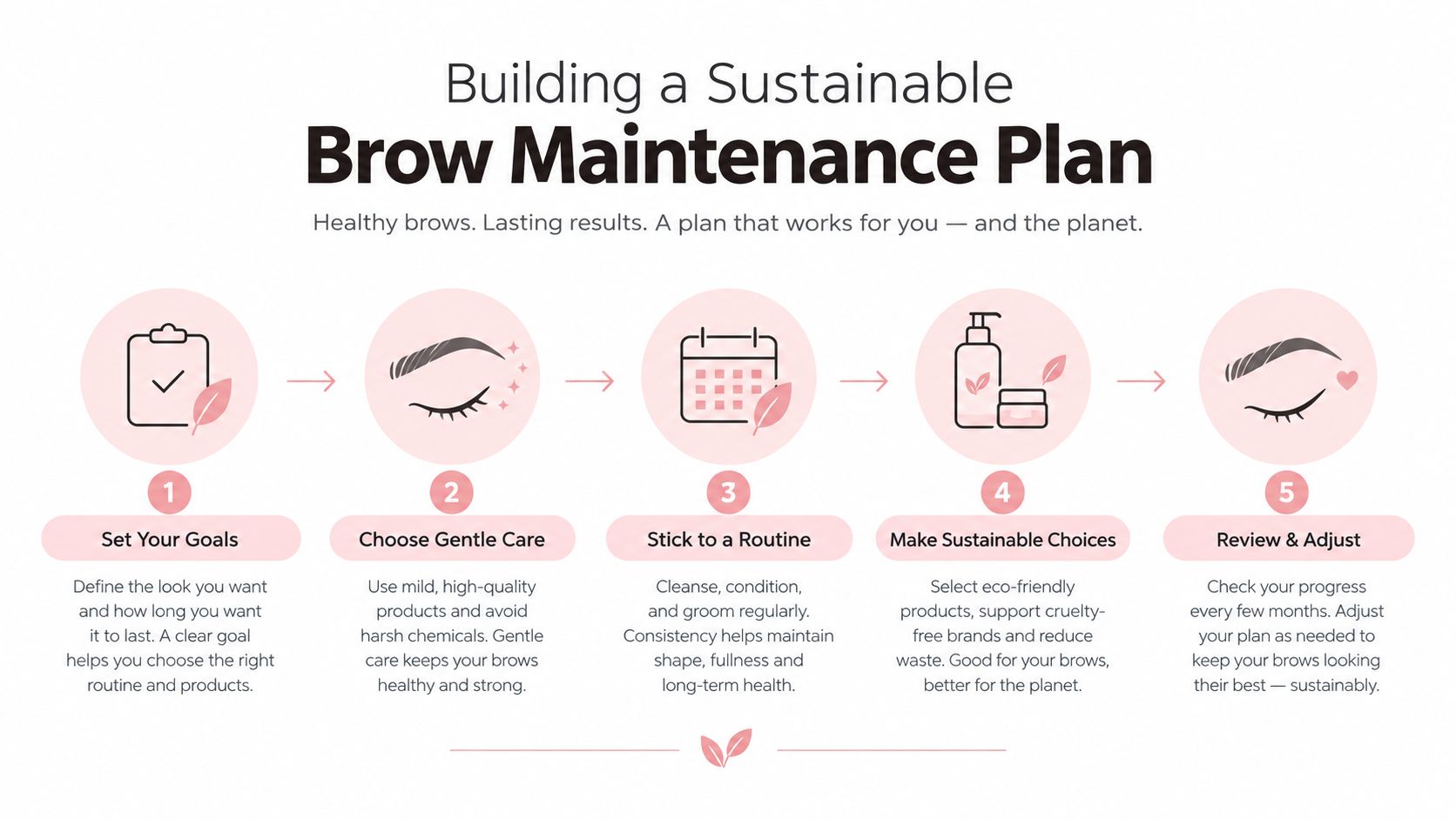
Your annual appointment count should follow your regrowth and skin response rather than a fixed target. Clients with fast regrowth or a sharply defined shape may book more often, while those who prefer a natural grow-out phase may attend less frequently. The usual Australian four-to-six-week cycle provides a useful starting point, but it does not suit every brow.
Consistency beats frequency. A stable shape, calm skin and clear records matter more than squeezing in another appointment.
Bonna Beauty's eyebrow wax kit guide explains the tools and preparation involved, whether you maintain your brows as a client or are learning professional techniques. The design line should guide removal. Every visible hair is not automatically a problem.
Bringing It All Together for Tidy Brows Year Round
Generally, eyebrow waxing belongs somewhere between three and six weeks, but your regrowth should decide where. Fast growth, hormonal changes and a sharp architectural shape may call for the shorter end. Slower growth, sensitive skin and a softer brow can justify the longer end.
The Sydney details matter. Choose a salon that follows NSW-aligned hygiene practices, including single-use wax and applicators, no double dipping, clean benches and fresh linen. NSW Health specifically requires wax and application instruments to be disposed of immediately after each procedure and requires handwashing before and after client care (NSW Health's waxing guidance sets out these hygiene requirements).
Also protect the skin between visits. Pause retinoids and strong actives around appointments, use sensible sun protection, and return to gentle exfoliation only once the area has settled. If a technician maps first and removes only regrowth outside the design line, your brows have a better chance of staying full and balanced over time.
Track two regrowth cycles, then book based on the point where your shape loses definition. Bonna Beauty serves clients across Bankstown and Yagoona, Roselands and Canterbury, Revesby and North Parramatta, with booking and brow training enquiries available for people who want professional guidance closer to home.
Bonna Beauty provides eyebrow waxing, reshaping, brow styling and related lash and brow services across its Sydney studios, with appointments adapted to your regrowth and skin needs. Visit Bonna Beauty to book a brow consultation, choose a nearby Bankstown, Roselands, Revesby or North Parramatta location, or enquire about professional brow training through Bonna Beauty Academy.