
You're standing in front of the bathroom mirror with an unopened eyebrow wax kit on the counter. It's late, the lighting is unhelpful, one brow already looks slightly higher than the other, and you're deciding whether a quick tidy-up is worth the risk of removing too much. That hesitation is sensible. Brow waxing is a small service performed close to delicate skin, and rushed choices can lead to an uneven tail, irritation, skin lifting, or a difficult recovery before your next tint or salon appointment.
The useful question isn't how to wax your eyebrows. It's whether waxing fits with your skin condition, your brow shape, and any tinting, lamination, henna, or cosmetic brow service you've planned. A good eyebrow wax kit can help with light maintenance, but it won't replace professional mapping or judgement when the shape has already gone off course. For a helpful shape reference before you touch the wax, compare the guidance in this eyebrow-shaping guide.
Standing in Front of the Mirror with an Unopened Kit
Most home waxing mistakes begin before the wax is heated. You see a few stray hairs beneath the brow, decide to clean up the line, and start applying without marking where the brow should finish. The first strip looks fine. The second removes more than intended. By the time you notice the tail has narrowed, the wax has already taken the decision out of your hands.
Sydney bathrooms create their own problems. Downlights cast shadows, magnifying mirrors exaggerate small differences, and a steamy room makes skin warmer and more reactive. A kit bought online may also include vague instructions, an applicator that's too wide for the brow, or no reliable way to judge whether the wax is safe to place near the eye.
Practical rule: if you can't clearly see the intended shape before heating the wax, you're not ready to wax.
A cautious approach starts with inspection. Look for broken skin, active irritation, sunburn, eczema flare-ups, recent exfoliation, or a history of reactions to brow dye and facial wax. If any of those apply, postpone the procedure rather than trying to work around the area. Waxing over compromised skin can turn a small grooming job into prolonged inflammation.
The other decision is timing. If you're planning a brow tint, henna, lamination, lift, or dye, waxing tonight may create a service conflict. Brow-dye product guidance commonly warns against use on eyebrows that have been plucked or waxed within the previous 72 hours, and recommends a skin-sensitivity test 48 hours before use, as stated in the 1000 Hour Eyelash and Brow Dye Kit guidance. That timing matters more than saving a quick trip to a salon.
What an Eyebrow Wax Kit Actually Contains
A useful kit should support three jobs, preparation, controlled hair removal, and calming the skin afterwards. If it only contains wax and wooden sticks, you'll need to supply the precision tools and aftercare yourself.
The core contents
Look for hard wax beads or a small hard-wax pot, a narrow spatula, a pre-wax cleanser or oil-free micellar wipe, and a facial-safe post-wax oil or calming product. Brow scissors, a spoolie, and a dual-ended mapping pencil make a major difference because the shape should be planned before the first application.
Hard wax is generally the more practical choice around the brow. It sets around the hair and can be removed without a fabric strip, which allows small, controlled applications. For delicate eye-area skin, that lower surface pull is useful, although it doesn't make poor temperature control safe.
Soft wax stays tacky and is removed with a strip. It can collect fine hairs efficiently, but a broad or repeated application may pull at the skin as well as the hair. That's a poor trade-off when you're working near the eyelid and trying to preserve a precise arch.
Sugar wax can be gentler for some users because of its water-based composition and different removal technique, but the result still depends on temperature, consistency, hair direction, and skin condition. Sugar paste isn't automatically safer just because the ingredient list looks familiar.
What to check on the Australian shelf
Choose a fragrance-free formula if your skin reacts easily, and check the ingredient and safety information rather than relying on packaging language. In Australia, cosmetic ingredients sit within the industrial-chemicals framework administered by AICIS, while the TGA becomes relevant when a product makes therapeutic claims. The ACCC also applies cosmetics labelling and product-safety requirements, as explained in the AICIS cosmetics and personal-care framework.
For imported cosmetics, registration is required before introduction into Australia, with no minimum sales threshold. The same trigger applies when an Australian-made cosmetic contains at least one imported ingredient, so a home salon or small beauty business can't treat a kit as an unregulated casual retail item.
Check whether the manufacturer provides a temperature indicator, batch information, clear application directions, and post-wax care. Cruelty-free certification can help if that matters to you, while local availability through Priceline, Adore Beauty, or a chemist warehouse makes replacement products easier to verify. Cheap kits often omit the items that prevent errors, especially mapping tools and soothing care.
Preparing Your Skin and Brows Before Waxing
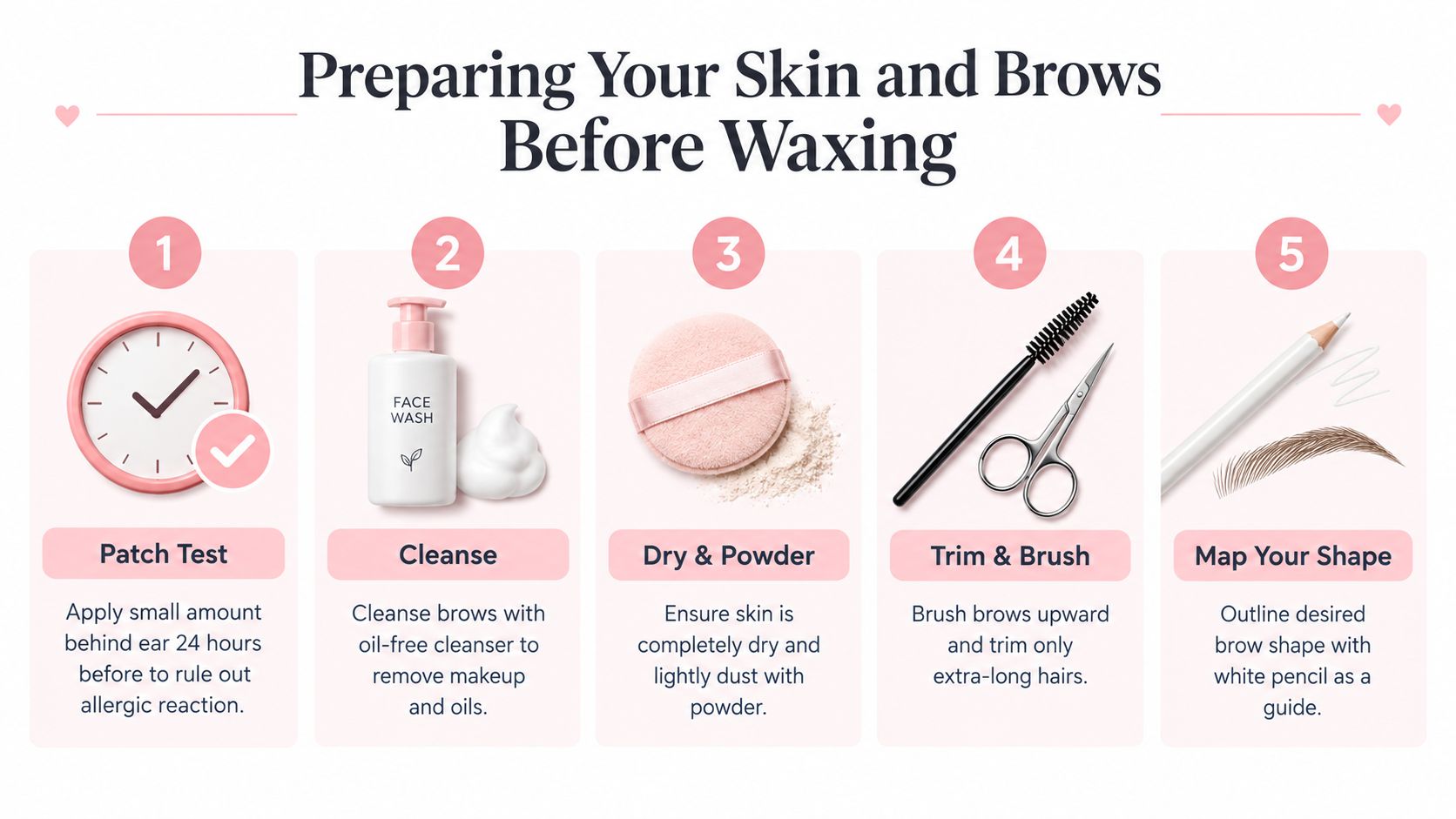
Preparation decides whether the wax grips the hair cleanly or drags across the skin. Start with a patch test behind the ear or on the inner forearm 24 hours before the planned brow wax. Use a small amount of the product, follow its directions, and wait. A patch test can't predict every reaction, but skipping it gives you no useful warning.
Clean the brow area with an oil-free cleanser or micellar solution. Remove foundation, sunscreen, brow pencil, and natural sebum, then pat the skin completely dry. Wax won't grip consistently over oil, and damp skin encourages uneven application. A very light dusting of powder can reduce surface moisture, but too much powder creates its own barrier.
Map before you trim
Brush the brows upward with a clean spoolie. Trim only the tips that extend well beyond the natural line, and don't cut across the whole brow in one sweep. Over-trimming makes the hairs look sparse and removes the visual guide you need while shaping.
Use a mapping pencil to mark three reference points:
- Start: align the inner brow with the side of the nostril.
- Arch: use the outer edge of the iris as a visual guide while looking straight ahead.
- Tail: follow the diagonal from the side of the nose towards the outer corner of the eye.
This is a guide, not a rigid template. Natural brows rarely match perfectly, and forcing identical arches often produces a sharper, less balanced result. Mark the areas you want to keep, then leave a visible buffer between the pencil outline and the wax.
Pause if you've used retinol, AHAs, or exfoliating products recently. The preparation guidance for facial waxing commonly advises avoiding these actives for 48 hours beforehand because they can leave the skin more vulnerable to lifting and irritation. Skip waxing during a breakout, eczema flare-up, or sunburn. Caffeine can also make some people feel more reactive or tense, so don't choose a rushed, over-caffeinated evening for your first attempt.
If you're preparing for an event, skincare timing matters as much as brow design. A practical pre-event routine such as look flawless in 48 hours can help you think about treatments as a sequence rather than isolated tasks. For appointment preparation, the pre-wax checklist from Bonna Beauty is also useful.
Waxing Technique That Protects Skin and Shape
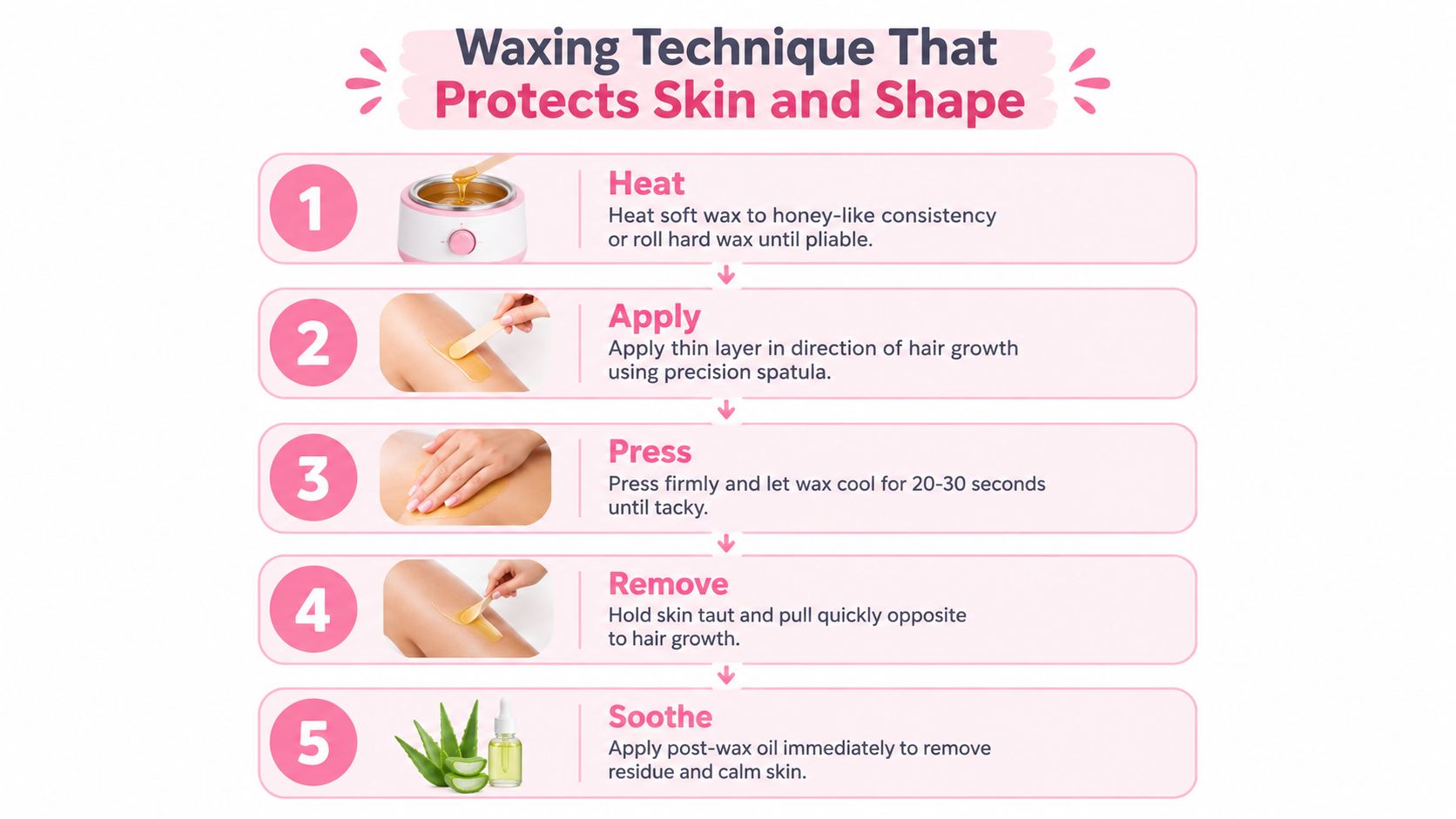
Heat is the first safety check. Soft wax should reach a honey-like consistency, not a watery run, while hard wax should be pliable enough to spread without dragging. Test a small amount on the inner wrist before taking it near the brow. It should feel warm and comfortable, never sharply hot. NSW Health guidance states that warm or hot wax must not cause burns, which makes temperature control a basic requirement rather than a salon-only preference. See the NSW Health waxing factsheet for the Australian hygiene and safety framework.
Keep each application narrow
Use a fresh, narrow spatula and work below the brow line. Don't wax the eyelid, and don't carry a large strip across the whole brow. Apply a thin layer in the direction of hair growth, following the shape you've already marked. Leave a thicker edge or small tab where the wax can be gripped cleanly.
Work in short sections, particularly beneath the arch and along the centre. A beginner usually has more control with a few small applications than with one long sweep. If you need to repeat an area because hairs were missed, stop and reassess rather than repeatedly heating and pulling the same skin.
Let the wax cool until tacky but not brittle. Hold the skin taut with your free hand, then remove the wax in one quick pull against hair growth, keeping the movement close and parallel to the skin. Pulling upwards increases the chance of discomfort and skin stress. If the hair snaps rather than releasing from the root, check the application direction, the wax consistency, and whether the hair is long enough for the product to grip.
Hygiene is part of the technique
A new spatula should be used for each dip. Never return a used applicator to the pot, and never share a pot between clients. Victorian infection-prevention guidance provides a practical benchmark by advising a single-use pot per client or a new spatula for every dip, with strip and hot wax held at 70 to 80°C for at least 15 minutes between clients and temperature logs retained for at least one year. Those commercial benchmarks are especially important for salons and training environments.
NSW Health also states that wax and instruments used to apply it, including a spatula, roller, or cartridge, must be disposed of immediately after each procedure. Reusing wax or applicators is not acceptable, and wax must not be placed over broken skin or an area where blood has been drawn.
Keep a cold, damp cotton pad nearby. If the skin feels hot, sharply painful, or unusually tight, stop. Don't attempt to correct asymmetry while the area is becoming distressed.
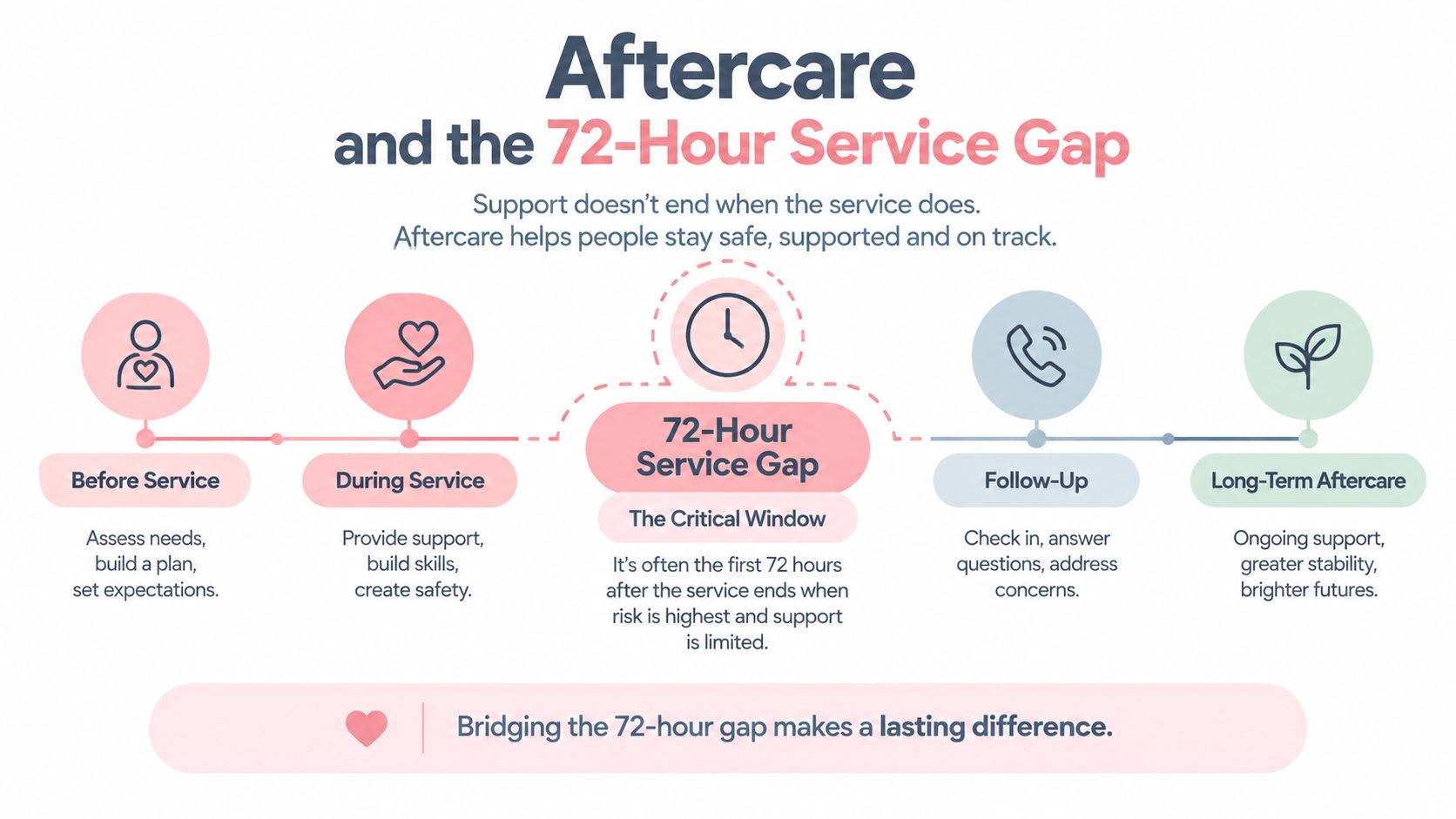
Aftercare and the 72-Hour Service Gap
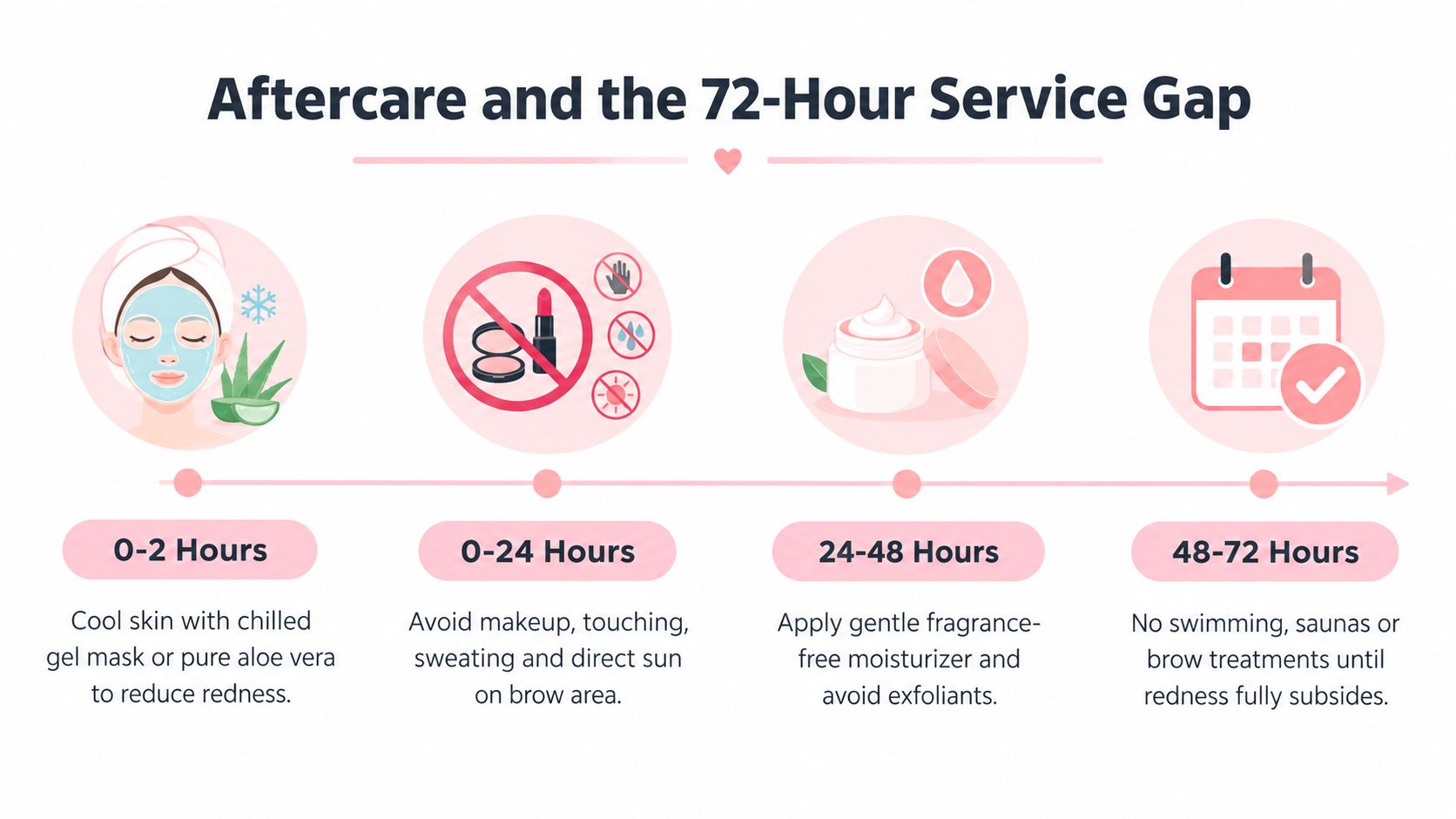
Freshly waxed skin needs less attention, not more products. Within the first few minutes, use a chilled gel mask or pure aloe vera to reduce warmth and visible redness. Apply it gently, without rubbing, then leave the brow area alone. Touching introduces friction and whatever is on your hands, phone, makeup brush, or pillowcase.
Avoid makeup over the waxed area for at least 24 hours, along with sweaty exercise, steam rooms, saunas, hot showers, and direct sun exposure. These activities increase heat, moisture, and friction when the surface barrier is unsettled. A fragrance-free, non-comedogenic moisturiser is a better option once the skin feels comfortable than an active serum containing retinol, AHAs, or vitamin C.
Skin-first advice: a calm, slightly less dramatic brow will always look better than a perfect shape surrounded by irritated skin.
Why services need spacing
Waxing, tinting, henna, lamination, threading, and microblading all affect the same small area in different ways. Combining them too closely can make it difficult to identify what caused a reaction, and freshly waxed skin may respond more strongly to dye or chemical processing. Treat 72 hours as a conservative service gap before another brow treatment, and extend it if redness or sensitivity remains.
Brow dye instructions add an important Australian caution. Many products warn against dyeing brows that have been plucked or waxed within the previous 72 hours, and they recommend a sensitivity test 48 hours before application. Don't override those product directions because an appointment is already booked.
Aftercare should protect the next service as well as today's result. If you've waxed before a lamination in Bondi, tint in Parramatta, or a brow appointment in Canterbury, reschedule the next treatment rather than layering procedures over reactive skin. For another practical perspective on post-treatment habits, read this Skinsation Aesthetics Inc. eyebrow care guide.
Troubleshooting Common At-Home Waxing Problems
Home waxing isn't automatically cheaper or better. The kit price is only one part of the decision. If the wax is unsuitable, the shape is altered too aggressively, or the skin reacts near the eye, the corrective appointment becomes the true cost.
Read the wax before blaming your skin
Runny wax usually means too much heat. Let it cool and test the consistency again. Wax that's hard, brittle, or stringy may be too cool, overworked, or applied in an inconsistent layer. Don't add more product to rescue a poor patch. Remove residue according to the product directions, clean the area gently, and wait.
Hair that snaps often points to poor grip or an application that doesn't follow the growth pattern. Applying with the growth and removing against it helps the wax engage the hair properly. If you're pressing repeatedly, bruising the skin, or pulling from different angles, stop rather than treating persistence as technique.
Redness can be expected immediately after hair removal, but redness that continues or worsens deserves caution. Broken skin, swelling, pustules that suggest folliculitis, or any reaction close to the eye needs professional assessment. If the eye itself is affected, seek medical care promptly.
When the mirror gives unreliable feedback
Asymmetry is often caused by correcting one brow before stepping back to assess both. Put the tweezers down after a small adjustment and check the full face in normal lighting. Never chase absolute symmetry by removing hair from the fuller brow until both tails are equally thin.
A salon visit in Bankstown, Revesby, Roselands, or Parramatta makes more sense when the brows are already sparse, the skin reacts easily, or you're preparing for an important event. NSW Health and Australian training guidance treat hygiene, single-use applicators, and no double-dipping as safety requirements, not optional extras. A bathroom can be clean, but it rarely offers the same controlled setup, mapping support, or second opinion when the shape starts drifting.
When to Book a Sydney Brow Specialist Instead
An eyebrow wax kit is most useful for controlled maintenance, not reconstruction. If you've over-plucked the arch, shortened the tails, or changed your brow shape repeatedly, waxing more at home can hide the problem temporarily while making regrowth harder to judge. A specialist can map the existing hair, preserve what remains, and use trimming or tweezing where wax would remove too much.
A professional appointment is also the sensible choice when hormonal changes have altered growth patterns, repeated DIY sessions cause irritation, or you need reliable symmetry for a wedding, photo shoot, graduation, or work event. In Sydney, clients in Yagoona, Bankstown, Revesby, Canterbury, Roselands, and North Parramatta can compare a local specialist with the cost and hassle of replacing wax, buying extra applicators, and correcting an uneven result.
Use a simple decision filter
Book rather than wax at home if:
- Your skin is compromised: broken skin, bleeding, sunburn, eczema, swelling, or a reaction near the eye means the procedure should wait.
- Your brows need design work: sparse, over-plucked, uneven, or previously tinted brows benefit from mapping before hair removal.
- Another service is involved: tinting, henna, lamination, threading, microblading, and brow dye need careful spacing.
- The occasion matters: precision is harder to guarantee when you're learning under bathroom lighting.
- You're repeating the same correction: removing more hair from one side usually creates a larger imbalance.
Australian personal grooming has a substantial service base. The Personal Waxing and Nail Salons market was valued at about $1.9 billion in 2024, with 15,776 people employed in the sector that year, according to IBISWorld's Australian industry profile. That market includes waxing and nail salons rather than eyebrow kits alone, but it shows that brow waxing sits within an established professional ecosystem, not a passing DIY trend.
A six-week salon cycle can help some clients avoid constant reshaping between visits, while home maintenance can handle an occasional obvious stray hair. The right balance is to use an eyebrow wax kit as a limited maintenance tool, not as a permanent replacement for professional mapping and skin judgement. For local service options, see eyebrow services near you in Sydney.
If you'd rather have your brow shape mapped, waxed, tinted, or laminated in a controlled Sydney studio, Bonna Beauty offers brow waxing and related brow services across Yagoona, Roselands and Canterbury, Revesby, and North Parramatta. Book a professional appointment when your skin is calm, or use the studio visit to establish a shape you can safely maintain at home.