
You've just left your appointment. Your brows look darker than expected, your lips feel puffy, or your eyeliner feels tight and oddly noticeable every time you blink. You've got a small aftercare sachet in your bag, the studio instructions are already half-blurred in your mind, and Sydney is doing what Sydney does. Heat outside, air-con inside, a long commute, maybe a stop for coffee, maybe a beach plan you forgot to cancel.
That's the point where good healing usually goes one of two ways. The clients who heal evenly don't do anything dramatic. They follow a small routine, keep their hands off the area, and avoid the few habits that interfere with fresh pigment. The clients who end up with patchy healing usually haven't done one huge wrong thing. They've done several small ones. A sweaty train ride, a hot shower straight on the face, makeup dabbed over flaking skin, a gym session that felt harmless at the time.
Permanent makeup aftercare instructions work best when they're practical enough to survive real life in Sydney, Bankstown, Yagoona, Roselands, Canterbury, Revesby, North Parramatta, and the suburbs in between. Brow tattoo aftercare in a cool treatment room is one thing. Brow tattoo aftercare after a walk through Parramatta sun or a school run near Canterbury Road is another. The same applies to lip blush healing before a ferry ride near Circular Quay or eyeliner healing during a packed commute through Bankstown.
Walking Out of the Studio and Into Healing
The treated skin usually feels tight, warm, and more obvious than it will later look. That's normal. Fresh pigment sits in skin that's just been worked on, so the colour reads stronger at first and the surface often looks a little sharper than the healed result.
In Australian practice settings, clients are commonly told to avoid makeup on the treated area for about 7 days, use only the aftercare cream supplied by the therapist, and apply a thin film of cream 2 to 8 times daily depending on the product and healing stage according to Skin Deep Clinic's cosmetic tattoo before and after care guidance. That advice matters most at the start, when the area is still vulnerable to contamination and uneven healing.
What predicts a smooth result
The first habits matter more than people think. The clients who heal best usually do three things well:
- They keep the area clean without fussing over it.
- They use a thin layer only of the product they were told to use.
- They avoid friction from fingers, towels, pillows, sunglasses, helmets, or clothing edges.
What doesn't work is improvising. Rich face cream isn't a substitute for proper aftercare. Neither is layering multiple products because the area feels dry. If you want a general ointment reference outside your salon-issued aftercare, something like Fresh Ink Glow 4oz tin shows the kind of simple, protective tattoo-style product people often look at, but the safer rule is still to stick with the product your technician has chosen for your procedure.
Practical rule: The more products you introduce in the first week, the harder it becomes to work out what's helping and what's irritating the area.
For clients who like seeing the healing stages laid out clearly, Bonna's guide to cosmetic tattoo healing is useful as a visual reference. Keep in mind that healing never happens in a vacuum. Sydney heat, long workdays in the CBD, and a quick detour to Bondi or Brighton-Le-Sands can turn a simple aftercare plan into a test of discipline.
Your First 24 Hours After Permanent Makeup
The first day needs structure. Not obsession. Freshly tattooed skin can be more susceptible to irritation or infection for up to 48 hours according to Baw Baw Shire's tattooing and beauty guidelines, which is why the opening stretch deserves more care than the rest of the week.
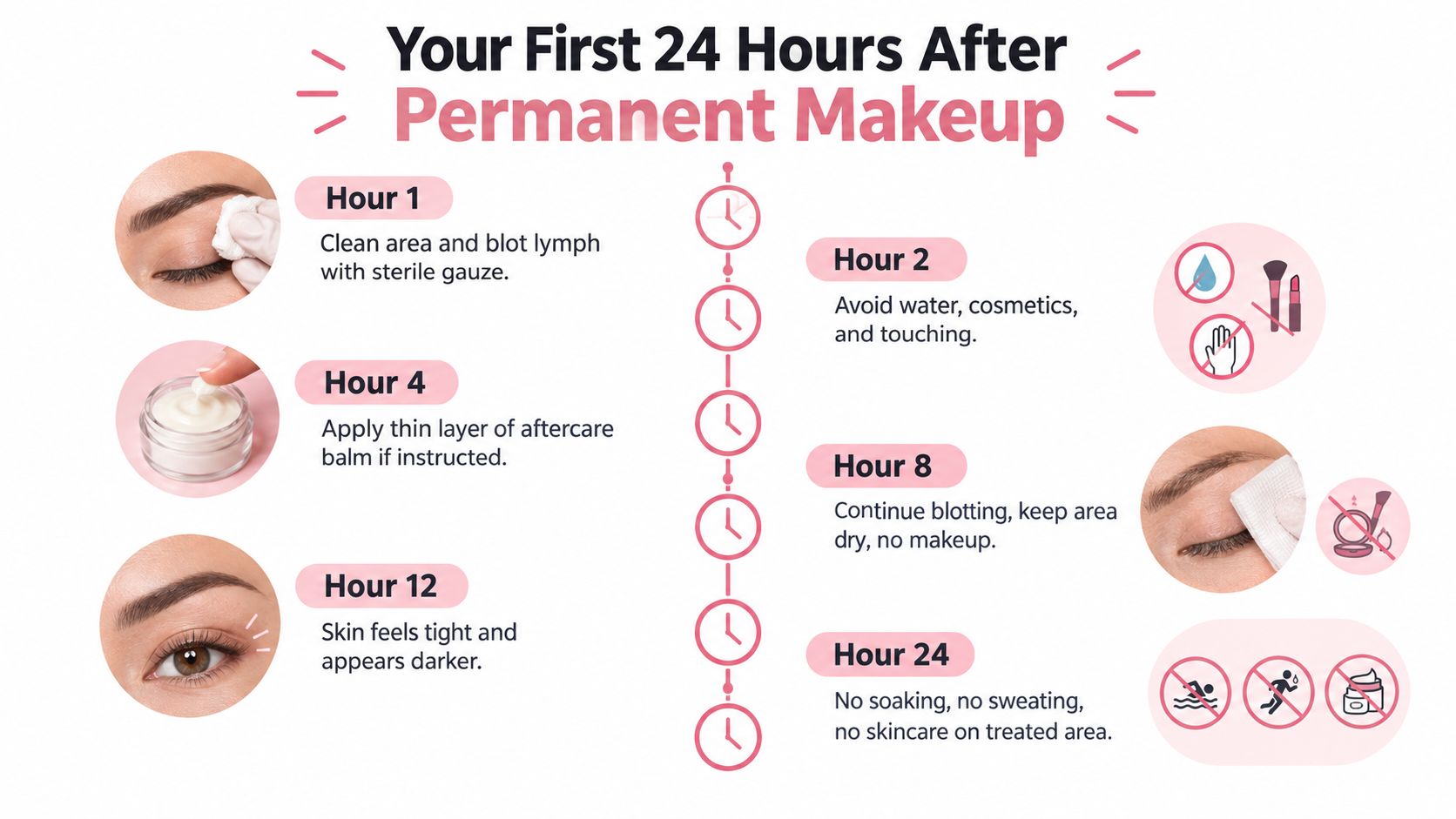
A simple timeline that works
Hour 1 to 2
Leave the area alone unless your technician has told you to blot it. If there's surface moisture, use clean gauze or a soft lint-free pad and press lightly. Don't wipe back and forth.
Hour 2 to 6
This is usually when clients get unsure. In Victoria, government tattoo guidance advises washing the skin 2 to 3 hours after the procedure with soap, patting it dry with a clean towel, and then lightly covering it with a recommended ointment in Better Health Channel's tattoo aftercare advice. For permanent makeup, the same sequence holds up well. Clean hands. Gentle wash if your technician has told you to wash that day. Pat dry. Then use a light layer of the recommended product.
The rest of the day
Repeat only as needed. More balm is not better. A thin film is enough. If the area looks glossy and heavy, you've used too much.
What to use and what to skip
Keep your product list short:
- Use the aftercare cream provided by your technician if one was supplied.
- Use clean hands every time before touching the area.
- Use fresh bedding the first night, especially for brows and eyeliner.
Skip the common mistakes:
- No makeup on the treated area.
- No tinted SPF over fresh work.
- No antibiotic creams unless a doctor has prescribed them.
- No gym, sauna, swimming, or hot spa.
- No alcohol if you know it increases heat and flushing for you.
Sleeping without undoing your appointment
Brows and lips tend to swell less when your head is slightly raised. Eyeliner clients do better when they avoid rolling into the pillow and pressing the eye area. If you sleep on your side, use a clean pillowcase and keep your hands away from the treated skin.
Fresh permanent makeup doesn't need constant touching. It needs quiet conditions.
If you're travelling back to suburbs like Revesby or North Parramatta after your appointment, the main risk isn't the drive. It's the heat, sweat, and face-touching that happen once you stop paying attention.
Days 2 to 7 and the Peeling Phase
This is when a temptation to interfere arises. The area starts to look uneven, flakes show up, and the colour often seems wrong before it settles. That part is normal.
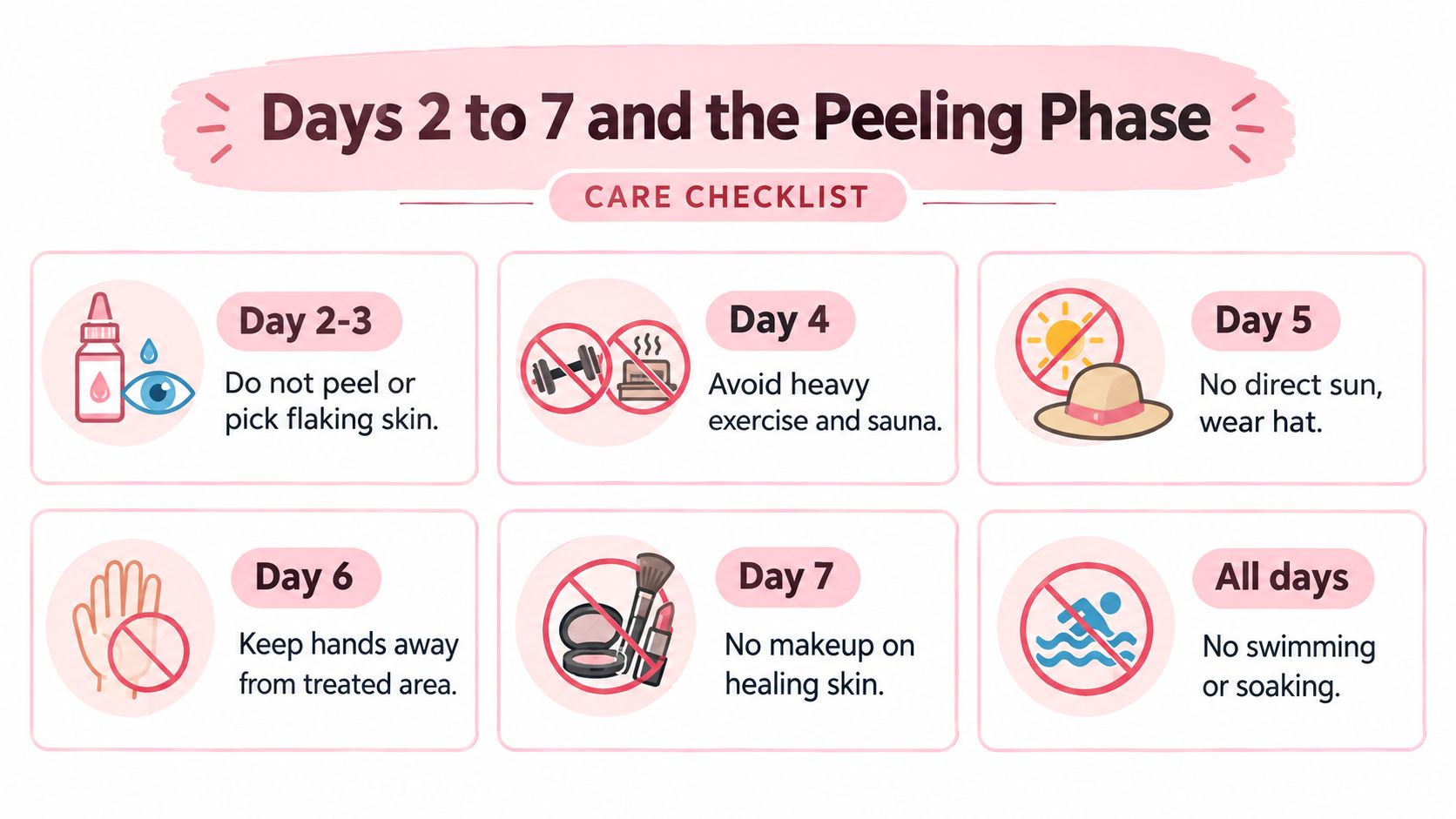
Australian aftercare sheets often set no-go windows of 5 to 7 days for washing with soap or cleansers and 7 days for makeup, swimming, spas, and heavy sweating, while some clinics extend parts of that to 2 weeks for soap, cleansers, swimming, sun exposure, saunas, and makeup, as outlined in Blys cosmetic tattoo aftercare guidance. Those windows reflect the fact that the superficial healing phase usually lasts about 4 to 7 days before peeling finishes.
What the week usually looks like
Days 2 to 3
Redness usually settles. Brows can start looking patchy. Lips can still feel fuller before they soften. Eyeliner often feels dry and tight rather than visibly flaky.
Days 3 to 5
Peeling starts to become obvious. Brows often shed in fine flakes. Lips can peel in slightly larger pieces. This is the stage where clients mistake normal turnover for pigment loss.
Days 5 to 7
Peeling tapers off. The colour underneath may look lighter, cooler, or softer than expected. That doesn't mean the result has failed.
The routine that keeps things even
Morning and night, keep the pattern plain:
- Clean gently if your technician has cleared you to do so.
- Pat dry, never rub.
- Apply a very thin layer of your aftercare product if the area feels tight.
- Leave it alone for the rest of the day.
A Sydney cosmetic tattoo guide notes that brows and the surrounding area should be kept dry for 7 to 10 days, with no cleansers, makeup, swimming, spas, direct water, or heavy sweating until peeling has finished, which typically takes about 4 to 7 days in Precision Beauty's before and after care page. That's especially relevant in suburbs where a “quick walk” easily turns into sweat, from Yagoona station to home, or from a Roselands car park into afternoon sun.
What usually causes trouble
- Picking flakes because they look ready. They're not.
- Over-moisturising until the area stays wet and sticky.
- Using actives nearby such as retinol, acids, or vitamin C.
- Taking steamy showers straight onto the face.
- Getting casual with sun during errands, school drop-offs, or café runs.
For lip clients, permanent lip makeup healing tips can help you judge what's typical during the peel. For everyone else, the key point is simple. What's flaking off is surface healing material. It isn't a signal to scrub, exfoliate, or test the colour before the skin is ready.
How Brows, Lips, and Eyeliner Heal Differently
All cosmetic tattooing heals through the same basic skin repair process, but the day-to-day experience is different depending on the area. Brows sit in oily skin and face friction from hair, hats, and skincare. Lips deal with saliva, food, toothpaste, and constant movement. Eyeliner sits on thin tissue close to the eye, where swelling and hygiene matter more than cosmetics.
Another Australian protocol says the tattoo area must be kept moist for successful healing, with Bepanthen applied morning and night only for the first 5 days, and no makeup on the tattoo area during the first 7 days in Cosmetic Ink Sydney's before and after procedure care. That kind of routine can suit some procedures well, but the exact product feel that works on lips won't always suit brows.
Aftercare differences across Brows, Lips, and Eyeliner
| Procedure | Typical Swelling | Peeling Behaviour | Product Caution | Pigment Retention |
|---|---|---|---|---|
| Brows | Usually mild | Fine flaking or dry shedding | Heavy balms can feel too occlusive on some skin types | Can look uneven during the peel, then soften |
| Lips | More noticeable than brows | Larger surface peel is common | Acidic foods and toothpaste contact can irritate the border | Often looks bright first, then calmer once healed |
| Eyeliner | Often localised puffiness | Less visible peeling | Keep products simple and away from the eye itself unless specifically advised | Can appear sharper first, then settle |
Procedure-specific handling
Brows usually need the most restraint. Clients tend to inspect them closely, brush them, or touch the edges. Leave them alone.
Lips need practical care. Drink carefully, wipe gently after meals, and avoid anything that repeatedly rubs the border.
Eyeliner needs the cleanest handling of all. No rubbing. No testing with eye makeup. No casual use of random creams near the lash line. If you're comparing healing stages, Bonna's guide to the eyebrow tattoo healing process is most relevant for brows, not liner.
The right aftercare product is the one that protects the area without keeping it soggy.
Sydney Summer Rules for Weeks 2 to 4
Once the skin has moved past the open-healing phase, clients often assume the hard part is over. In Sydney, that's when a different set of problems begins. Sun, sweat, surf, salt, wind, and the urge to “get back to normal” too early.
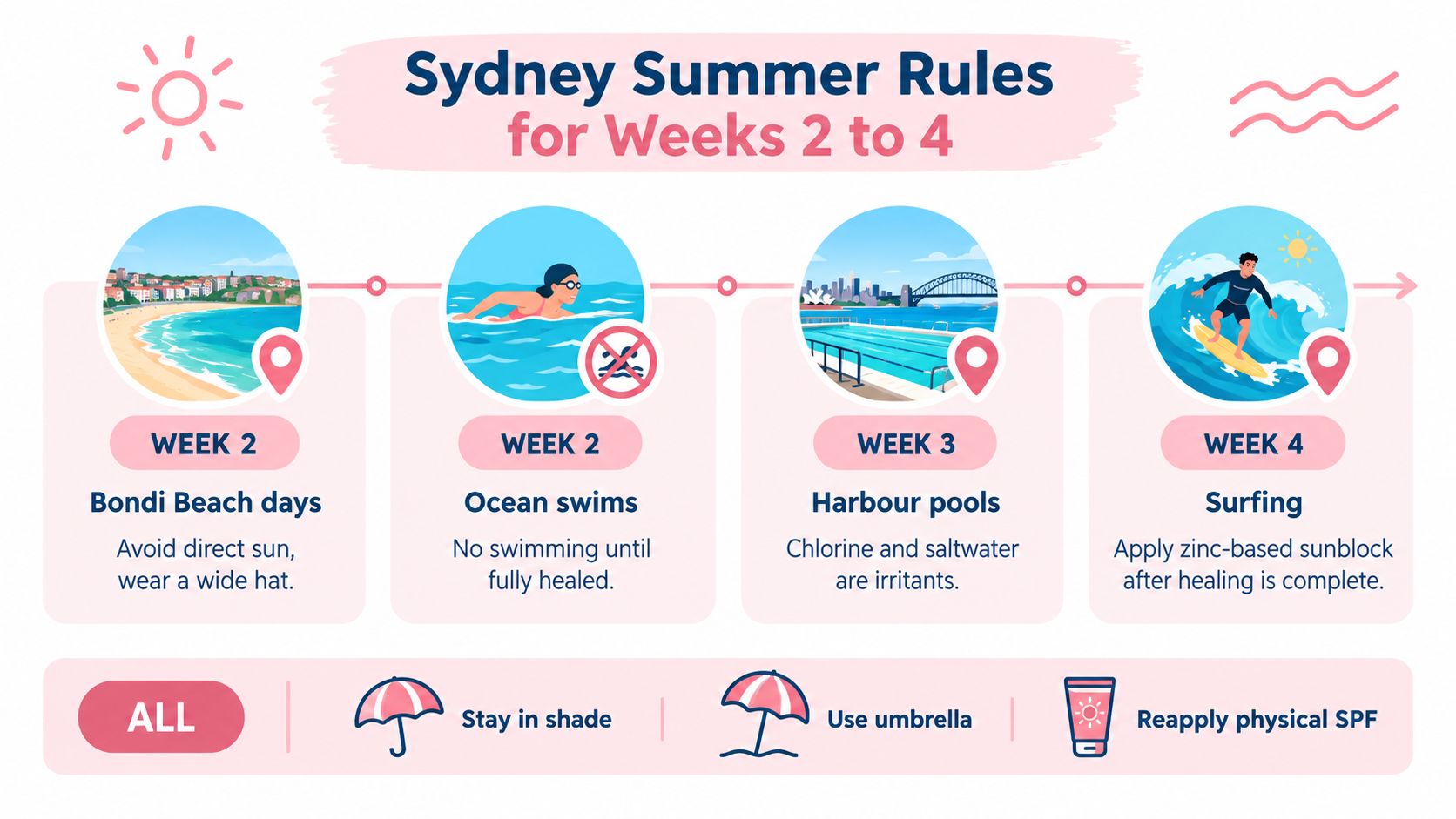
Australian beauty aftercare advice often adds sun avoidance, no makeup on the area, and no strenuous exercise, while health guidance for tattoos stresses avoiding soaking in baths, pools, and the sea, plus keeping the area clean and watching for infection, as discussed in Elite Look's permanent makeup overview. That gap matters in real life. A client in Bondi, Coogee, Cronulla, or near Parramatta Park doesn't need vague advice about “avoiding sun”. They need to know what to do on an actual hot day.
What to do with beach, pool, and gym plans
By this stage, don't judge healing by comfort alone. Skin can feel mostly fine before it's fully settled.
- Beach days: If you're going to Bondi, Manly, or Brighton-Le-Sands, keep treated areas out of direct UV with a hat and shade first. Don't rush back into prolonged sun exposure because the surface looks calmer.
- Swimming: Ocean swims, harbour pools, and long soaks are a poor idea until the area is fully healed. Saltwater and chlorine are both rough on recently treated skin.
- Gym sessions: Ease back in. Sweat, towel friction, and heat still matter more than most clients expect.
Sunscreen timing and Sydney habits
The biggest long-term issue in Australian conditions is UV exposure. Once the area is healed enough for sunscreen, use it carefully and don't grind product into skin that's still settling. If you want a plain-language breakdown of mineral vs chemical sunscreen tips, that comparison helps when deciding what texture and finish you're more likely to tolerate around healed cosmetic tattooing.
For brows, physical barriers work well. A cap or wide-brim hat on a Canterbury commute does more than patchy sunscreen use. For eyeliner, sunglasses reduce squinting and sun exposure. For lips, consistent lip-area protection matters once the skin has fully closed and settled.
A realistic weeks 2 to 4 reset
Clients in Bankstown, Roselands, Revesby, and North Parramatta usually do better when they return to normal in layers:
- Makeup returns first, but only once the skin is no longer actively peeling or fragile.
- Exercise comes next, starting with lower-heat sessions.
- Facials, exfoliation, and stronger actives wait longer, especially around brows and lips.
- Heat-based treatments and abrasive skin work should be pushed well past the point where the area merely “looks okay”.
An Australian aftercare page also advises avoiding heavy exercise that causes sweating, plus saunas, spas, and hot baths for the first week, while keeping makeup and creams off the freshly tattooed area until it's healed in Sydney Cosmetic Tattoo's aftercare instructions. In Sydney summer, many clients should think beyond the first week and stay conservative if the skin still feels reactive.
Warning Signs That Need a Quick Call
Most healing looks a bit untidy before it looks polished. Dryness, tightness, and light flaking can all be normal. What matters is the direction things are moving.
If redness is easing, discomfort is settling, and the area stays dry and clean, that's usually reassuring. If the area becomes more inflamed after it seemed to be improving, pay attention.
Normal healing versus something else
A thin, dry peel is not the same as a thick, wet, angry scab. Mild tenderness is not the same as throbbing pain. Temporary swelling is not the same as spreading heat.
Watch for these changes:
- Increasing redness after the early healing phase
- Yellow or green discharge
- Spreading warmth
- Marked swelling that worsens instead of settling
- Strong throbbing pain
- Fever or feeling unwell
Who to contact first
Start by photographing the area in good light. Message your technician with a clear photo and a short timeline of what changed.
If you have systemic symptoms, severe pain, or signs that suggest infection, contact a GP promptly. A technician can help identify whether something looks off, but they can't diagnose or treat a medical problem.
If the area is hot, increasingly red, and producing coloured discharge, don't wait for it to “settle on its own”.
Lips deserve extra caution because they react more visibly, and clients often mistake a reactive response for routine swelling. Eyeliner deserves caution for a different reason. It's close to the eye, where irritation can escalate quickly.
Touch-Ups, Care Cards, and Lasting Results
The first healed result is rarely the final result. A follow-up appointment matters because healing isn't always perfectly even. Some areas hold pigment beautifully. Others soften more than expected, especially around tails, borders, or spots that got rubbed during healing.
What the touch-up is really for
A touch-up usually corrects the details that only show once the skin has fully settled:
- Faded edges
- Small gaps
- Uneven density
- Minor asymmetry
It can refine a good base. It can't completely rescue poor aftercare, and it can't instantly redesign a shape that wasn't suitable in the first place.
A screenshot-style care card
Keep this list simple enough to save to your phone:
- First day: Keep hands off, keep the area clean, use only the advised aftercare product, and avoid makeup, sweat, and soaking.
- Days 2 to 7: Expect peeling, don't pick, keep products minimal, and avoid sun, pools, spas, and friction.
- Weeks 2 to 4: Return to makeup and exercise gradually, protect from UV, and delay exfoliation or stronger treatments until the skin is settled.
If you want a practical clinic resource, Bonna Beauty's aftercare materials and booking support can help clients in suburbs such as Yagoona, Roselands, Revesby, and North Parramatta keep the process organised without guessing.
Quick answers clients ask at the door
When can I wear makeup again?
Once the treated area has finished the fragile peeling stage and the skin surface is calm. Don't rush makeup onto skin that still feels tender.
When can I exercise normally?
Wait until sweating and friction won't disturb the area. Start lighter before returning to hard sessions.
When can I use SPF on the area?
Only once the skin is sufficiently healed for topical products beyond your aftercare routine. Before that, use hats, shade, and distance from direct sun.
Why does the colour look lighter after peeling?
Because the surface has shed and the new skin is still settling over the pigment. Early softness doesn't equal failure.
How do I get the best long-term result?
Protect it from UV, avoid aggressive skin treatments over the area, and keep up with maintenance before the shape looks obviously faded.
Bonna Beauty provides cosmetic tattooing for brows, lips, and eyeliner across Sydney, along with practical aftercare support that fits real suburb-to-suburb routines, not generic salon advice. If you want treatment planning, healing guidance, or a booking at a nearby studio, visit Bonna Beauty.