
DIY eyelash extension removal is mainly an eye-exposure risk, not just a cosmetic one. The safest approach is to soften the adhesive slowly, and never pull an extension that still resists.
The popular “just soak them in oil” advice is incomplete. Oil may help with extensions that are already loose, but it won't reliably dissolve a firmly cured bond, and bringing remover, oil or steam close to the eye creates a problem that natural lash loss alone doesn't describe. I've seen enough removal mistakes in Sydney salons to be direct: if the set is intact, the glue is close to the waterline, or your eye feels irritated, home removal is the wrong job.
Australian consumer and optometry sources have warned about this for years. Choice reports that eye disorders may occur in up to one in four eyelash-extension users, and links removal-related exposure or pressure with keratoconjunctivitis, allergic blepharitis, conjunctival erosion and subconjunctival haemorrhage. Choice's Australian guidance on eyelash-extension risks makes the central point clear: the eye needs more protection than the visible lash line suggests.
Why DIY Eyelash Removal Is Really an Eye-Safety Issue
A lash extension sits millimetres from the cornea, eyelid margin and tear film. Yet most home-removal advice treats the job like taking off nail glue or peeling away a temporary strip. That comparison is unsafe because the product, the distance from the eye and the force required are completely different.
The visible problem is the extension. The hidden problem is the adhesive bond and whatever reaches the ocular surface. A person may apply oil with a cotton bud, steam their face, rub the lash line, use tweezers or add more product when the first attempt fails. Each action can move liquid or softened debris towards the eye. Pulling also transfers force through the natural lash, rather than separating the cured adhesive cleanly.
Practical rule: Protect the eye first. Only consider loosening an extension if the bond is already failing and the product can stay well away from the waterline.
Australian commentary has documented irritation, inflammation, allergic reactions, tweezers-related injuries and permanent lash loss from poor lash work. ABC News reported that the NSW branch of the Royal Australian and New Zealand College of Ophthalmologists warned that broken lash fibres can scratch the cornea and leave fine fibres embedded in the eyelid, with possible corneal ulcers and vision loss. The Australian safety discussion around eyelash extensions and removal shows why mechanical removal deserves as much attention as glue exposure.
The risk is also shaped by local regulation. The Australian Society of Optometrists noted in 2020 that extensions can cause significant ocular disease requiring timely medical attention, while Australia has no regulations governing minimum training requirements for operators. That doesn't mean every technician is unsafe. It does mean clients shouldn't assume that every adhesive, application or removal process follows the same training standard.
The safer mindset
Think of removal as adhesive softening, not lash extraction. Home methods are limited and slow. Professional removal uses a product selected for the adhesive and keeps the eye protected while the bond is separated.
The next question is why water, oil and steam behave so differently. The answer sits in the adhesive chemistry.
How Extension Glue Actually Bonds to Your Natural Lashes
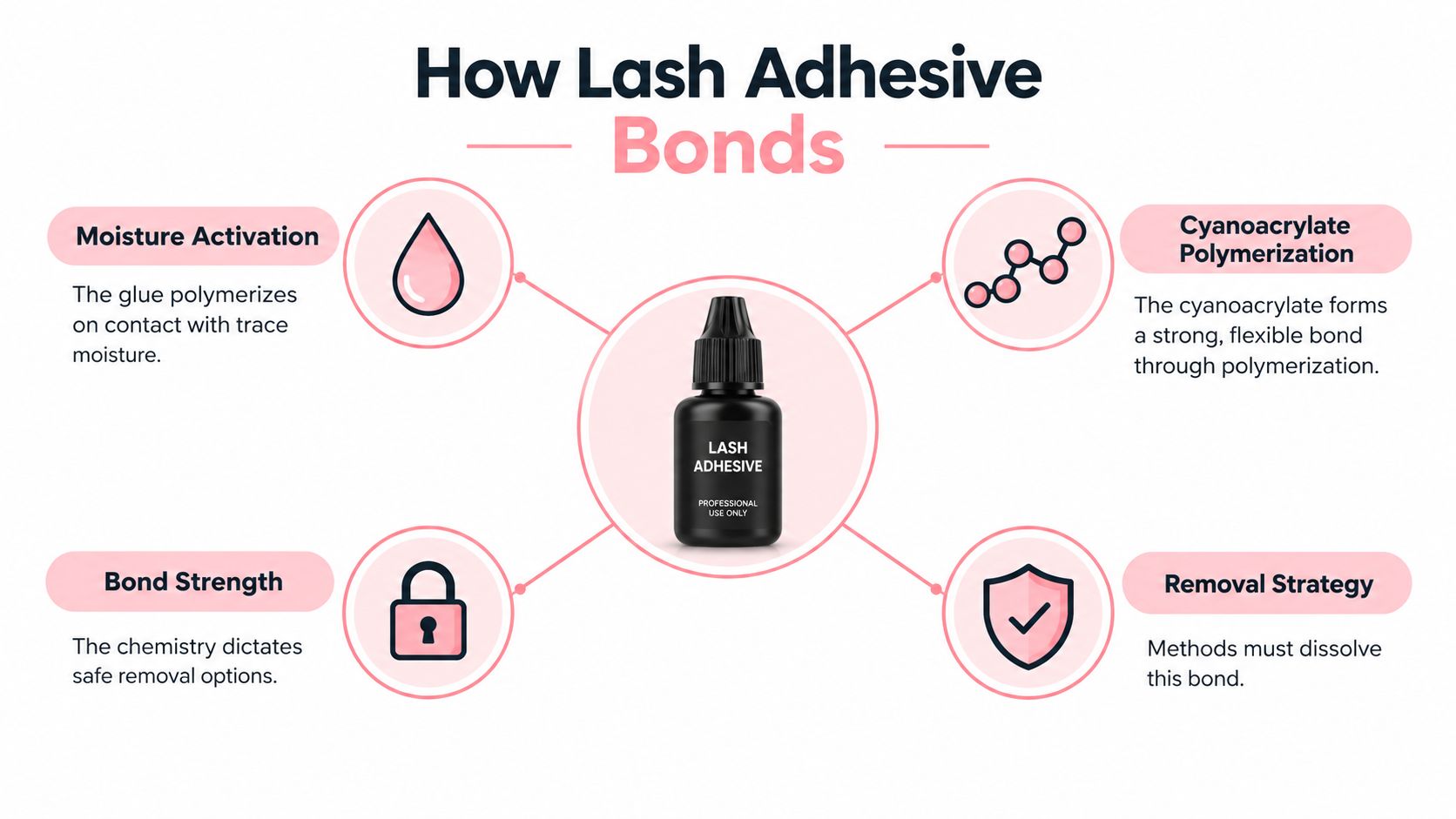
Most eyelash-extension adhesive is based on cyanoacrylate. Australian lash-education material explains that formaldehyde isn't an ingredient in cyanoacrylate, but it can be released later as a by-product of adhesive breakdown, so handling and removal still need care. An Australian explanation of cyanoacrylate adhesive and formaldehyde is useful because it separates the ingredient itself from what may happen as the adhesive degrades.
Cyanoacrylate reacts with trace moisture. The moisture in the air, on the natural lash and around the eye helps the liquid adhesive polymerise. It changes from a fluid into a hardened polymer that holds the extension against the natural lash shaft. Humidity can affect curing behaviour, which matters in coastal areas such as Sydney, but a more humid room doesn't turn a cured bond into something that can be wiped away.
Why common home remedies disappoint
Water cleans the surface but doesn't reliably dissolve a cured cyanoacrylate bond. Steam can make the surrounding lash area feel softer and may help a weak bond, but it isn't a controlled professional remover. Oil can reduce friction and work into a partially loosened bond, yet it won't guarantee that a firmly attached fan will release.
Mechanical pulling is the dangerous shortcut. When the extension remains bonded, the natural lash often takes the strain. That can snap or shed the natural lash before the adhesive separates. Tweezers add another risk because the tip can touch the lid margin or cornea.
A trained technician uses a dedicated remover designed for lash adhesive and applies it while controlling the eye area. Product chemistry varies, so a household solvent isn't a substitute. Never use acetone, nail-polish remover or an unlabelled chemical near the eye.
For a home attempt, the chemistry gives you a strict boundary: only work on extensions that are already lifting, use a small amount of a suitable oil-based loosener, and stop immediately if the bond doesn't slide with minimal pressure.
The Eye Risks Australian Optometrists Keep Warning About
The most useful way to judge DIY removal is to name the injury, the likely cause and the setting where it occurs. Australian sources don't describe these problems as merely cosmetic. They include disease and injury affecting the eye itself.
Choice links lash-extension removal with keratoconjunctivitis, allergic blepharitis, conjunctival erosion and subconjunctival haemorrhage when glue or remover enters the eye, or when pressure is applied. The Australian Society of Optometrists has also described significant ocular disease requiring timely medical attention. Those findings should change how you interpret stinging, redness or a gritty sensation after removal.
Common DIY lash removal injuries reported in Australia
| Injury Type | Typical Cause | Severity | Likely Setting |
|---|---|---|---|
| Keratoconjunctivitis | Glue, remover or fumes irritating the ocular surface | Can require timely medical assessment | Home removal or salon exposure |
| Allergic blepharitis | Sensitivity to adhesive or remover | Inflamed, uncomfortable eyelid margins | Home or salon |
| Conjunctival erosion | Product migration or pressure near the eye | Ocular-surface injury | Home removal |
| Subconjunctival haemorrhage | Excessive pressure during removal | Visible bleeding under the conjunctiva | Home removal |
| Corneal scratching | Lash fragments, rubbing, scraping or tweezers | Can progress to more serious corneal injury | Poor application or forceful removal |
ABC News also reported warnings from ophthalmology representatives that lash shards can scratch the cornea and become embedded in the eyelid, with possible corneal ulcers and vision loss. Our guide to common eyelash-extension complications explains why eye symptoms deserve more attention than the appearance of the lash line.
Contact lens wearers, people with hay fever and anyone with blepharitis should take a particularly conservative approach. Their eyes or eyelid margins may already react to irritants, and contact lenses can hold product against the eye. Remove lenses before any exposure response, and don't put them back in while the eye remains uncomfortable.
Redness isn't a beauty inconvenience if it comes with pain, light sensitivity, blurred vision or a gritty feeling. Treat it as an eye symptom.
The absence of national minimum training requirements for Australian operators also makes the product and technique harder for clients to assess. A safe decision isn't based on whether a remover is sold online. It's based on whether the bond can be softened without product entering the eye or force reaching the natural lash.
A Safer At-Home Method for Loose or Nearly-Off Extensions
I'd only consider home removal when the extension is already substantially detached, the remaining bond is away from the waterline, and the eye is completely comfortable. If half or more of the extension is already detached, the situation is different from removing a fresh, dense set. Even then, this is a last resort, not a routine recommendation.
Start with clean hands, a clean mirror and a clean spoolie. Don't use tweezers to pry a stuck fan. Don't work over a sink full of water, and don't attempt removal while wearing contact lenses.
A cautious sequence
Soften the area gently. Use a warm compress or gentle facial steam for about five minutes. The aim is comfort and softening around a weak bond, not heating the eye or forcing the adhesive open.
Apply a small amount of loosener. A pea-sized amount of an oil-based eye-makeup remover or suitable lash bonder dissolver can be placed along the lash line with a clean spoolie. Keep it away from the eye itself and don't flood the area.
Wait before touching. One Australian lash-removal guide advises steaming first, then applying castor oil or an oil-based remover and waiting 10 to 30 seconds before wiping downwards, repeating as needed until the extension releases. The Australian slow-softening removal approach supports patience, not force. For a nearly detached extension, I prefer allowing a longer pause of two to three minutes only if the eye stays closed and comfortable.
Slide, don't pull. If the extension moves with almost no resistance, slide it sideways or downwards along the natural lash direction. Never yank from the tip, twist a fan or pull against the growth direction.
Stop at resistance. Resistance means the adhesive hasn't softened enough, or the extension isn't ready. Wipe away excess product, leave it alone and book a professional removal.
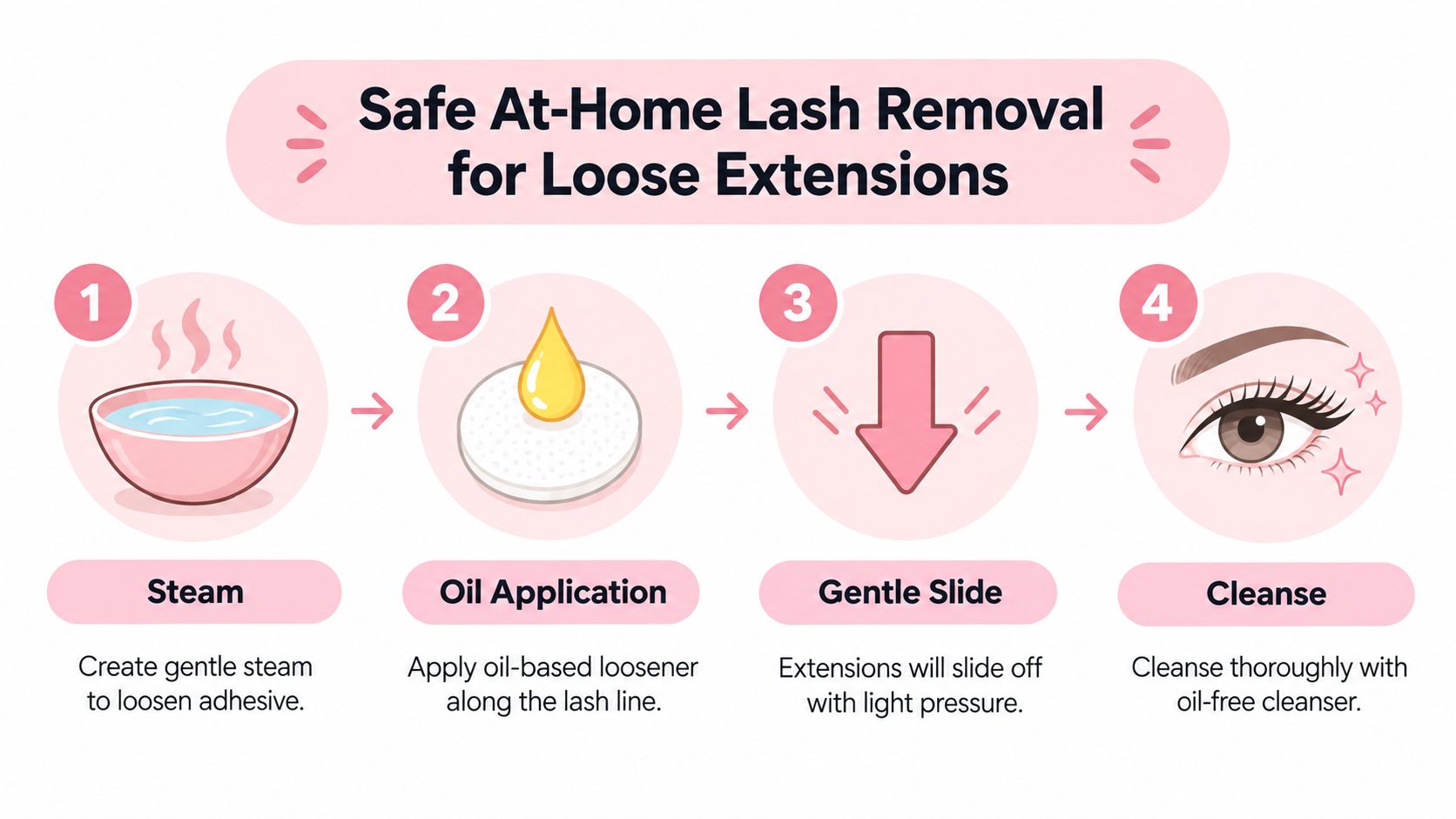
Don't try to perform a final “mirror-free” check by feel. Your fingers can't reliably tell whether a bond has separated, and rubbing blind increases the chance of pushing residue into the eye. Clean the area with an oil-free cleanser afterwards, and if you want a temporary alternative while natural lashes recover, this affordable false lashes guide offers a way to compare strip-lash options without pulling at remaining extensions.
For a fuller explanation of the limits and risks, see this guide to removing extensions at home. If any part of the set is stuck, skip the home attempt.
Home Removal Versus Booking a Sydney Lash Professional
Home removal appears cheaper and more convenient, but those advantages disappear quickly when the person has to deal with pulled natural lashes, irritated lids or glue left close to the eye. A professional can inspect the set, isolate the lashes and use a dedicated gel remover without relying on traction.
A Sydney salon removal generally takes about 20 to 30 minutes and costs $30 to $60, according to the service comparison in this brief. Bonna Beauty lists an old-lash-extension removal appointment with a 20-minute duration and pricing from A$20 in its booking profiles. Prices vary between studios, so confirm the current fee before booking.
DIY versus professional lash removal key trade-offs
| Factor | Home Removal | Sydney Salon Removal |
|---|---|---|
| Cost | Usually avoids an appointment fee | Paid service, with pricing confirmed by the studio |
| Time | Can take repeated attempts over several sessions | A structured appointment |
| Lash preservation | Depends on the bond already being loose and the user avoiding force | Technician controls separation and reduces traction |
| Eye safety | Product and residue are handled close to the eye without clinical control | A trained professional manages placement, exposure and removal |
| Best suited to | One or two loose extensions, no eye symptoms and no bond near the waterline | Full sets, dense fans, sensitive eyes or difficult bonds |
Home removal is only reasonable when the set is nearly off, there is no eye condition or active irritation, and the extension moves without force. A full set, a fresh application, a history of blepharitis, contact lens use or sensitive eyes shifts the decision towards a professional appointment.
Decision rule: If you need to pull, scrape, tweeze or add stronger solvent, stop. Book removal instead.
In Sydney, that might mean choosing a studio convenient to Bankstown and Yagoona, Roselands and Canterbury, Revesby or North Parramatta rather than turning the bathroom into a treatment room. The safe option is the one that controls the bond, not the one that costs the least at the start.
What to Do if Remover or Glue Gets in Your Eye
Accidental exposure needs a response, not experimentation. Don't rub the eye, don't add oil to dilute the product and don't try lemon juice, baby shampoo or another online remedy. Those products can add irritation and delay proper flushing.
First response
- Stop immediately. Put down the remover, spoolie or tweezers.
- Remove contact lenses. Take them out if they come away easily.
- Flush continuously. Rinse with sterile saline or clean, cool water for at least 15 minutes, blinking gently during irrigation. Australian cyanoacrylate safety instructions advise flushing for this duration and seeking medical attention if irritation persists. Australian adhesive exposure guidance also says not to force bonded eyelids open.
- Don't force closed lids apart. If the eyelids are bonded, cover them with a wet pad and release the lashes with warm water. Don't pry them open.
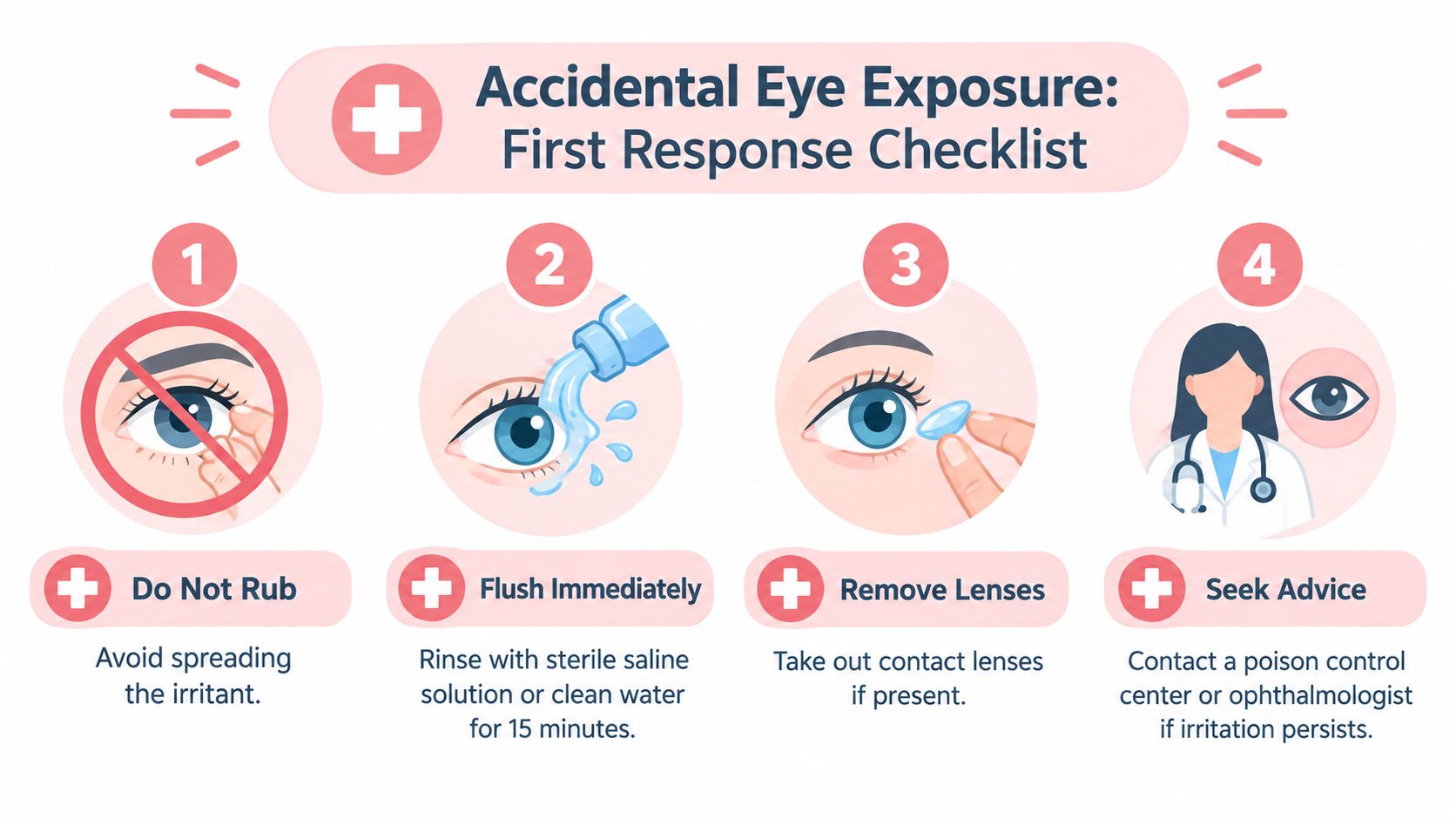
Mild stinging that settles after thorough flushing, with clear vision and no continuing discomfort, may be monitored cautiously. Persistent redness, blurred vision, light sensitivity, pain, worsening swelling or a gritty feeling under the lid needs same-day assessment by an optometrist or GP. If vision changes or severe pain occurs, seek urgent medical care.
A chemical irritation from remover isn't the same as a scratch from a glue fragment or lash fibre. Flushing helps reduce surface exposure, but it won't necessarily remove a fragment trapped under the eyelid. Don't use tweezers on the eye to solve that problem.
Bring the adhesive or remover packaging, the time of exposure, the treatment used and any photos of the product label. A clear eye-burn first-aid guide can help you understand why immediate irrigation matters, while this Bonna Beauty article on chemical burns and eye reactions outlines warning signs that shouldn't wait.
Aftercare, Recovery, and When to See a Dermatologist
Once the extensions are off, stop treating the lash line like a surface that needs heavy scrubbing. The skin and natural lashes need a quiet recovery period, particularly if the removal involved repeated rubbing or product exposure.
Your first 72 hours
- Clean gently. Use oil-free micellar water and a clean pad, without dragging across the lid.
- Leave mascara alone. Avoid mascara for five days, and don't use false lashes while the area feels tender.
- Sleep with less friction. A silk pillowcase can reduce rubbing against the lashes while you sleep.
- Skip lash curlers. Mechanical pressure can stress natural lashes that have already been pulled or weakened.
- Watch the eyelid margin. Scales, crusting or ongoing irritation may point to blepharitis rather than ordinary post-removal sensitivity.
The specified recovery timeline for natural lash regrowth is six to eight weeks, but that doesn't mean every sparse area will look identical during that period. Avoid applying another full set over an irritated lid. A technician can assess the cosmetic application, while a dermatologist can assess allergic contact dermatitis or traction alopecia.
Book medical advice for persistent redness beyond 48 hours, any drop in vision, light sensitivity, lash loss exceeding five per day, or scaly eyelid margins suggesting blepharitis. Don't wait for a lash appointment if the eye itself hurts or vision changes. An ophthalmologist or optometrist is the right person to assess ocular injury.
A salon can address application errors and discuss when regrowth supports another treatment. A dermatologist treats the skin condition when allergy or traction-related loss is suspected. Those roles overlap, but they aren't interchangeable.
If you're in Sydney and need a controlled removal rather than another home experiment, Bonna Beauty offers professional lash removal performed by trained artists, alongside lash extensions, lash lifts and aftercare guidance at studios including Yagoona, Roselands and Canterbury, Revesby and North Parramatta. Visit Bonna Beauty to review the removal service and book an appointment before irritation or pulling turns a cosmetic problem into an eye problem.